Get Full Government Meeting Transcripts, Videos, & Alerts Forever!
Get email alerts on the Child Welfare Ombudsman topic
No spam. Unsubscribe anytime.
New Health and Social Services Ombudsman outlines mandate to review foster‑care complaints, asks for higher personnel funding
Summary
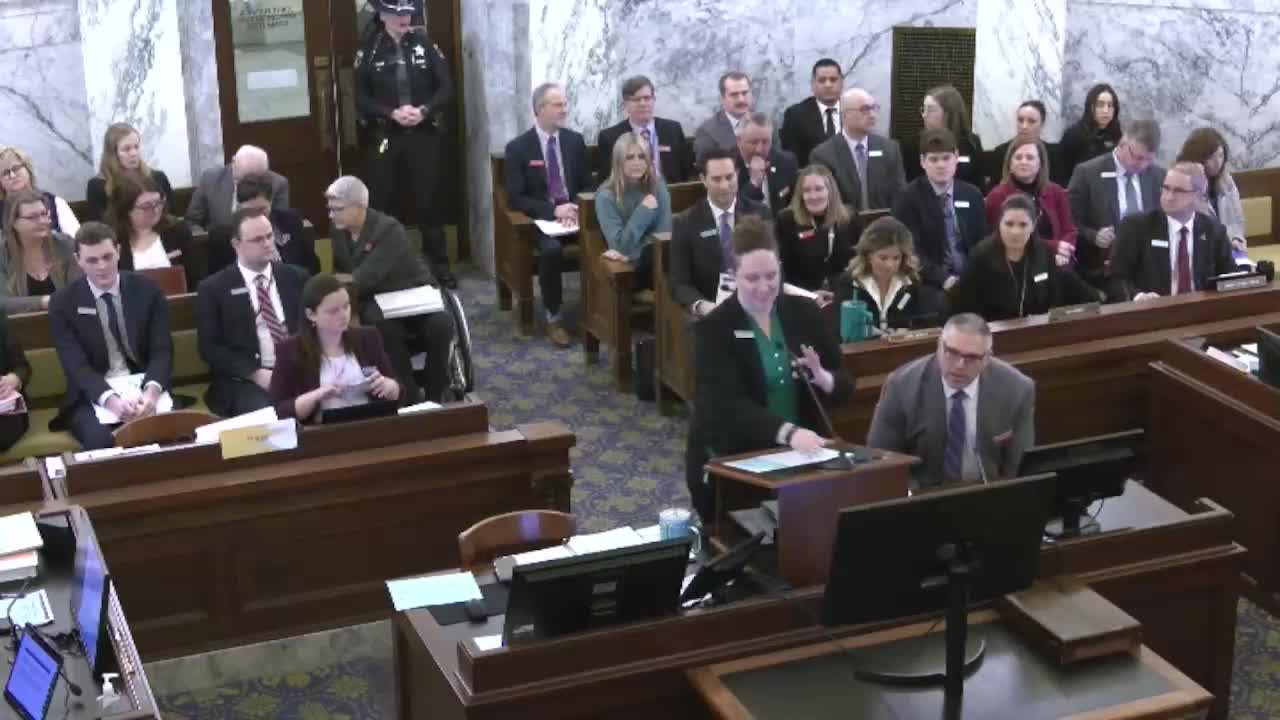
Trevor Sparrow, Idaho’s newly appointed Health and Social Services Ombudsman, told the Joint Finance‑Appropriations Committee on Jan. 15 that his office will investigate complaints involving children in state care and is appropriated three FTEs and $470,000 ongoing from the general fund.
Trevor Sparrow, Idaho’s newly appointed Health and Social Services Ombudsman, described the office’s role and staffing to the Joint Finance‑Appropriations Committee on Jan. 15, saying the office will investigate complaints related to children in state care and may issue recommendations to improve agency practice and policy.
Alex Williamson, a budget and policy analyst with the Legislative Services Office, presented the office’s fiscal profile. The Office of Health and Social Services Ombudsman was created by legislation (identified in the agency materials as Senate Bill 1380) and is appropriated three full‑time positions and an ongoing budget of $470,000 from the general fund for FY2025; $395,000 of that is allocated for personnel costs. The appropriation also included a one‑time capital outlay allocation of $20,000 to set up the office.
Sparrow, appointed by the governor on Nov. 27, said the office’s work will focus primarily on the foster‑care system but is authorized to receive and investigate complaints from parents, foster parents and other stakeholders about residential agencies and the state’s provision of health and social services for children. He described the office’s investigatory authority, the ability to produce agency‑level investigative reports, and the option to make legislative recommendations based on systemic findings.
Committee members asked about the office’s scope and relationships with existing citizen review panels. Sparrow said he has already discussed coordination with deputy agency leadership and sees the citizen review panels as a potential resource for research and policy development; he said the office also plans to use multidisciplinary teams in line with United States Ombudsman Association standards, which could include legal, nursing and social‑work expertise.
Williamson said the Department of Human Resources recommended increasing personnel dollars so the office could recruit and retain qualified staff (the DHR recommendation was to allow hiring above 80% of policy salary levels). Sparrow said he is in the process of making hires to fill the three positions and described prior experience leading a youth program for eight years.
The committee did not take a vote; members asked clarifying questions about scope, whether congregate‑care placements have ended, and how the office might use citizen review panels. Sparrow said the state has moved children out of congregate care and short‑term placements, per discussions with agency leadership. He closed by noting the office is adopting U.S. Ombudsman Association standards for multidisciplinary investigations.
The committee will consider ongoing personnel funding and any enhancement requests as part of upcoming maintenance and supplemental budget decisions.