Get Full Government Meeting Transcripts, Videos, & Alerts Forever!
Get email alerts on the Budget Technical Corrections topic
No spam. Unsubscribe anytime.
Legislative staff outline technical corrections to FY2025 budgets for commerce, DEQ and health programs
Summary
Legislative analysts presented three technical corrections affecting FY2025 appropriations: moving broadband reappropriations within the Department of Commerce, restoring a misdirected transfer into the CAFO improvement fund at DEQ, and reclassifying two Health & Welfare contract payments from trustee to operating expenditures.
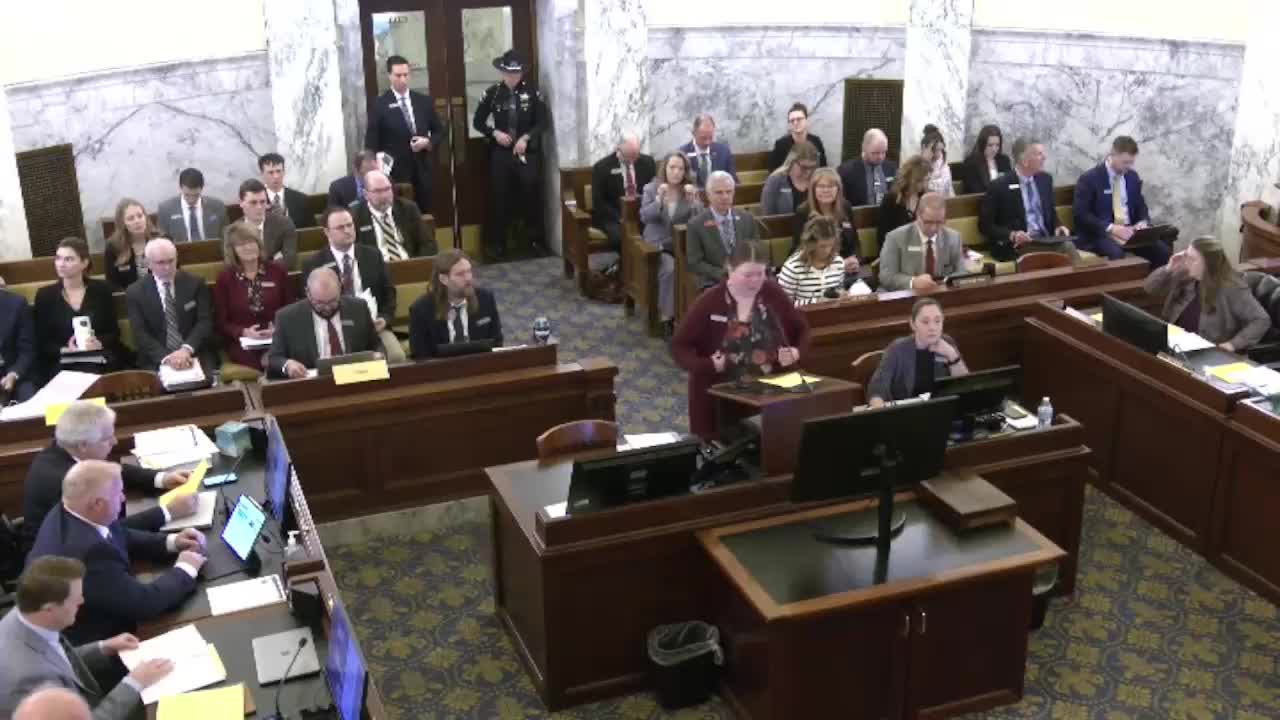
Legislative staff briefed the Joint Finance-Appropriations Committee (JFAC) on three technical corrections to fiscal year 2025 budget documents that staff plan to present for a formal vote the next day.
Janet Jessup, a budget and policy analyst with Legislative Services, said the first correction moves prior-year reappropriated broadband monies from the Department of Commerce’s general commerce program into a newly created broadband program so broadband spending can be tracked separately. “The changes net to zero,” Jessup said, explaining the action shifts dollars between two Commerce program tables so the broadband program shows the reappropriated funds that were routed into the wrong program last year.
The second correction concerns a drafting error that affected the Department of Environmental Quality (DEQ). Jessup said language in the 2025 bill named the transfer as coming from the “DEQ general fund” instead of the state general fund, which resulted in DEQ having to cover the $2 million CAFO (confined animal feeding operation) improvement transfer from its own departmental general fund rather than the intended source. The correction will restore the DEQ general fund so agency personnel and other DEQ programs are made whole.
The third correction, Jessup said, moves appropriations in two Department of Health and Welfare programs — substance-abuse treatment and prevention and physical health services — from the trustee and benefit payments category into operating expenditures. Because the vendor payments are contract-driven third-party payments, the funds should be budgeted as operating; however, the Health and Welfare bill included language restricting the agency’s authority to move monies out of trustee and benefit payments. “That’s why the action is back before you,” Jessup said: the agency requires legislative approval to reclassify those dollars.
Chairman Groh and several members thanked staff for the work and noted the complexity of the packet. No final votes on these corrections were recorded at the meeting; staff indicated the committee would vote the next day.
Ending: Committee members were invited to direct questions to Legislative Services analysts before the scheduled floor vote the following day.