Get Full Government Meeting Transcripts, Videos, & Alerts Forever!
Get email alerts on the Medicaid Rules Rewrite topic
No spam. Unsubscribe anytime.
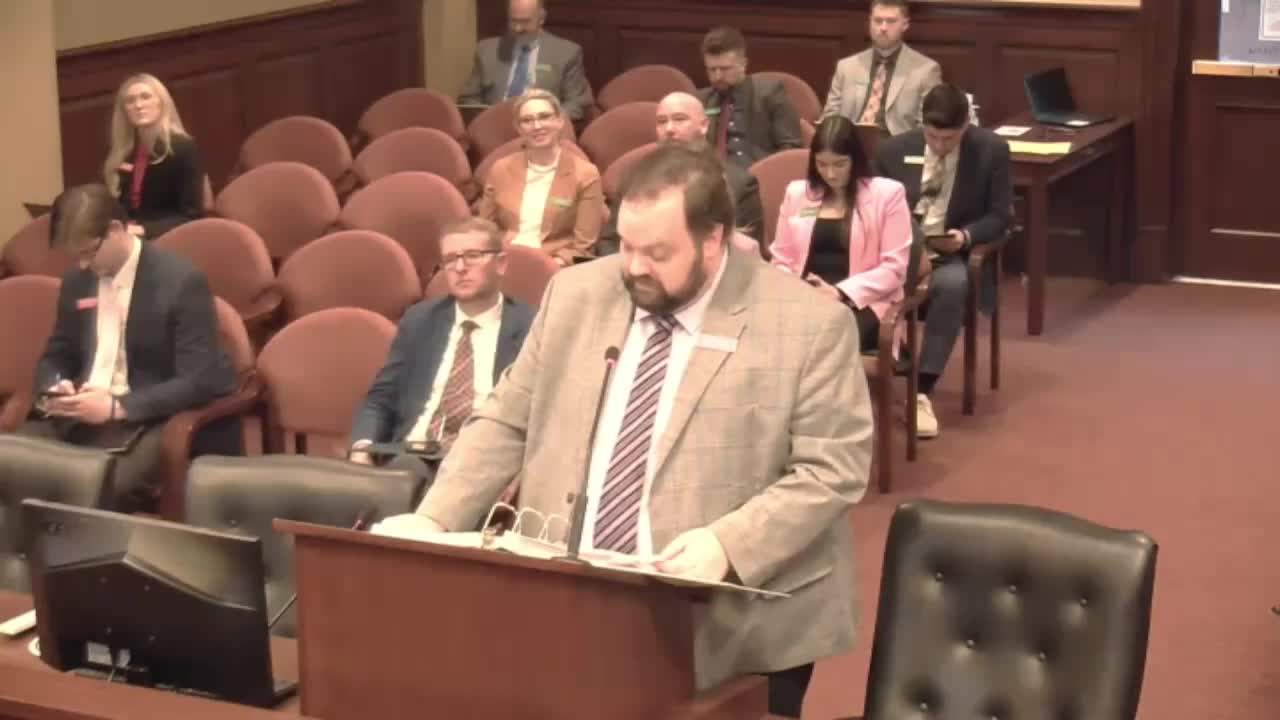
Senate Health & Welfare committee approves wide rewrite of Medicaid rules to remove duplication and clarify provider role
Summary
The Idaho Senate Health & Welfare Committee voted to adopt a broad rulemaking that streamlines the Medicaid Basic Plan rules, removes duplicative federal and state language, and updates the definition of 'provider' to align rule text with legislative scope-of-practice decisions.
The Senate Health & Welfare Committee approved a consolidated rule docket intended to simplify Idaho's Medicaid Basic Plan rules and remove duplicative federal and statutory language.
The adopted docket reduces the size of the chapter and clarifies that many requirements already found in federal regulations or state law will not be repeated in state rule, while making one substantive change to the definition of "provider" so that the department will not second-guess legislative scope-of-practice decisions. "When this committee in particular takes up scope of practice issues ... our rules were slow to follow. And we have come up with a definition of provider that when you make a scope of practice decision, we automatically follow," the Department said in presenting the rule.
The department said the rewrite aims to leave policy levers in the place where elected officials can act and to reduce the rule chapter from roughly 150 pages to about 80 pages. Deputy Director Juliette Sharon told the committee the changes are intended to strip out duplication of requirements already in federal law and to make the remaining rules the policy decisions the Legislature can change.
Committee members asked about several specifics in the draft language, including: notification requirements for convictions or investigations involving licensed personnel; the department's handling of claims submitted after a recipient's date of death; Medicare crossover claims; and what service categories Medicaid does not cover. The department said the provision about notifications was not intended to require immediate reporting of unverified allegations and that claims submitted after a person's date of death are investigated and, when improper, recovered.
On Medicare crossover claims, Deputy Director Sharon explained the mechanics for dually eligible beneficiaries: "Medicare crossover claims occur for our dually eligible participants ... Medicaid may come in behind and support the remaining part of that service." The department also said it clarified which service categories Medicaid will not cover (for example, certain educational and vocational services and some home-delivered meals) to reflect existing policy rather than change coverage.
The committee approved the docket on a voice vote after Senator Harris moved to adopt the rules and Senator Wintrow seconded. Senator Wintrow asked the department to confirm the changes were not intended to alter access or eligibility; Deputy Director Sharon responded on the record, "pinky swear, there are no policy changes in this docket other than the substantive changes that Mr. Larson outlined for the committee."