Get Full Government Meeting Transcripts, Videos, & Alerts Forever!
Get email alerts on the Long Term Care Monitoring topic
No spam. Unsubscribe anytime.
Senate committee advances bill allowing in-room cameras in residential care when authorized by resident or guardian
Summary
The Senate Health and Welfare Committee sent House Bill 337 to the floor with a due-pass recommendation after extended testimony from the bill sponsor, industry representatives and advocacy groups about privacy, consent and operational impacts.
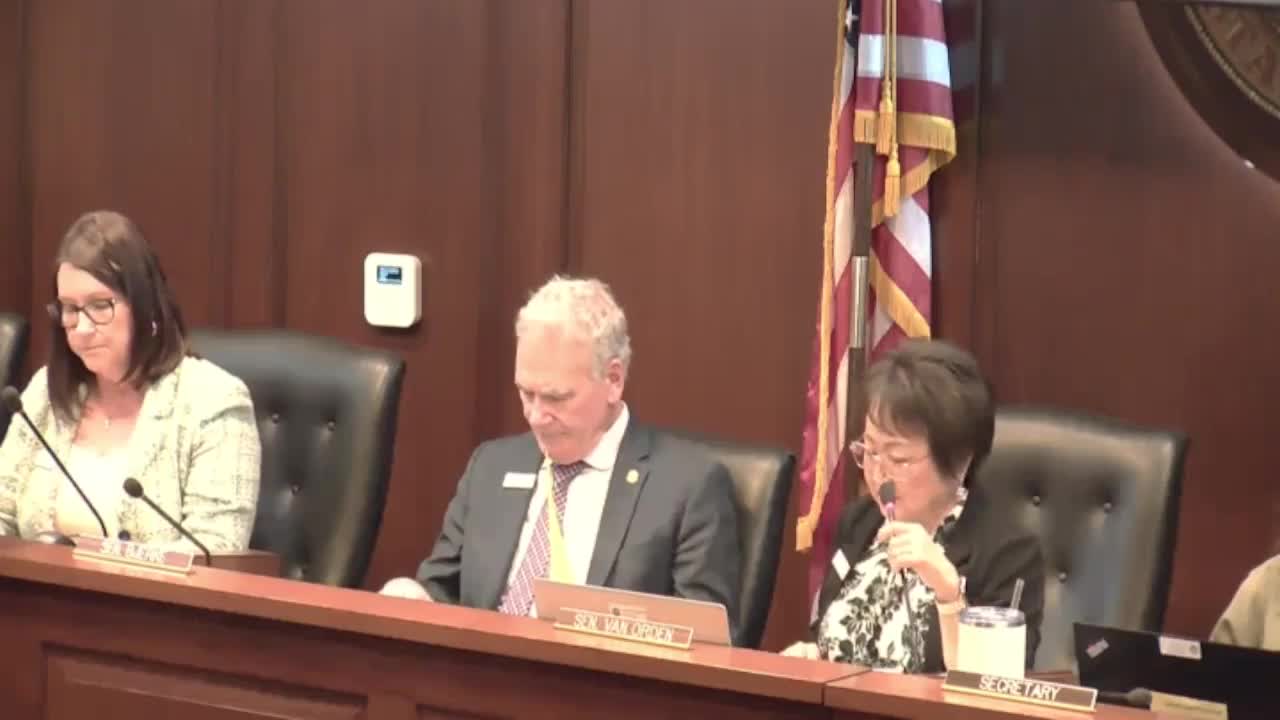
BOISE — The Senate Health and Welfare Committee voted to send House Bill 337 to the floor with a due-pass recommendation after a nearly hourlong discussion over whether residents or their authorized representatives should be allowed to install electronic monitoring devices in residential care settings.
Representative Dory Healy, R-District 15, told the committee the bill responds to constituent requests and emerging national practice. “This allows loved ones or the resident to put a camera in their room so that families can help check in on them,” Healy said, adding the measure is optional and the resident or a resident’s guardian or health care agent may authorize installation.
Supporters said in-room cameras can help detect abuse and provide families with reassurance when they cannot visit frequently. Healy noted other states have adopted similar laws and that the bill requires cameras to be placed so facilities can assist residents “while maintaining the privacy of the residents’ sensitive and intimate body areas.”
Industry witnesses and a statewide association urged caution. Elizabeth Sonnichsen, deputy general counsel for Pinnacle Senior Living, said the bill is “overbroad” and raised specific concern that it would bar facilities from viewing footage needed to investigate complaints and to take corrective action. “I believe that this bill is so overbroad that it disallows our care staff from viewing the footage and potentially making changes to it,” Sonnichsen told the committee.
Representatives of Grace Assisted Living — including regional administrator Cody Bennett, executive regional nurse Monica Heath and co-owner Colter Camo — said the measure would create operational, legal and privacy problems. Bennett said the bill’s authorization language is unclear about whether consent must be obtained from the resident and whether a resident with cognitive impairment can validly consent.
“Shouldn’t the resident always be required to consent prior to the use of a recording device?” Bennett asked, adding that the measure, as written, could lead to unauthorized recordings and legal exposure for providers.
Nursing and operator witnesses also told the committee cameras could make direct caregiving tasks — for example catheter care or dressing changes — harder to perform without exposing intimate areas, and could deter staff from taking assignments. Robert Van der Merwey, executive director of the Idaho HealthCare Association, said the privacy and dignity concerns are substantial and stressed that some places already use non-detailed camera systems designed to show outlines or falls without revealing sensitive body parts.
Committee members pressed about several operational details raised in testimony: whether facilities must be notified before cameras are installed, whether facilities can require families to use their own separate Wi-Fi, whether audio is permitted, how to handle roommates, and who bears camera costs. Representative Healy said the bill is intentionally broad to let facilities adopt implementing policies and that the resident, resident guardian or health care agent may authorize installation. She also said the measure requires a resident to have a private room when a device is installed.
Senators noted the complexity of balancing resident safety, privacy and staff protections. Senator Wintrow said she was “struggling” with the choice; other members echoed concerns that rural areas with a single facility may not offer families an alternative if a facility declines to permit monitoring under its policy.
After debate, Senator Blaylock moved and Senator Kaiser seconded to send the bill to the floor with a due-pass recommendation. The motion passed; the committee chair recorded that Senators Harris, Shippey and Wintrow voted no and the remainder voted in favor.
The bill’s next stop is consideration by the full Senate. If enacted, it would require residential care facilities to permit electronic monitoring devices when authorized by the resident, a guardian or a health care agent and would require facilities to adopt standards intended to protect residents’ sensitive and intimate body areas.
—
Votes at a glance and bill details are included below.