Get Full Government Meeting Transcripts, Videos, & Alerts Forever!
Get email alerts on the Elections Administration topic
No spam. Unsubscribe anytime.
Committee approves election‑law rewrite standardizing filing deadlines and capping early voting window
Summary
The House State Affairs Committee voted to send House Bill 278 to the full House with a do‑pass recommendation; the bill standardizes filing deadlines across office types and sets a maximum three‑week early‑voting window, while leaving county discretion to offer fewer weeks.
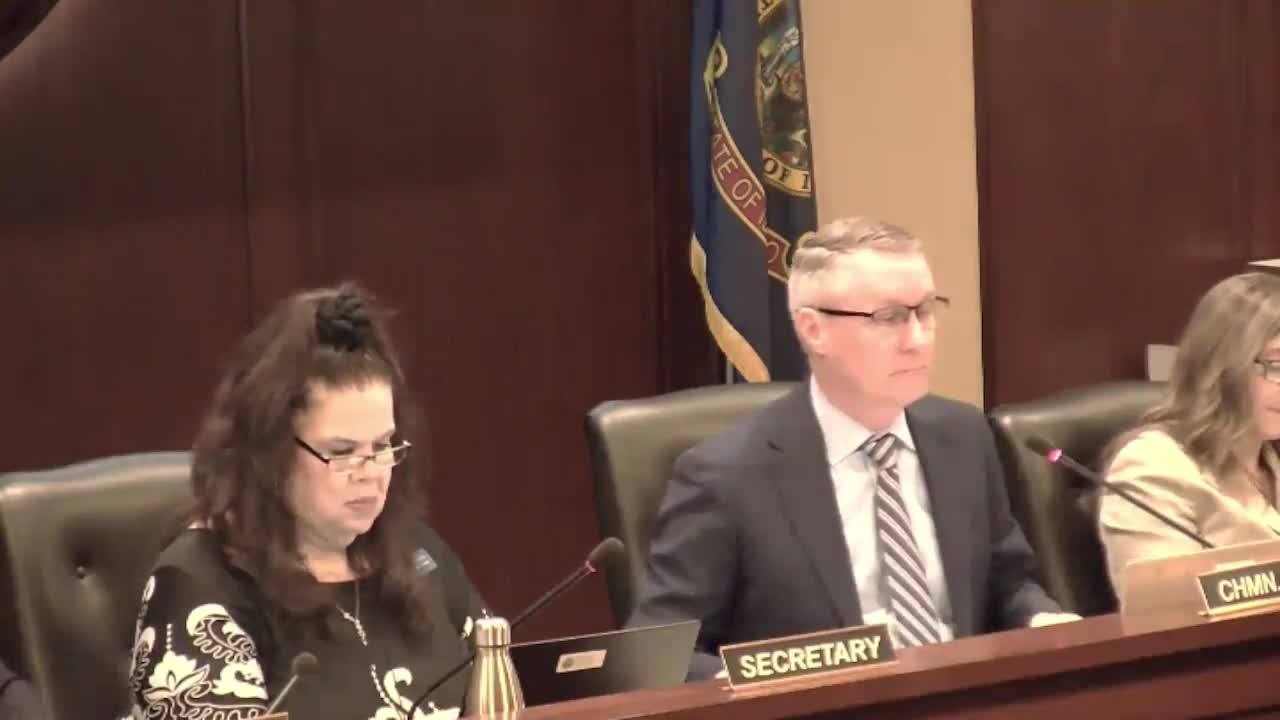
The House State Affairs Committee voted to send House Bill 278 to the full House with a do‑pass recommendation after several hours of explanation and public testimony.
Representative Brandon Mitchell, the bill sponsor, said the measure consolidates and standardizes administrative dates and deadlines used by election offices across the state, addressing inconsistent filing and early‑voting practices among counties. "We've been trying to get some dates and deadlines adjusted on the for elections to kinda help out with timing of things," Mitchell said.
Under the draft described in committee, filing for state, legislative and federal offices in even‑numbered years would be condensed to a one‑week window (the sponsor described it as the "thirteenth Monday to the twelfth Friday") followed by a one‑week withdrawal and write‑in period; other local offices would retain a two‑week filing period. The bill also revises early‑voting timing: the current law sets a minimum early‑voting period; the bill would set a maximum of three weeks before election day and allow counties to offer three, two, one or no weeks of in‑person early voting.
County clerks and county associations generally supported the bill. Kelly Brasfield of the Idaho Association of Counties said standardization "alleviate[s] confusion amongst candidates, parties, districts and citizens." Jason Dixon, president of the Idaho Clerks Association and elected clerk in Bannock County, told the committee: "We are in 100% support of this bill." He said the change would help clerks process filings and prepare ballots, including meeting federal requirements for ballots sent to military voters.
Opponents urged amendments or called for more flexibility. Kayla Dodson of the League of Women Voters of Idaho said the League "applauds the portion of this bill that standardizes administrative dates" but opposed shortening the primary filing window for statewide and legislative offices to five days and objected to capping early voting: "If standardizing is the goal, why not 2 weeks for all candidates?" Bonnie Shuster of Boise said the bill could allow some counties to shorten early voting to an unhelpfully brief period and urged the committee to remove the early‑voting change.
Secretary of State office staff and county elections officials explained operational tradeoffs. Clerk Triplett summarized the compromise: state, legislative and federal offices would file in a one‑week window followed by a one‑week withdrawal/write‑in period; all other offices would have a two‑week filing period when their filings go to county clerks. Triplett said the change was intended to reduce the patchwork of different deadlines across overlapping districts.
Committee members debated whether shrinking the filing window for high‑profile offices would advantage incumbents and whether shortening or capping early voting would disadvantage voters in counties that have used longer windows for operational reasons. Sponsor Mitchell said most counties supported the change and that only a small share of ballots were cast in the additional third week in recent elections.
Representative Alfieri moved the committee motion to send the bill to the floor with a do‑pass recommendation; the motion carried by voice vote. The bill proceeds to the full House for further debate and possible amendment.