Get Full Government Meeting Transcripts, Videos, & Alerts Forever!
Get email alerts on the Drug Policy topic
No spam. Unsubscribe anytime.
House State Affairs committee backs sending constitutional amendment requiring two-thirds vote to legalize unlawful drugs to the floor
Summary
The House State Affairs Committee voted 12-3 to send House Joint Resolution 3 — a proposed constitutional amendment that would require two-thirds approval in each legislative chamber to legalize currently unlawful drugs — to the full House after extended public testimony and member questions about medical exceptions and the initiative process.
The House State Affairs Committee voted 12-3 to send House Joint Resolution 3 to the full House with a "do pass" recommendation, advancing a proposed constitutional amendment that would require two-thirds of the Idaho House and Senate to approve any change that would make currently unlawful drugs lawful.
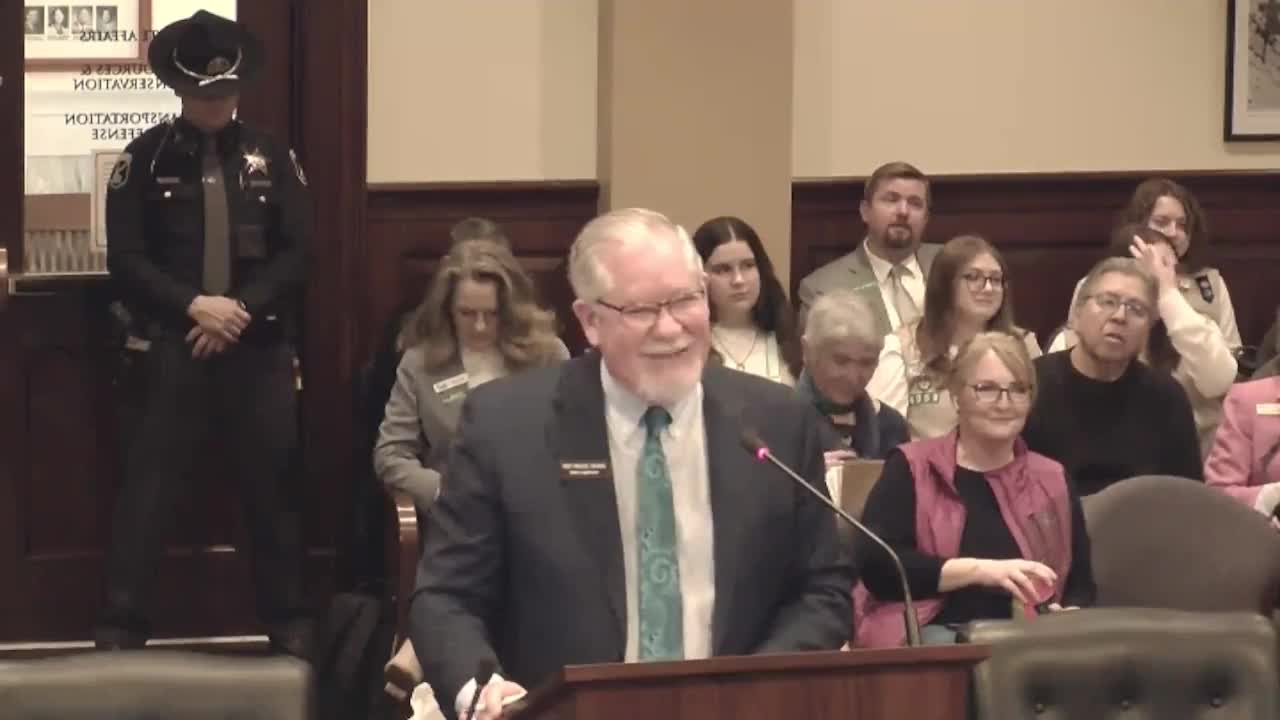
Representative Skog, the resolution sponsor, told the committee, "we need 2 thirds of the House and of the Senate to get this onto the ballot initiative, and that's what we're seeking to do." He framed the measure as a way to give Idaho voters and lawmakers greater protection against outsized out‑of‑state influence and what he and supporters described as negative outcomes seen in nearby states.
Supporters said the amendment would make it harder to legalize substances such as methamphetamine, heroin, fentanyl and marijuana. Billy Norp of Meridian said, "This amendment merely puts in Idaho Constitution what we already have in law." Multiple law‑enforcement endorsements were placed in the committee packet, Skog said.
Opponents and some committee members raised concerns about medical access and the effect on the initiative process. Joseph Evans, a combat veteran testifying for Kind Idaho, said: "This particular bill will continue to make that access significantly more difficult to maintain in the state of Idaho." Representative Barbieri asked how the resolution would interact with a voter initiative; Representative Skog responded that the resolution "does not affect" the initiative process but later said he would have a clearer answer for the floor.
Committee members also discussed exceptions written into the draft resolution. Representative Scott pointed to text allowing exceptions for research and investigational drugs and for terminally ill patients "as provided by law." Representative Green warned that the draft intentionally uses the broader term "unlawful drugs" rather than specific schedules so future substances would not require repeated constitutional updates.
Public testimony included a wide range of personal accounts and data points comparing Idaho with neighboring states. Speakers who supported the resolution cited evidence they said showed increased crime, homelessness and overdoses in jurisdictions that legalized drugs; several witnesses urged the committee to guard against out‑of‑state money pushing legalization.
The committee recorded the motion to send HJR3 to the floor and completed a roll call that produced a 12‑3 result. Representatives voting no included Representative Barry, Representative Achilles and Representative Green; the other members present voted yes. The committee action sends the resolution to the House for further consideration.
The resolution does not itself change criminal law; it would place a requirement in the state constitution about the threshold needed for the legislature to render an unlawful drug lawful. Next steps are floor debate and, if approved by the full Legislature and later by voters where required, implementation would depend on the separate processes for statutes, initiatives and constitutional amendments.