Get Full Government Meeting Transcripts, Videos, & Alerts Forever!
Get email alerts on the Foster Care topic
No spam. Unsubscribe anytime.
Committee approves foster-care licensing reforms, lowers age requirement and adopts Reasonable Prudent Parent standard; firearms storage rule prompts follow-up
Summary
The Senate Health and Welfare Committee approved foster-care licensing reforms that adopt the Reasonable Prudent Parent standard, lower certain age limits for foster parents to 18, create a fast-track reapplication process for former foster parents, and include weapon-storage requirements that prompted follow-up work with a senator.
The Senate Health and Welfare Committee approved several rule dockets that rewrite foster-care licensing chapters, adopt the federal Reasonable Prudent Parent standard, reduce some application timelines and add a fast-track reapplication for former foster parents.
Jared Larson explained the package as a chapter repeal and replace: one docket repealed the prior chapter and a following docket re-established licensing under the Reasonable Prudent Parent standard rather than an age-only limit. Larson said the state is adopting a national model (a Trump-era model referenced in the transcript) for foster-family licensing that gives the department discretion to deviate from specific standards if justified, while maintaining required training for the Reasonable Prudent Parent standard.
Notable changes discussed include lowering the minimum age for foster parents from 21 to 18 in some placements — for example, an 18-year-old former foster sibling might be an appropriate placement for younger siblings — and reducing timeframes for foster applications in some cases (transcript cites an example of moving from 30 days to 1 day for an application timeframe). The department said it will pay for reasonable accommodations (such as fire extinguishers or smoke detectors) needed to meet home and safety standards.
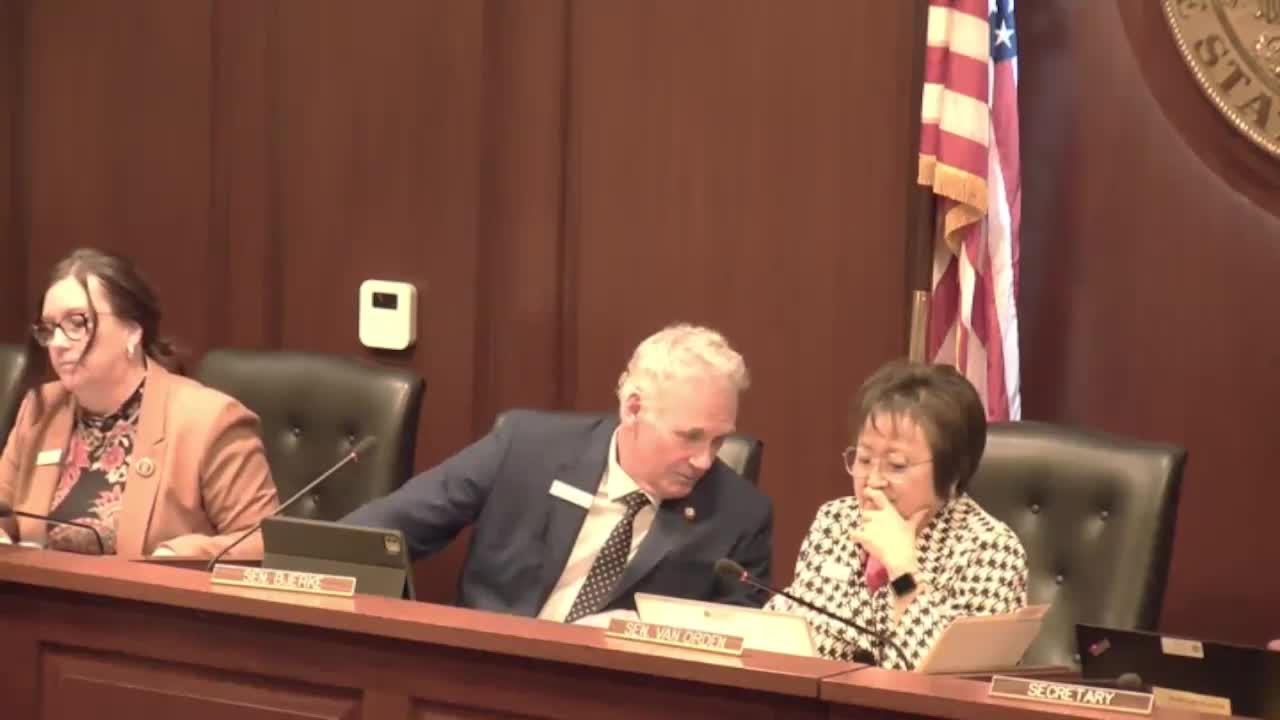
Sen. Shippey raised a substantive concern about a weapons-and-ammunition storage rule in the new licensing standard. The rule requires weapons stored separately, locked and unloaded, with ammunition separately stored and inaccessible to children. Shippey, who identified herself as a licensed foster parent, said that storing weapons and ammunition separately could impede a foster parent’s ability to defend a home quickly in an emergency. Larson responded that the department would be “more than happy to work with you, through the interim on this and help” to refine language.
The committee also approved a temporary rule to fast-track reapplication of former foster parents who left in good standing and who seek to return within 12 months of their last licensed foster-home visit; Larson said the department seeks to increase available placements and reported an improvement in foster-parent coverage from 74 per 100 children to 94 per 100 children, with a stated departmental goal of 150 per 100 children.
Dockets were moved and approved by the committee, generally by voice vote, though Sen. Harris was recorded as an A vote on one motion in the transcript record.