Get Full Government Meeting Transcripts, Videos, & Alerts Forever!
Get email alerts on the Water Resources Budget topic
No spam. Unsubscribe anytime.
Idaho water officials outline $30 million ask, recharge push and staffing request as projects await funding
Summary
The Idaho Department of Water Resources and the Idaho Water Resource Board presented budget updates to the legislature, describing hundreds of millions in committed project funds, a request for five water‑administration positions and support for a governor recommendation of $30 million ongoing while urging expanded recharge capacity for the Eastern Snake Plain Aquifer.
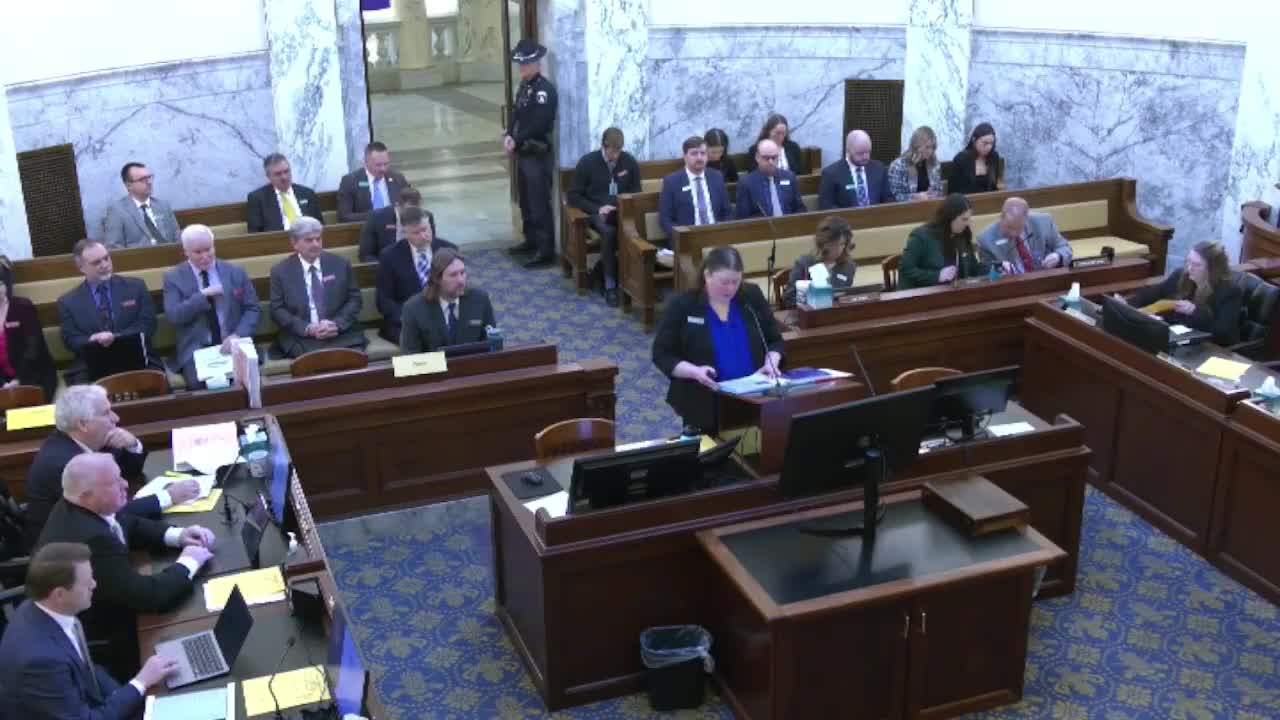
The Idaho Department of Water Resources and the Idaho Water Resource Board presented budget and program updates to the Joint Finance-Appropriations Committee, describing large committed project balances, a push to expand managed recharge on the Eastern Snake Plain and a request for five additional staff to form a Water Administration Bureau.
The presentation matters because Idaho is grappling with long-term groundwater management on the Eastern Snake Plain Aquifer (ESPA) and other basins, while the agency is stewarding hundreds of millions of dollars in project commitments and federal ARPA (American Rescue Plan Act) state fiscal recovery funds. Lawmakers questioned an ongoing $30 million governor recommendation and the agency’s capacity to deliver projects quickly.
Janet Jessup, budget and policy analyst with legislative services, opened the department overview and detailed the agency’s fund structure, staffing and recent spending patterns. She said the department has historically filled roughly 90% of positions and spent about 87–90% of personnel dollars in recent years. Jessup told the committee that the department received large ARPA allocations in fiscal 2023 (about $100 million total: $50 million one-time and $50 million ongoing in the earlier appropriation cycle) that changed how operating and trustee payments appear in five‑year charts.
Director Matt Weaver and Idaho Water Resource Board Chairman Jeff Raybould answered committee questions. Weaver said demand to create and support water districts has grown across the state and that the department is requesting five positions to pair with roughly 11 existing staff to form a Water Administration Bureau; the five positions would include a bureau chief, resource-agency liaisons and a technical records specialist. Weaver said the department also requested a public information officer (repurposing an unfilled FTE) and ongoing funding of $58,500 for increased ArcGIS license costs.
Weaver described the administration workload that prompted the staffing request: “Prior to this request, we had grown from 2.5 FTEs to about 11 FTEs department‑wide” working on water district support, and the new five positions “would get paired with those 11 existing positions” to better meet demand for district creation and administration.
The board chair summarized where water-management account money is committed. Jeff Raybould said the water management account supports a long list of projects, including a pipeline to serve Mountain Home Air Force Base, funding toward an Anderson Ranch dam raise, pipeline work associated with Dworshak Dam to serve fish hatcheries, assistance for Lewiston Orchards Irrigation District work with the Bureau of Reclamation, and regional sustainability loans and grants. “It’s going in lots of different places,” Raybould said, listing conversion projects, storage work in Bear Lake, Priest Lake projects and canal efficiency improvements among uses.
Jessup and Weaver gave a fund-balance snapshot. As summarized to the committee, the water management account ending balance for fiscal 2024 was presented as about $293 million, with additional revenue through December around $38 million and expenditures near $11.2 million, producing a cash balance near $320 million. The board has formally committed roughly $290 million of that balance, leaving an uncommitted cash balance in the low tens of millions (about $29 million, as presented). The board also has loans outstanding in multiple accounts; the transcript includes estimates of about $23 million in the revolving development account and about $20 million out in loans from the water management account.
On the ESPA recharge goal, Weaver said state‑sponsored recharge averaged about 268,000 acre‑feet per year from 2016–2024, private recharge averaged 116,000 acre‑feet per year and pumping reductions averaged about 212,000 acre‑feet per year, producing roughly 600,000 acre‑feet of combined aquifer management activity on average during that period. He said the board and department are considering raising the management target for the ESPA from about 250,000 acre‑feet to 350,000 acre‑feet per year for state‑sponsored recharge, and that meeting that target will require expanded recharge capacity. Raybould said the Upper Valley likely needs “another up to a thousand CFS of instantaneous recharge capacity” to help reach a 350,000 acre‑foot goal.
Committee members pressed timing and oversight concerns. Senator Cook and others asked why funds appropriated for projects remain unspent; Raybould and Weaver said large capital projects require engineering, permitting and staged disbursements and that money is typically released as work progresses. Several legislators expressed skepticism about adding ongoing base funding — Representative Tanner, among others, said he would favor one‑time project funding rather than a guaranteed ongoing $30 million without an explicit, itemized list of projects.
Lawmakers also raised policy concerns about how managed recharge interacts with existing water rights. Representative Miller and others warned against substituting state‑funded recharge for incidental recharge that currently accrues to irrigators and noted the legal and equity questions of using those actions in an administrative plan.
Committee staff said the department will follow up with a detailed list of projects that are identified but not yet funded. No formal appropriations or votes occurred during the hearing; the session was a presentation and question period.
Looking ahead, Weaver told lawmakers the department expects continued demand for administration, adjudication and project support — he said implementing parts of the recent ESPA settlement requires expanded measurement and reporting in real time for 5,000–6,000 wells, a task that, he said, will require significant effort by water users, groundwater districts, water districts and the department.
Ending: The committee asked for follow‑up materials on the department’s list of unfunded projects and for further detail on loan balances and commitments. The department and board appeared to win no immediate new appropriations during the hearing; next steps include staff follow‑up and future budget deliberations.