Get Full Government Meeting Transcripts, Videos, & Alerts Forever!
Get email alerts on the Education School Choice topic
No spam. Unsubscribe anytime.
Idaho Home Learning Academy outlines statewide virtual, parent-supported model to House Education Committee
Summary
Terry Sorensen, executive director of Idaho Home Learning Academy, told the House Education Committee the public virtual charter serves thousands statewide, provides an $1,800-per-student education savings account, partners with three educational service providers and is seeking statutory relief from a charter-cap provision cited as 30-3-52-7.
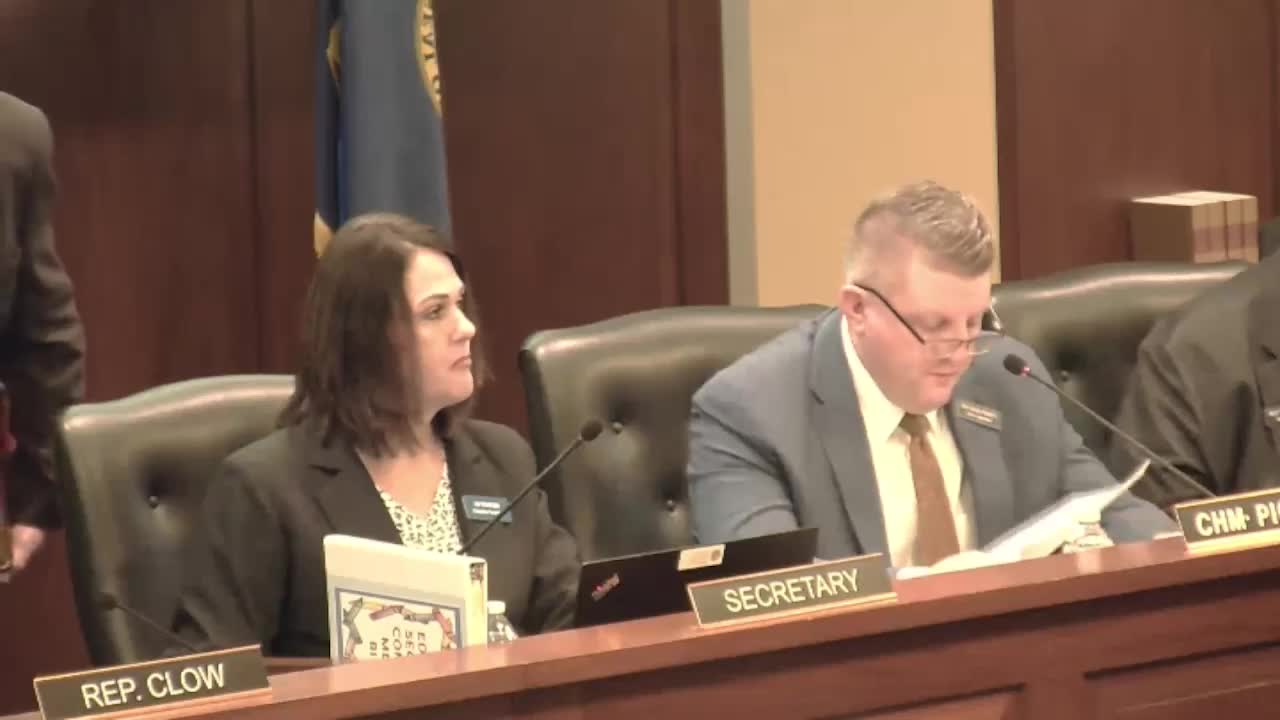
Terry Sorensen, executive director of Idaho Home Learning Academy, briefed the Idaho House Education Committee at a morning meeting on the academy’s model, funding and accountability systems and asked legislators to consider changing a statutory cap she said constrains the program’s growth.
Sorensen said Idaho Home Learning Academy (ILA) is a statewide virtual public charter authorized through Oneida School District that serves kindergarten through 12th grade students. She described a program that combines teacher-led synchronous instruction, self‑paced asynchronous work, in-person learning opportunities and an education savings account (ESA) of $1,800 per student per year to allow parents to buy curriculum and supplemental resources.
ILA’s model relies on contracts with three educational service providers (ESPs) — identified in testimony as Harmony Education, Braintree Learning and HomeEd360 — that Sorensen said supply curriculum, manage parent ESAs and provide program-level services such as field trips and testing coordination. Sorensen told the committee that ILA and Oneida split state funding by “unit” and that ILA’s contracts with ESPs are paid from those funds. She said the school moved this year from operating inside Oneida School District to a charter model to access a funding model without “use it or lose it” restrictions.
Why it matters: The committee heard that ILA serves thousands of students statewide (Sorensen cited figures ranging from about 7,200 to 7,925 students at different points in testimony), and that program growth affects district budgets, special education delivery and state accountability metrics. Committee members asked detailed questions about per‑unit payments to ESPs, special education responsibilities under the federal Individuals with Disabilities Education Act (IDEA), student proficiency rates and how state and federal funds flow through the authorizing district.
Program features and accountability
Sorensen said ILA requires state testing for students who remain in the program and that K–8 students have biweekly teacher check-ins and submit artifacts of learning for teacher review; high school students submit assignments weekly. She said ILA administers the Idaho Reading Indicator (IRI), the Idaho Standards Achievement Test (ISAT) and additional screeners, and that the academy continues engagement surveys even though the state no longer requires them.
On special education Sorensen said the program provides services through Oneida and employs about 23 special education teachers and six special education administrators; she said ILA serves “over 600” special education students. Superintendent Kyle Abrams of Oneida School District told the committee federal special education funds flow to the authorizing district and that the district and ILA negotiate how those funds are applied.
Funding, contracts and staffing
Committee members pressed Sorensen for financial details. She said ILA’s contracts with ESPs run on the state’s unit funding model and gave two contract figures for program services: about $62,000 per unit for K–8 and about $52,500 per unit for high school (both figures were stated in testimony as contract amounts paid to ESPs). Sorensen and other witnesses characterized the ESP payments as covering more than curriculum: the providers, she said, manage direct purchases from ESAs, coordinate field trips and provide program-level services including testing coordination.
Testimony described ILA’s staffing as including roughly 90 certified high school teachers, about 280 K–8 teachers, multiple administrators (Sorensen listed principals, assistant principals and special education administrators) and additional staff employed by the ESPs. Sorensen said teachers are employed through Oneida School District to comply with state funding rules; ESPs also employ staff to fulfill their contracts.
Questions and concerns raised to the committee
Committee members sought clarification on multiple points: how many ILA students originate in Oneida (Sorensen estimated 60–70), whether non‑Idaho residents can enroll (Sorensen said proof of Idaho residency is required), how many students use Empowering Parents grants in addition to the $1,800 ESA (a member cited a report showing a large share of Empowering Parents grants to ILA students), and why some grade‑level proficiency rates—particularly in math—appear low on publicly available score reports.
Sorensen acknowledged lower math proficiency in some grades, attributed part of that pattern to students who come from traditional homeschool backgrounds and to math being a challenging subject for some parent learning coaches, and said ILA is prioritizing math interventions. Superintendent Abrams said ILA and Oneida have been working with the State Department of Education on special education compliance and asked that oversight be applied consistently to other online schools.
Policy requests and legal context
Sorensen asked legislators to revisit a statutory cap she cited as “30-3-52-7,” which she said limits charter growth to a fixed number of units (she described the cap as 40 units and said it translates to somewhere between roughly 800–900 students depending on grade-level unit definitions). She also referenced a draft bill from Senator Thain described in testimony as putting the ‘‘parent-supported instruction’’ model into law; she said the draft bill’s intent is to make the model easier to operate and to allow other districts to adopt similar programs.
Sorensen and witnesses repeatedly raised the federal IDEA and the state department’s interpretation of child‑find requirements as a constraint on how much parent choice ILA can enable, saying state staff have taken a more restrictive interpretation of how parents and certified teachers co‑teach in a parent‑supported model.
Votes at a glance
- Motion to approve minutes from 01/21/2025: moved by Representative Church; committee voice vote recorded as "aye," motion carried and minutes approved.
Ending
Sorensen told the committee she was available to share additional information and a copy of a draft bill she said Senator Thain had circulated to supporters. The committee’s questions reflected interest in funding flows, special education compliance under IDEA, proficiency outcomes and how the state should oversee rapidly growing virtual programs.