Get Full Government Meeting Transcripts, Videos, & Alerts Forever!
Get email alerts on the Medical Records Disability Access topic
No spam. Unsubscribe anytime.
Idaho committee holds bill to require one free copy of medical records for Social Security disability claims
Summary
The House Health and Welfare Committee deadlocked twice on Senate Bill 1087, which would require health-care providers to furnish one free copy of a patient’s medical records for documented Social Security disability claims. Two roll-call votes ended in 6-6 ties; the clerk announced the bill will be held in committee.
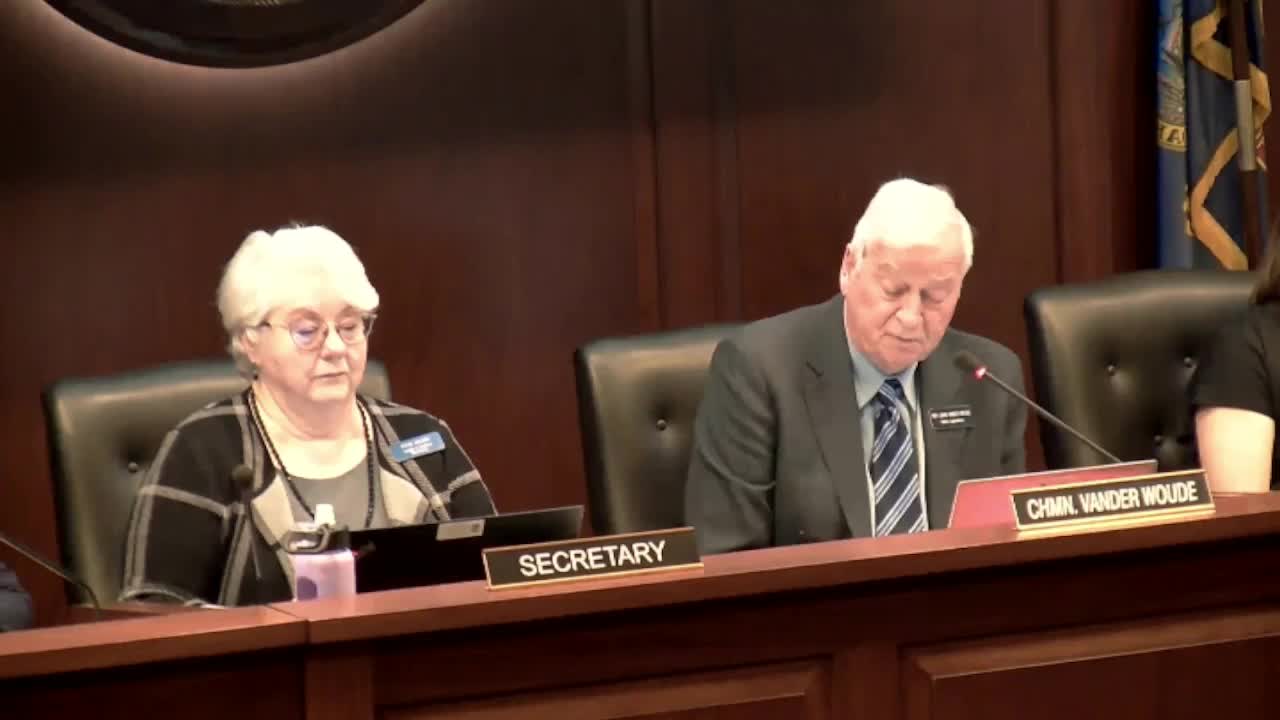
The House Health and Welfare Committee on Wednesday considered Senate Bill 1087, a bill that would require health-care providers to furnish one free copy of a patient’s medical records when needed to support a documented claim or appeal under the Social Security Act. After debate and testimony, two roll-call votes on competing motions each ended in 6-6 ties; committee staff announced the bill will be held in committee.
Senate Bill 1087, as described by Representative Josh Wheeler (R., District 35), would require providers to deliver one free copy of a patient’s medical records — including physical or mental health records — where the records are needed for a documented Social Security disability claim. The measure includes an exemption for smaller, independently owned providers with fewer than 50 employees that do not contract with third‑party record vendors, sets a 30‑day timeline for fulfilling requests, and asks providers to prioritize electronic delivery when possible.
“That is going to remove some bureaucratic barriers for Idahoans navigating the Social Security system,” Representative Wheeler said, urging the committee to send the bill to the House floor with a due‑pass recommendation. Senator Doug Ricks (R., District 34), who has carried similar measures in the Senate, described the bill as a narrowed, multi‑year effort intended to address high charges tied to third‑party record vendors.
Proponents and opponents described different practical problems. Kate Haas of Kestrel West testified for the Alliance for Health Information Operations and Standards (AHEOS), a trade association of third‑party record vendors. Haas said AHEOS does not oppose the current, narrowed version of the bill and appreciated language clarifying the specific subset of cases that would receive the free copy.
“Under federal law, a patient can get their own records. That’s not in dispute,” Haas told the committee, adding that the bill’s change is aimed at requests made on a patient’s behalf (for example by attorneys) that are now charged by vendors.
Opponents warned the mandate could impose hidden costs on providers. Former Representative Greg Furch, testifying as a private provider, said software, postage and labor costs are rising and that requiring a free copy from private entities risks increasing other charges. “If we’re capping services in a market like that, I do not think that’s appropriate,” he said.
Committee members also described real‑world cases in which attorneys or advocates request complete records on behalf of claimants. Representative McCann, who moved that the committee send the bill to the floor with a due‑pass recommendation, said attorneys often need full, aggregated records to represent clients in an often lengthy Social Security process. Representative Egbert noted that individuals can withhold parts of their own records (for example, doctor notes), which can make third‑party requests necessary.
Committee votes were closely divided. A substitute motion to hold the bill in committee (moved on the floor of the committee) resulted in this roll call: Chairman Van de Waade — No; Representative Redmond — Yes; Representative Wheeler — No; Representative Weiswinger — Yes; Representative Bergoyne — Yes; Representative Kaler — Yes; Representative Furman — No; Representative Leavitt — Yes; Representative McCann — No; Representative Rasor — Yes; Representative Rubell — No; Representative Egbert — No. The clerk announced, “Roll call shows 6 ayes, 6 nays, 3 absent. Motion has failed on a tie vote.”
A subsequent roll call on the motion to send the bill to the floor with a due‑pass recommendation also tied (6‑6): Chairman Van de Waade — Aye; Representative Redmond — No; Representative Wheeler — Yes; Representative Beissinger — No; Representative Burgoyne — No; Representative Kaler — No; Representative Furman — Yes; Representative Leavitt — No; Representative McCann — Yes; Representative Rasor — No; Representative Rubel — Yes; Representative Egbert — Yes. The clerk announced the motion failed. Committee staff then stated that Senate Bill 1087 “as amended will be held in committee.”
Supporters highlighted specific price examples and administrative charges tied to third‑party vendors: witnesses and sponsors cited an example charging $1.24 per page, an 1,196‑page printout and instances of duplicated pages in vendor PDFs. Representative Wheeler told the committee the measure could reduce costs by about $1,624.55 per patient in the situations described.
The measure’s proponents said the bill targets exploitative fees charged to disability applicants and their representatives; opponents said it steps into private‑sector pricing and may shift costs elsewhere in the health system.
The committee record shows further discussion about who typically requests records (often attorneys in disability cases), whether patients can request and transfer records themselves and how the exemption for smaller providers (fewer than 50 employees) was negotiated as a compromise.
The committee received testimony from trade association representatives and a former legislator; several committee members asked procedural and policy questions. With the tie votes recorded, the committee did not advance the bill to the House floor.
Votes at a glance: Two roll‑call motions on SB 1087 failed on 6‑6 ties; committee staff announced the bill will be held in committee.
What’s next: Because the committee did not adopt a due‑pass recommendation, SB 1087 will remain in House Health and Welfare Committee for further consideration.