Get Full Government Meeting Transcripts, Videos, & Alerts Forever!
Get email alerts on the Luma It Modernization topic
No spam. Unsubscribe anytime.
State controller asks for $15.2M to bring LUMA on‑budget; warns cuts would halve staff and slow payroll/reports
Summary
Controller Brandon Wolf told JFAC the Business Information Infrastructure Fund that paid for LUMA implementation expires June 30 and asked the committee to move sustainment costs onto the controller's budget for FY2026. He said the request funds staff and infrastructure needed to keep payroll and financial reporting functioning.
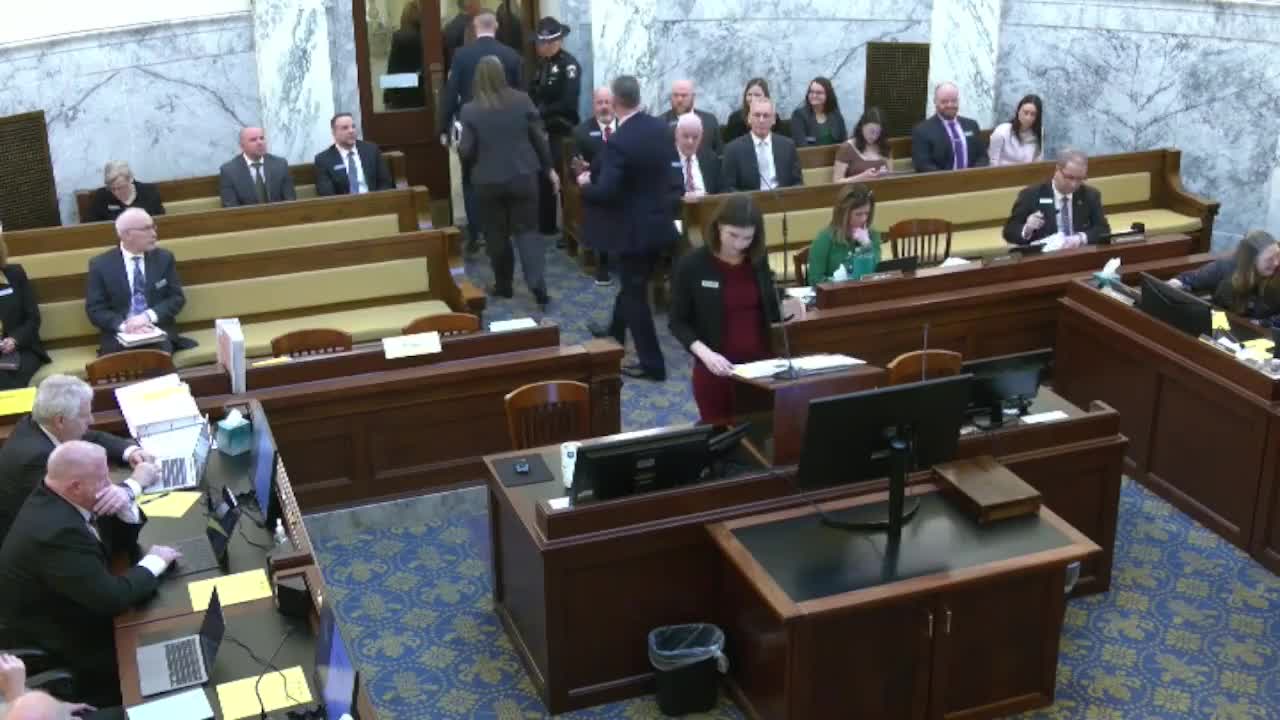
State Controller Brandon Wolf told the Joint Finance‑Appropriations Committee on Feb. 17 that the state's enterprise resource system, LUMA, requires funding to move from a temporary implementation fund onto the controller's ongoing budget and warned that failure to fund the request would sharply reduce staff and jeopardize timely payroll and financial reporting.
Frances Lippett, the legislative analyst, told the committee that the controller's office requested $15,200,000 in FY2026 to bring LUMA sustainment onto the office appropriation. Lippett said the request includes 7 full‑time positions and $2,159,900 in personnel costs, $800,000 for LUMA infrastructure and overhead in the computer service center, and additional positions to support shared services and agency reporting. She said bringing LUMA on‑budget will increase the state's general‑fund cost and that the Governor recommended the requested enhancements.
Controller Brandon Wolf said the Business Information Infrastructure Fund (BIF), which has paid for LUMA implementation to date, expires on June 30. He told JFAC that the controller's office currently employs about 47 people working on LUMA and that "the 13 that we asked for ... those were to be paid through the BIF process." Wolf told the committee, "if we did not have the funding, then we would almost cut the LUMA team in half," adding that such a reduction would jeopardize core operations including payroll processing and the state's financial close.
Wolf and committee members discussed operational impacts the transition has already caused. Representative Orrin asked about delayed audits; Wolf said the office had been about eight weeks late in completing the financial close for the first time under LUMA and that improving timeliness of agency reporting and audits was a priority. He and multiple legislators emphasized the need for continued training, documentation and change‑management support for agency fiscal staff.
The analyst's breakdown of the request included roughly $9,856,000 as the general‑fund portion of bringing LUMA on budget and $5,500,000 in dedicated fund appropriation for the computer service center to reflect where infrastructure costs are incurred and billed to agencies. Lippett said the request also funds 2 financial specialists to build shared services for smaller agencies and a communications manager for transparency programs such as Transparent Idaho and Town Hall Idaho.
Wolf defended continuing the LUMA implementation and sustainment work, saying "the system is functioning. It is working," and argued the state was "firmly on the right path forward" despite implementation challenges. He urged continued legislative support and said his office would share lessons learned from the LUMA rollout to inform future IT procurement and implementation.