Get Full Government Meeting Transcripts, Videos, & Alerts Forever!
Get email alerts on the Permanent Building Fund topic
No spam. Unsubscribe anytime.
Permanent Building Fund: committee hears $1.9B in active projects, FY2026 recommendation of $122.9M
Summary
Legislative analysts and the Division of Public Works told JFAC the state's active public works portfolio totals about $1.9 billion; the FY2026 permanent building fund recommendation totals $122,861,900 and includes projects for higher education, public safety and military readiness.
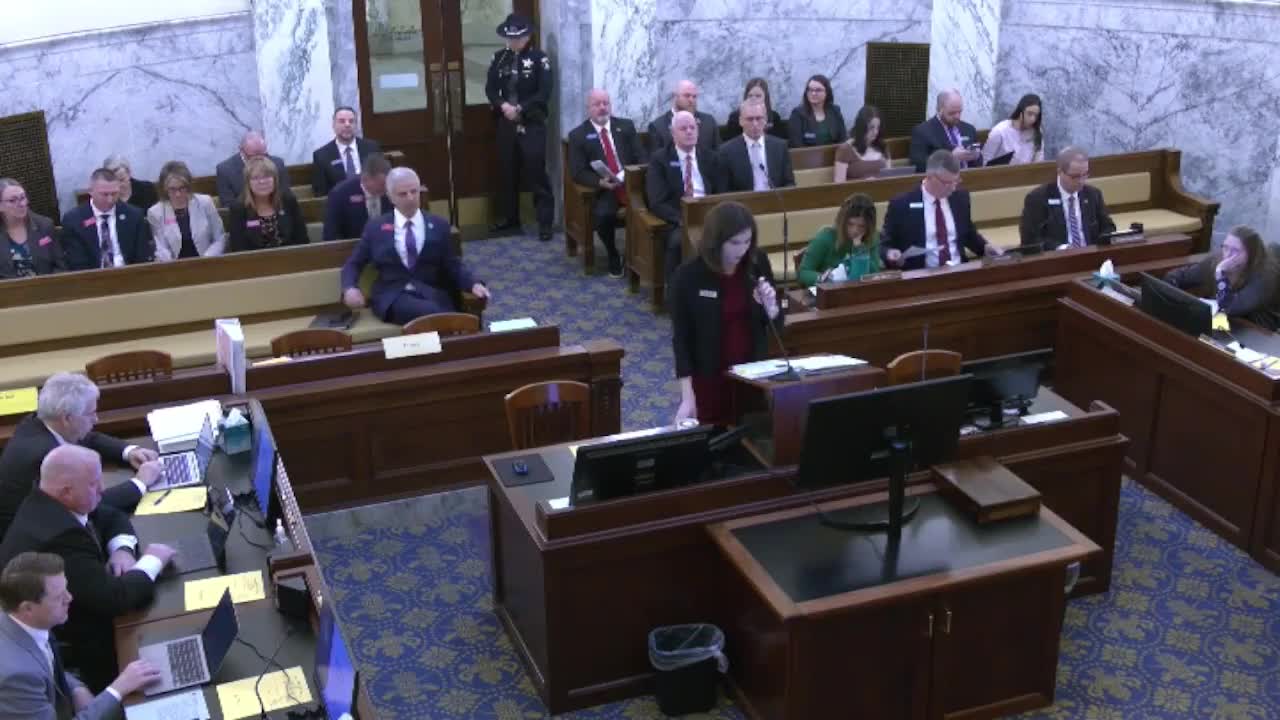
The Joint Finance‑Appropriations Committee heard Feb. 17 that Idaho has roughly $1.9 billion in active public‑works projects and that the Division of Public Works' FY2026 recommendation from the Permanent Building Fund totals $122,861,900.
Frances Lippett, legislative budget analyst, told the committee that the "total value of active public works projects is 1,900,000,000.0," with capital projects accounting for about $1.4 billion of that total and 42% of capital project funding already committed. She said the division typically expends $50–70 million of an appropriation in the first year and that large capital projects are multi‑year efforts.
Dale Reynolds, administrator for the Division of Public Works, described recent and planned work at the Chinden Campus and elsewhere. He told the committee the division has completed about $70 million in work at Chinden, has $30 million in progress, and estimates another $145–160 million in deferred‑maintenance work and upgrades ahead of additional building acquisitions. Reynolds said the campus is "for the most part" fully occupied and that Building 3 remains vacant while the division seeks tenants.
The FY2026 recommended capital and maintenance items discussed by Lippett and DPW staff include:
- $6,500,000 to expand Department of Lands Ponderosa office (adding restroom/shower facilities, increased security and space for a 20‑person hand crew); - $5,560,000 for utilities connections to support a future Idaho National Guard readiness center in Bonneville County (projected to support up to 350 personnel at peak occupancy); - $5,525,000 for Idaho State Police District 2 (Lewiston) to add land purchase and new construction after attempts to acquire an existing building were unsuccessful; - $2,500,000 to add lab space at Boise State University's Micron Center for Materials Research (to build out remaining shelled lab space); - $14,000,000 toward a life sciences complex at Idaho State University; Lippett said the total project is estimated at $127,770,000 and would include $35,770,000 in agency funds and $78,000,000 in bonding; and - $8,000,000 for a joint military science and veterans assistance center at the University of Idaho.
Lippett said the FY2026 recommendation also restores $12,500,000 of an appropriation that had been repurposed in FY2025 and recommends $68,208,800 for alterations and repairs, building maintenance, accessibility projects and capitol mall/Chinden Campus facilities maintenance.
Committee members pressed the division on timing and project execution. Representative Miller asked about project lifespans; Lippett estimated projects typically take about two to four years from appropriation to completion. Administrator Reynolds said timeframes vary widely by delivery method and project scale and noted that the women's prison project (cited as an example) will take about 2½ years once construction begins.
Senators and representatives also raised concerns about projects that have been inactive for multiple years. Co‑Chair Herrmann referenced budget language added last year requiring reporting and noting that funds for projects without a "shovel in the ground" within four years are subject to reappropriation; Lippett said she would provide the committee with a list of projects that have not met execution timelines. Representative Pesky asked whether geography factors into funding decisions; Administrator Reynolds said project recommendations are based on agency need and the Permanent Building Fund advisory process rather than geographic distribution.
Kelly Berard, deputy administrator with the division, described the Ponderosa office expansion as driven in part by staff safety concerns at an entrance that currently lacks separation between public visitors and staff; Berard said the proposed project would increase security and improve circulation.
Several committee members asked about construction sector pressures, cost escalation and labor shortages. Reynolds said cost escalation for some materials and labor has been a challenge and that some projects may be better deferred if escalation makes them economically impractical, although projects under contract must proceed.
Lippett and DPW staff referenced a November capital budget report available to committee members on SharePoint that contains project‑level status information, including appropriated amounts, committed funds and remaining balances. Committee staff requested additional lists and status reports to aid oversight of project execution and potential reappropriation decisions.