Get Full Government Meeting Transcripts, Videos, & Alerts Forever!
Get email alerts on the Child Welfare topic
No spam. Unsubscribe anytime.
Idaho panel hears Department of Health and Welfare plan to add prevention staff, recruit foster parents to cut costly congregate care use
Summary
Department of Health and Welfare officials told the Joint Finance and Appropriations Committee that a plan to add prevention specialists and clinicians aims to reduce placements in high-cost congregate care; the department requested a $14.1 million supplemental and multiple new full‑time positions to implement the strategy.
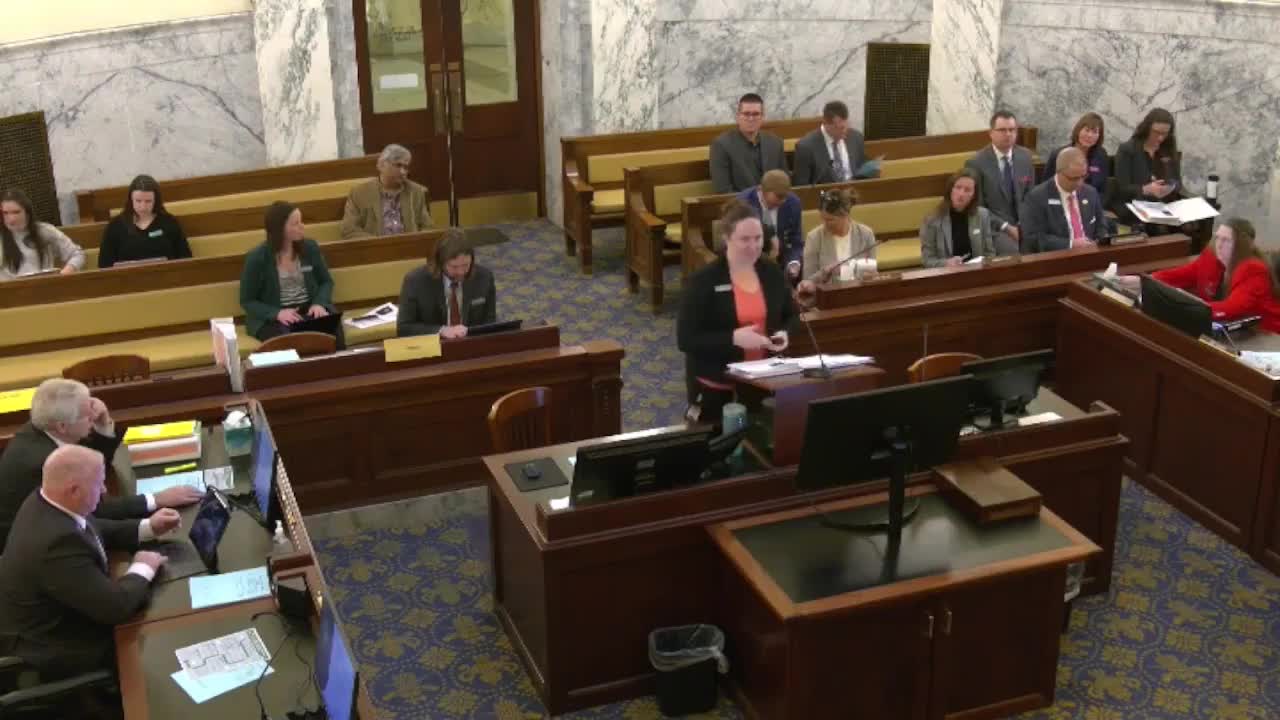
The Joint Finance and Appropriations Committee on Feb. 20 heard the Department of Health and Welfare’s request for new staff and one-time funding aimed at reducing the state’s reliance on expensive congregate care for children in state custody.
Agency director Alex Adams and legislative staff said the department is proposing 36 prevention specialist positions, additional clinical and placement staff, and a $14.1 million supplemental tied primarily to foster care population forecast adjustments.
Why it matters: Committee members were told the state spends far more when children must be placed outside homes in congregate care. Director Alex Adams said, “If a child is removed from their home and placed in foster care, it's $16 a day. If I don't have a foster bed available to them, congregate care is $380 a day.” The department told lawmakers it intends to increase prevention services and recruit more foster families so fewer children require congregate placements.
Adams and budget analyst Alex Williamson placed the budget requests in context. Williamson said the division — now retitled Youth Safety and Permanency — is seeking a mix of ongoing and one-time funds and is asking to be exempted from last year’s transfer restrictions (citing 67-35-11) so it can move funds between expense classes as needed. Williamson also reported 434.8 authorized FTE for child welfare and 45.8 vacancies as of Feb. 10, with roughly 25 of those positions in interview status and nine posted.
What the department requested and why: The department outlined these primary items: - Prevention specialist team: 36 new FTE to expand a statewide prevention team, bringing prevention specialists from 14 to about 50; the package is meant to keep more children safely at home instead of entering foster care. - Youth safety and permanency staff: agency requested 12 positions (governor recommended 9) including clinicians for needs assessments and family-search workers to identify kin placements; the request and recommendation both include $120,000 for a family-find tool. - Foster program clinical staff: agency requested 15 clinicians (governor recommended 10) to support foster families caring for children with complex emotional and behavioral needs; the package also includes a proposed monthly maintenance-rate increase for foster families (about 5% on average) and $400,000 one‑time to update the child-welfare information system (Ensuring Safety and Permanency in Idaho, “SP system”). - Licensing and case management: 14 FTP requested for foster program licensing staff to accelerate the licensing process (agency reported an average licensing time of ~80 days with 19 licensing staff averaging caseloads of 59 families); the governor recommended 3 positions for licensing. The division seeks to reduce average caseloads for in‑home case management workers from 32 to 26. - Supplemental: Williamson identified a FY2025 supplemental request of $14.1 million tied to foster care population forecast adjustments, driven largely by congregate care cost increases and higher needs among youth (mental‑health and substance‑use complexities) and shortages of foster families able to care for children with complex needs.
Department rationale and projected payoff: Adams described a “flywheel” strategy — invest upfront in prevention and foster‑family capacity to lower congregate placements and overall costs later. He said the state has increased foster‑bed availability from 74 beds per 100 children when he started to 94 per 100 today, which reduced emergency placements in short‑term rentals and Airbnbs. He warned that, because congregate-care beds are limited nationally, states often compete for available beds and prices can spike.
Committee questions and discussion: Lawmakers pressed for program details and implementation timelines. Deputy Director Monte Pro described prevention work as intensive, weekly in‑home visits at the outset, tailored assessments and court‑reviewed treatment plans, and brokering of services such as substance‑use treatment or counseling. Representative Tanner and others praised the prevention emphasis; Representative Furness and others emphasized faith‑based recruitment as a source of potential foster families. Representative Handy raised the related issue that incarceration of caregivers accounted for about 16 percent of removal reasons in 2024 and asked whether co‑located programs for incarcerated parents and children had been considered; Adams said the department would continue the dialogue.
Limits and risks: Committee members were reminded that many child‑welfare costs are entitlement‑driven by court commitments; Adams noted that the department’s supplemental requests reflect costs the state already is incurring because the courts commit children and the department must provide care. Williamson also pointed out that last year’s maintenance bill included language limiting transfers of personnel and trustee/benefit payments, and the department requested an exemption to allow transfers under 67‑35‑11.
Ending: Lawmakers requested follow‑up materials (heat maps, handouts, and staffing reports are in the committee SharePoint). Adams and his team said they will pursue recruitment and rapid hiring if the Legislature authorizes positions; the department also said it will report back on the results of the prevention and foster‑recruitment efforts.