Get Full Government Meeting Transcripts, Videos, & Alerts Forever!
Get email alerts on the K12 Budget Formula topic
No spam. Unsubscribe anytime.
LSO presents K‑12 budget overview: attendance, support units and funding mechanics explained
Summary
Legislative Services Office deputy Jared Tatro briefed the House Committee on Education on enrollment vs. average daily attendance, the support‑unit funding system, major funds (general, dedicated, federal), and pending enhancement proposals including a potential weighted student formula and transportation rewrite.
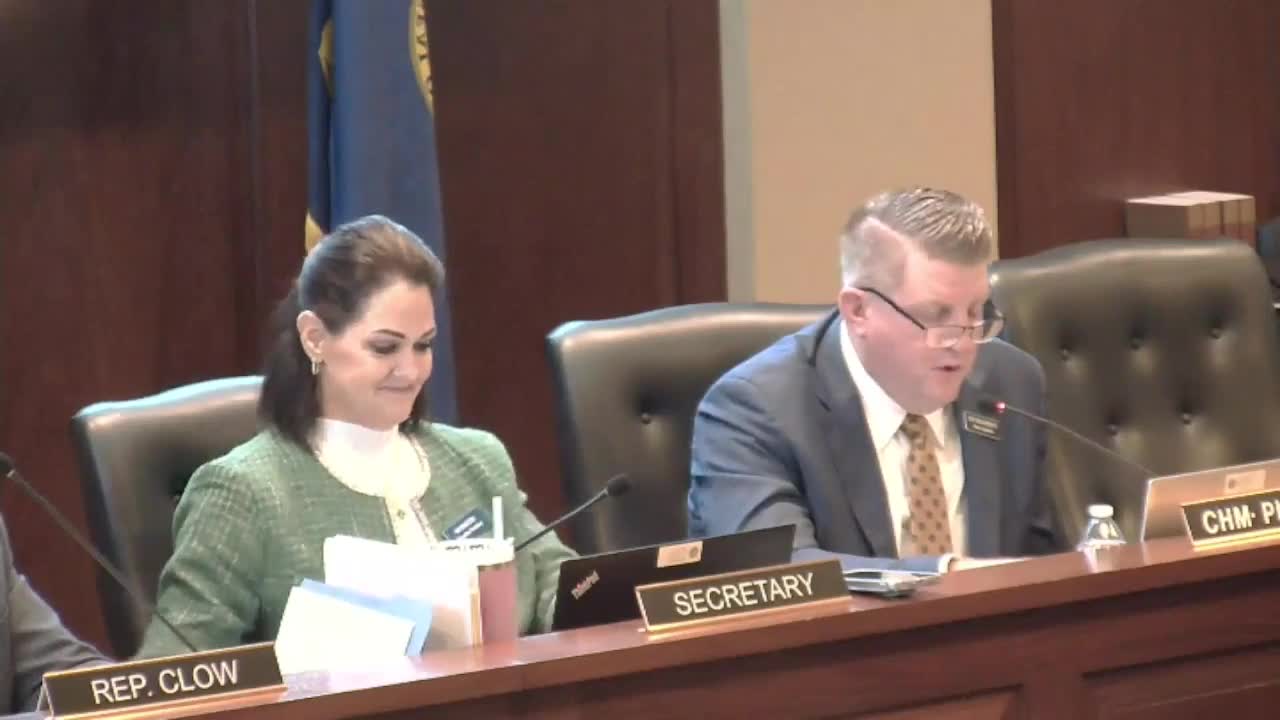
Jared Tatro, deputy division manager for the Legislative Services Office's Budget and Policy Analysis Division, provided the House Committee on Education an overview of K‑12 funding mechanics and current budget issues on Feb. 13.
Tatro told members the state uses average daily attendance (ADA) and support units—statutory constructs that translate attendance into funding—to allocate most public school dollars. He said midterm average daily attendance for February payments was roughly 295,400 (about 94% of estimated enrollment of 314,100) and that support‑unit counts and the divisor tables determine how many classroom equivalents the state funds. "Support units are how public schools are funded today," he said, and described a support unit as roughly the equivalent of a classroom (about 19 students on average statewide).
Tatro walked the committee through several statutory references and budget mechanics. He noted that funding must have a statutory vehicle to reach districts (for example via Title 33, Chapter 10 formulas or appropriation language) and that one‑time federal funds such as ARPA have been tapering out and will be removed from base calculations after they expire. He also explained the Public Education Stabilization Fund (PESF) is used to make distributions whole if enrollment/attendance calculations and appropriations diverge.
On program maintenance and enhancements, Tatro said JFAC had approved change‑in‑employee‑compensation and personnel benefit adjustments (including a 5% CEC for various staff categories) and listed the superintendent's top enhancement requests: a weighted student formula (which would require germane legislation), a pupil‑transportation formula rewrite, and a special‑needs student fund. He stressed those changes require policy decisions by the germane committees before JFAC can act.
Committee members asked questions about the difference between funding on enrollment and funding on attendance; Tatro said Idaho reverted to ADA after a temporary hybrid rule during COVID and that attendance remains the statutory standard because lawmakers have expressed concern that funding on enrollment might reduce incentives to ensure students attend. Members also asked about timing: Tatro said districts typically do not have final, signed budgets until the legislature completes action and local districts then use legislative action to plan staffing, though they can approximate earlier.
Members and staff discussed operational complexities such as the career‑ladder allocation and how the recent $6,359 per‑cell funding addition interacts with change‑in‑employee‑compensation language, creating implementation ambiguity unless the code is clarified. Tatro said draft cleanup legislation has been or will be printed to improve transparency and that committees should consider code fixes to clarify allocations.
Tatro closed by pointing members to resources—the legislative budget book, fiscal facts, a fiscal sourcebook and the legislature's budget information page—to help members track statutory distributions, appropriations and other technical budget details as bills move through the process.