Get Full Government Meeting Transcripts, Videos, & Alerts Forever!
Get email alerts on the Higher Education Budget topic
No spam. Unsubscribe anytime.
Legislative analyst outlines FY 2026 higher‑education budget requests and governor recommendations
Summary
Kevin Campbell of the Legislative Services Office gave the House Committee on Education an overview of FY 2026 higher‑education budgets, detailing base budgets, enhancement requests and governor recommendations across agricultural research, CTE, colleges and universities, community colleges, health education programs, special programs and the Office of the State Board of Education.
Kevin Campbell, senior budget and policy analyst with the Legislative Services Office, presented an overview of FY 2026 higher‑education budgets to the House Committee on Education on Feb. 12, walking members through base budgets, requests and governor recommendations across seven portfolio areas.
Campbell summarized key figures and requests: Agricultural Research and Extension has a FY 2026 base of $37,966,900 and requested a viticulture professor and maintenance funding for a new research dairy; Career Technical Education (CTE) has a base of $94,426,500 and requested additional instructors, federal spending authority and a business‑industry engagement manager; the colleges and universities combined base is $709,431,200 with a main request for operational capacity enhancements; community colleges requested enrollment workload adjustment funding (EWA) totaling $707,100; health education programs (including WWAMI and residency programs) have a base of $28,206,800 and submitted multiple requests for additional residency seats and an Idaho dental education seat increase; special programs have a base of $35,937,600 and include scholarships and a range of small program requests; and the Office of the State Board of Education (OSB) has a base of $55,800,000 and proposed a $15,000,000 one‑time grant program to incentivize workforce‑related infrastructure projects with private matches.
Campbell explained key budget mechanics, including the role of the enrollment workload adjustment (EWA), which redistributes funding based on enrollment formula outcomes and can cause institutions to gain or lose funding year to year. He noted that some line items—such as endowment distributions managed by the Endowment Fund Investment Board—derive from land and timber management rather than direct appropriations. He also stressed that full institutional operating budgets are more complex than appropriated lines because institutions have multiple revenue streams.
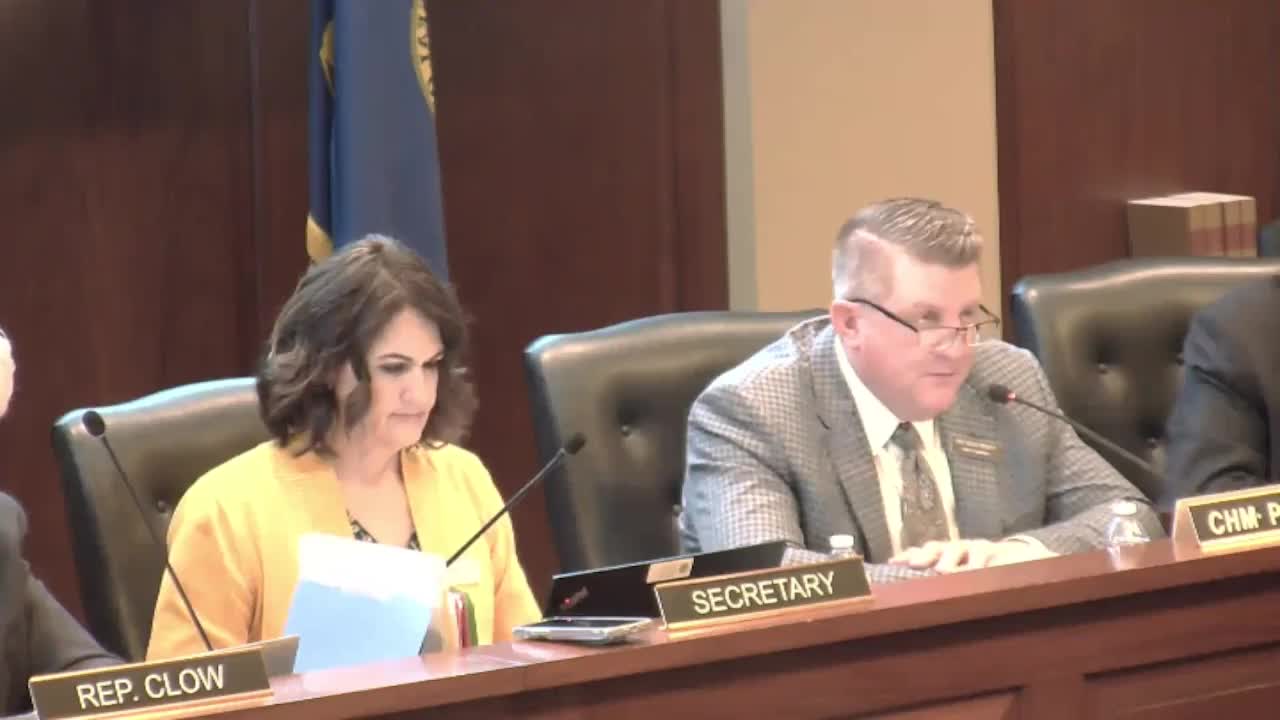
Committee members asked technical and policy questions. Representative Thais clarified that FTE counts in the budget book represent full‑time equivalents, not head counts. Representative Clow and others sought detail on the matching ratios in OSB’s proposed private‑match grant program; Campbell said the differing ratios (1:1 for larger universities, 1:2 for Lewis‑Clark and community colleges) reflect varying fundraising capacities. Representatives asked about clinical sites for medical education and residencies; Campbell and other members noted that limited clinical site capacity constrains growth in medical seats and residencies and that the state does not separately fund clinical practicum sites beyond institutional arrangements.
Campbell concluded by directing members to the legislative budget book and dashboards for detailed tables and historical data and offering to meet individually with members to walk through the material.
The committee thanked Campbell and adjourned.