Get Full Government Meeting Transcripts, Videos, & Alerts Forever!
Get email alerts on the Behavioral Health topic
No spam. Unsubscribe anytime.
JFAC approves multiple behavioral-health budget actions, adds federal grant spending and contingency language
Summary
The Joint Finance-Appropriations Committee approved a package of supplemental appropriations and fund shifts to support Idaho’s behavioral-health services, including $6,743,800 in federal grant spending authority for Idaho Behavioral Health Plan implementation and a $2.66 million general-fund addition for community civil-commitment costs.
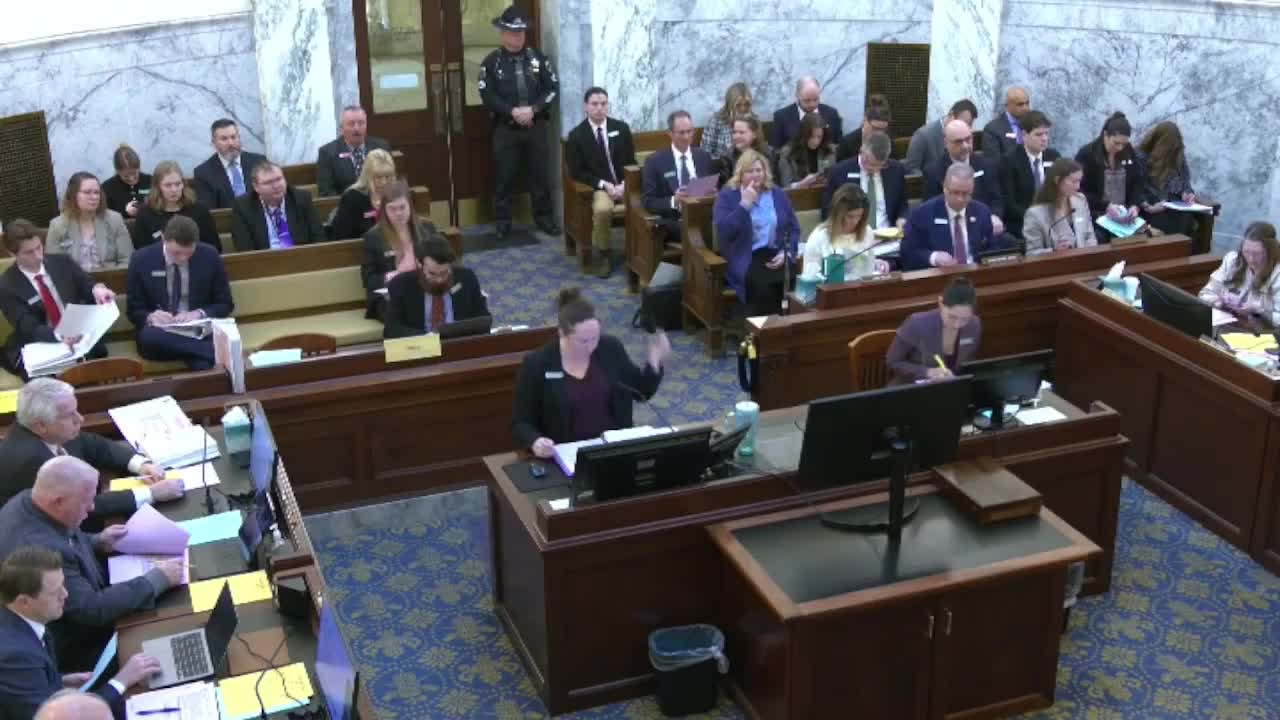
The Joint Finance-Appropriations Committee on Friday approved a set of supplemental and ongoing budget actions for behavioral-health programs covering mental-health services, psychiatric hospitalization and substance-abuse treatment.
The panel approved a one-time appropriation of $6,743,800 in Cooperative Welfare Federal Funds to support implementation of the Idaho Behavioral Health Plan (IBHP). It also approved a series of supplemental additions and fund shifts to cover civil-commitment and community hospitalization costs at State Hospital West and South, and a number of adjustments shifting costs between federal, dedicated and general funds to reflect changes in federal reimbursement and managed-care receipts.
Alex Williamson, budget and policy analyst with the Legislative Services Office, told the committee the package “all rolls up into 1 enhancement bill for behavioral health.” Williamson described three federal grants previously awarded to the state whose appropriations expired because of implementation delays; the committee restored spending authority to spend those federal grant dollars.
The committee also approved a one-time general-fund addition of $2,663,500 to the psychiatric hospitalization budget for civil-commitment expenditures in community hospitalization, reflecting higher-than-anticipated costs for mental holds and commitments, and recommended multiple forecast and fund-shift adjustments for State Hospital West and South that reduced federal authority while increasing dedicated and general funds where federal receipts reclassified as dedicated.
Separately, the Division of Substance Abuse Treatment and Prevention saw internal fund-source adjustments to move certain personnel and trustee/benefit costs between dedicated and federal accounts without changing the net budget impact.
Committee members approved language to exempt mental-health and psychiatric-hospitalization divisions from the usual transfer limitation in Idaho Code 67-3511 for specified trustee/benefit and personnel categories, and adopted language directing agencies to report if federal funding were revoked or reduced and to limit state match exposure.
Votes on individual pieces ranged from near-unanimous to split, but the package overall received enough votes in committee to move forward with a due-pass recommendation. The committee recorded recorded affirmative votes for the IBHP supplemental (15 ayes, 5 nays) and approved the psychiatric hospitalization civil-commitment supplemental (19 ayes, 1 nay) and other related items.
Why it matters: Appropriations and fund-shifting actions approved by JFAC determine how behavioral-health services can use federal grant dollars that were delayed during rollout, provide one-time relief for growing civil-commitment costs, and create a procedural exemption for limited internal transfers to allow program managers to align spending with service delivery.
Committee direction and next steps: The committee asked staff to coordinate reportbacks on implementation and to monitor any future reductions in federal funding. The language adopted requires agencies to report potential federal-fund reversions and clarifies the department’s authority to move appropriations between expense classes in the short term.
Quotes from the hearing: “This all rolls up into 1 enhancement bill for behavioral health,” Alex Williamson said while reviewing the packet. Representative Furniss moved the IBHP supplemental appropriation. Ending: The package will move forward to the next steps in the legislative process under a due-pass recommendation; agencies were asked to return with follow-up reporting on how the federal grant dollars are being spent and to notify the committee if federal receipts are reduced.