Get Full Government Meeting Transcripts, Videos, & Alerts Forever!
Get email alerts on the Dual Credit Advanced Opportunities topic
No spam. Unsubscribe anytime.
Committee backs bill to expand dual‑credit pathways, allow multiple college‑entrance attempts
Summary
House Bill 175 would let homeschooled students use community colleges to access Advanced Opportunities funds, allow students more than one college‑entrance exam attempt, and align private‑school technical language with public programs; the committee recommended the bill be sent to the floor with a due‑pass vote.
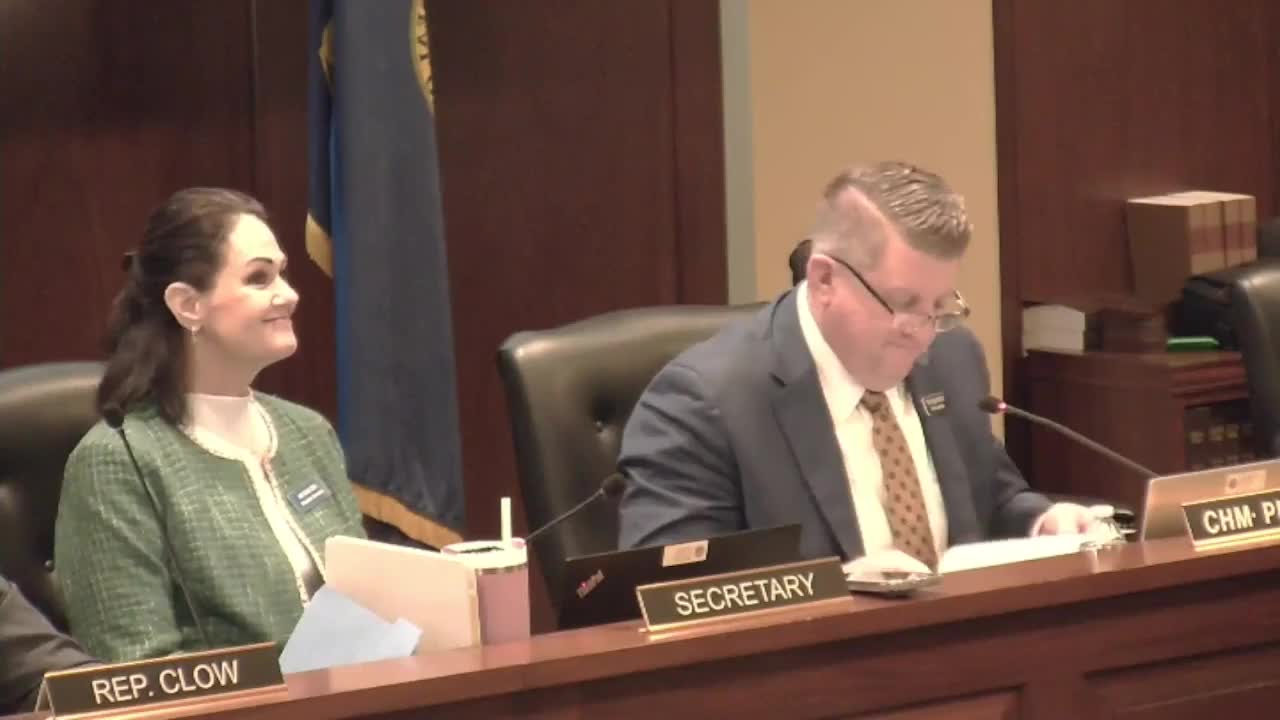
The Idaho House Committee on Education voted Feb. 13 to send House Bill 175 to the full House with a "do pass" recommendation. The bill, sponsored by Representative Brent (Kevin) Horman (presented in the transcript as "Representative Horman"), clarifies the state's Advanced Opportunities program to give families an alternate pathway for dual‑credit course access and makes several technical alignments requested by the State Department of Education.
Horman told the committee HB 175 responds to families who have had difficulty working through a local district to access dual credit. Under the bill, homeschooled students encountering such problems could work directly with a community college for dual‑credit coursework and use Advanced Opportunities funds. The sponsor said he worked with College of Western Idaho (CWI) on the language and that institutions reviewed it with no requested changes.
The bill also proposes allowing students to take college‑entrance exams more than once and aligns wording in statute so private schools have the same default treatment for course failures as public districts. Horman said the Department asked for changes to replace the phrase "tuition and fees" with "educational costs" to match Opportunity Scholarship language and asked that community college out‑of‑district tuition be covered for private school students as it is for public school students.
Committee members broadly supported the bill's goals but raised technical and fiscal questions. Representative Mathias said he would not support the motion as presented because lines on page 5 (college entrance exams) could conflate "college entrance exams and preliminary college entrance exams" with postsecondary credit‑bearing exams; he called that a legal incongruity that should be amended. Representative Wisniewski asked how Advanced Opportunities funds pay any additional fees; the sponsor and later Legislative Services Office staff said funds come from each student's Advanced Opportunities account (an allotment described in testimony) and that a legislative line‑item and stabilization fund can respond to statewide funding needs.
Representative Ehart moved to send HB 175 to the floor with a "do pass" recommendation. The motion passed on a voice vote; Representative Mathias asked to be recorded as voting "nay." The chair announced the bill will go to the floor and the committee's recommendation.
Sponsor and other members urged the bill be printed and the public given the opportunity to comment; the sponsor also described additional technical corrections requested by State Department staff relating to counseling after students earn credits, private‑school tuition coverage, and aligning public/private language on course failure definitions.
The bill will proceed to the House with a committee recommendation; committee members said they expect technical amendments may be offered to address Mathias' stated legal concern about exam language and other drafting questions raised in committee.