Get Full Government Meeting Transcripts, Videos, & Alerts Forever!
Get email alerts on the Mobile Device Policy topic
No spam. Unsubscribe anytime.
Committee introduces RS 32‑321 to create voluntary mobile‑device policy grant fund for schools
Summary
The House Committee on Education introduced RS 32‑321, a proposal to create a voluntary mobile‑device policy fund offering $1,500 grants to schools that adopt evidence‑based "bell‑to‑bell" mobile device policies; the RS was introduced and sent to second reading with recorded opposition noted by several members.
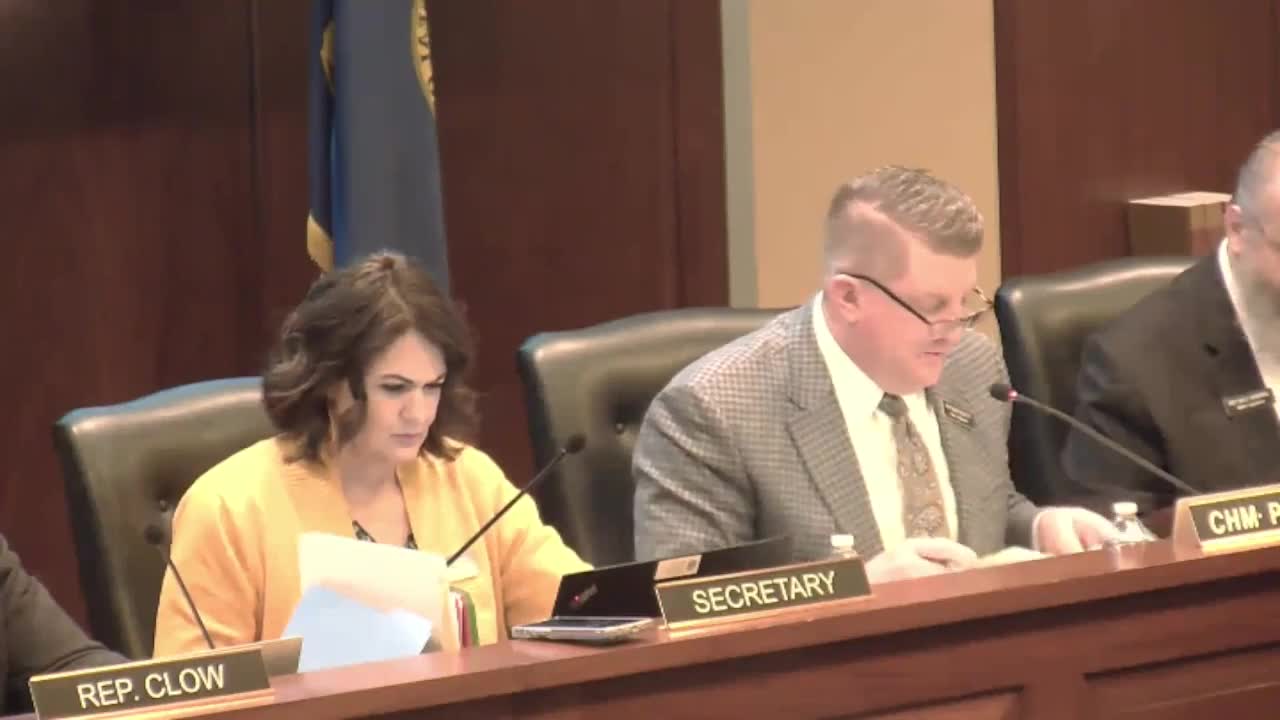
Representative Chris Mathias told the House Committee on Education Feb. 12 that RS 32‑321 would preserve local control of mobile device policy while creating a small state fund to help districts implement so‑called bell‑to‑bell policies that restrict student use of personal mobile devices during instructional time.
Mathias said the RS does not require school districts to adopt a particular policy. Instead, it would create a School Mobile Device Policy Fund that makes one‑time grants—proposed at $1,500 per school—to districts that voluntarily implement an evidence‑based bell‑to‑bell policy. The $1,500 figure, Mathias said, was based on a large district’s reported cost for a comparable policy. Committee materials estimate a total appropriation of $285,000 by multiplying 115 school districts and 77 charter schools by $1,500; Mathias said the $285,000 figure was conservative because many districts already adopted similar policies or used grants from a governor’s executive order.
The RS also would require the State Board of Education to use existing data systems to assess whether districts that used the grants showed measurable differences after implementation; the board agreed to prepare and submit a report summarizing the data to JFAC, the House Education Committee and the Senate Education Committee, Mathias said.
Committee members raised implementation questions. Representative Clow asked whether the governor’s previously announced $5,000 grants remain available; Mathias said the $5,000 grants originated from federal COVID funds and might no longer be fully available. Representative Hawkins questioned the need to spend money to study harms from mobile devices; Mathias and others said the board’s assessment would be narrowly focused on whether the $1,500 investment achieved measurable effects and that it would use data the board already collects.
Representative Sauter moved to introduce RS 32‑321 and send it to second reading. The motion passed; the transcript records several members asking to be noted in opposition (Representative Mendyve, Representative Hawkins, Representative Visniewski and Representative Marvin were mentioned as opposed or noted). Mathias and multiple members said they would return with more detailed implementation information at later proceedings.