Get Full Government Meeting Transcripts, Videos, & Alerts Forever!
Get email alerts on the School Discipline Cellphones topic
No spam. Unsubscribe anytime.
House education committee introduces bill asking districts to adopt classroom cell‑phone restrictions
Summary
The House Committee on Education voted to introduce RS32063, a proposed rule that would require Idaho school districts to adopt written cell‑phone policies prohibiting wireless device use during classroom instruction while preserving broad local control.
The Idaho House Committee on Education voted to introduce RS32063 on Feb. 13, a one‑paragraph proposal that would require every school district to adopt a written policy that, at minimum, "prohibit[s] the use of wireless electronic communication devices in classrooms during periods of academic instruction." The proposal directs districts to have any confiscation procedures and return processes spelled out and to include the policy in district conduct manuals.
Sponsor Representative Jaren Crane, R‑Nampa, told the committee the draft is modeled on a South Carolina policy and is short by design so local school boards can tailor rules to each community. "Each district is gonna allow for local control, they're gonna get to decide what their policy looks like," Crane said, stressing exceptions such as medical needs and on‑call students who might need devices.
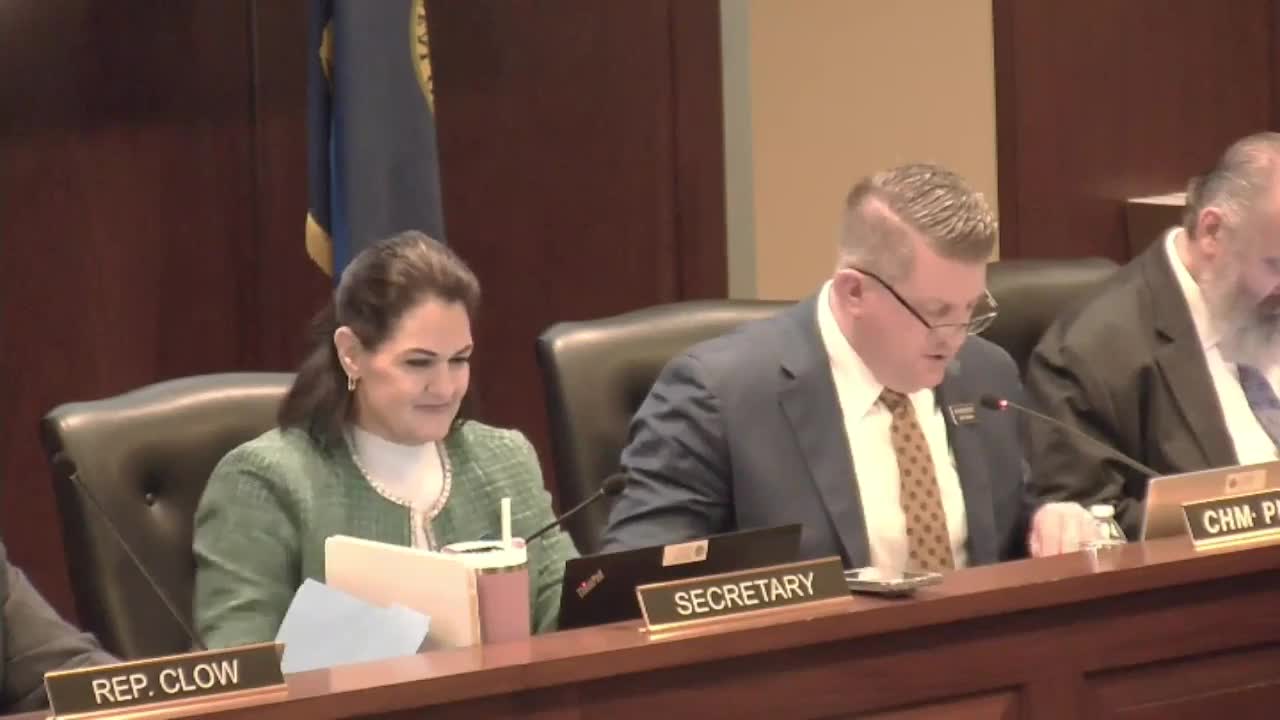
Committee members asked for clarifying language after several said the bill's phrasing—particularly the definition of covered devices and the requirement to "prohibit the use of wireless electronic communication devices"—could be read broadly enough to include district‑issued tablets or other devices. Representative Nelson warned a literal reading could be "so restrictive that we've basically said they can't have any electronic devices," and Representative Clow and Representative Hawkins asked whether the definition explicitly exempts devices provided by the district or used for Individualized Education Program (IEP) or Section 504 accommodations.
Crane responded that the measure intends to target cell phones as defined in the bill's device definition and to leave finer exemptions to local boards. Representative Green cited the bill's definition language, noting it "means any electronic device including but not limited to a telephone, personal digital assistant, paging device, text messaging device or other device with similar functions that can be used to wirelessly communicate with another person," and said that narrows the scope toward phones. Several members urged careful drafting before printing to avoid legal or operational confusion.
Representative Hawkins moved to introduce RS32063; the motion passed after a voice vote. Committee members who asked to be recorded as voting "nay" were Representative Plough, Representative Nelson and Representative Wisniewski. The committee chair and the majority voted to introduce the draft, which will be printed and made available for public comment and any future amendment.
The introduction does not change existing district authority; the bill directs districts to adopt and board‑approve written policies by Aug. 1 of the year specified in the draft and to include any confiscation/return procedures in those conduct manuals.
The committee did not take final action on policy text at the Feb. 13 meeting; members and the sponsor indicated they expect additional drafting clarifications—especially exemptions for medically necessary devices and district‑issued instructional tools—before a printed bill moves through a formal hearing.