Get Full Government Meeting Transcripts, Videos, & Alerts Forever!
Get email alerts on the School Safety topic
No spam. Unsubscribe anytime.
House committee introduces RS 32‑361 to clarify school safety and emergency‑operations rules
Summary
The Idaho House Committee on Education voted to introduce RS 32‑361, a replacement for language in House Bill 43, clarifying background checks, emergency operations plans and required training for school staff; the measure was sent to second reading with a due‑pass recommendation.
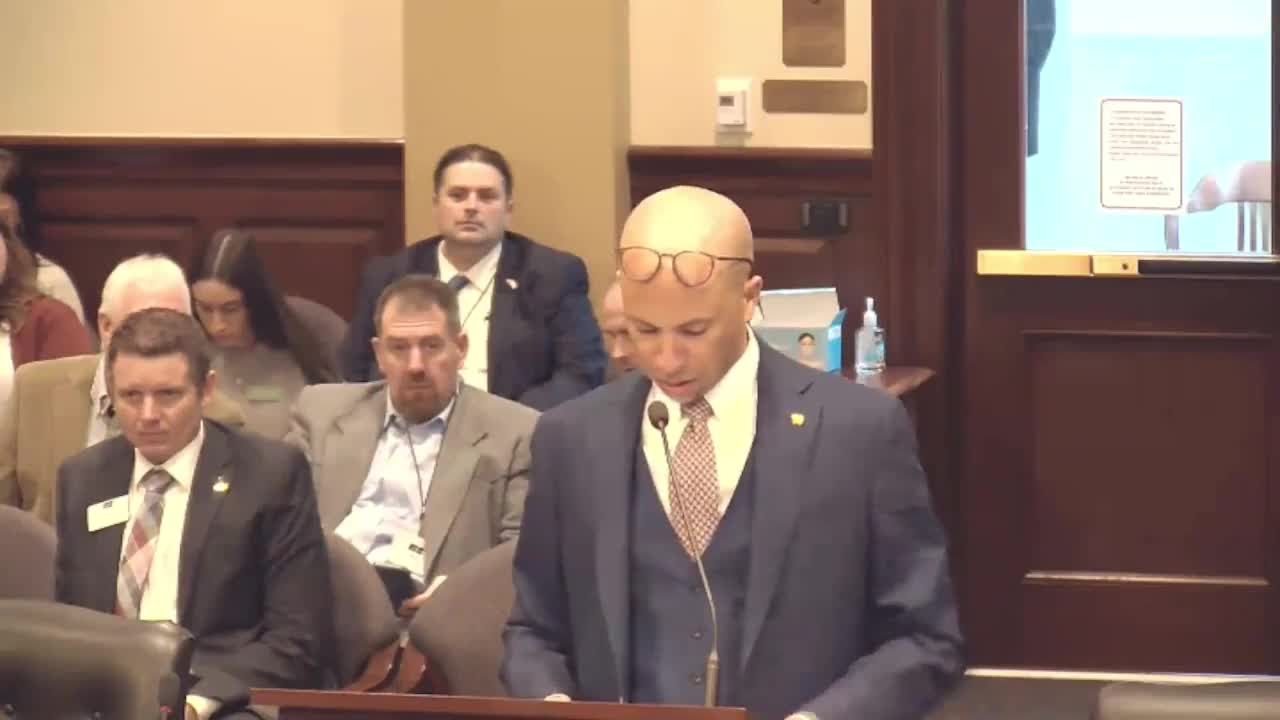
Representative Chris Mathias, R‑District 19, urged the House Committee on Education on Feb. 12 to introduce RS 32‑361 as a replacement for language in House Bill 43 to separate and clarify three school safety requirements: background checks for staff with unsupervised student contact, required emergency operations plans for each school, and initial and annual emergency‑operations training for district staff.
Mathias said the existing code attempted to do all three in one paragraph and caused confusion. He told the committee that earlier concerns about shielding plans and training from public records requests were resolved because Idaho Code already exempts records “related to critical infrastructure … when the disclosure is reasonably likely to jeopardize the safety of persons,” language he quoted during his remarks.
The measure would not add a new exemption but would reorganize current statutory obligations to make individual duties clearer, Mathias said. He asked that RS 32‑361 be introduced and sent to the second‑reading calendar with a due‑pass recommendation.
Committee members offered brief comments supporting the rework. Representative Harris thanked Mathias for revising and returning the proposal. Representative Garner moved to introduce RS 32‑361 and send it to the second‑reading calendar with a due‑pass recommendation. With no further discussion, the committee approved the motion by voice vote; no roll‑call tally was recorded in the transcript.
The committee also heard that earlier concerns about protecting emergency plans from public disclosure traced to an existing statutory exemption, a point Mathias cited as resolving questions raised in the bill’s prior hearing.