Get Full Government Meeting Transcripts, Videos, & Alerts Forever!
Get email alerts on the Religion In Schools topic
No spam. Unsubscribe anytime.
Committee introduces RS 31972C1, a bill to allow sequential Bible reading in classrooms with conscience protections
Summary
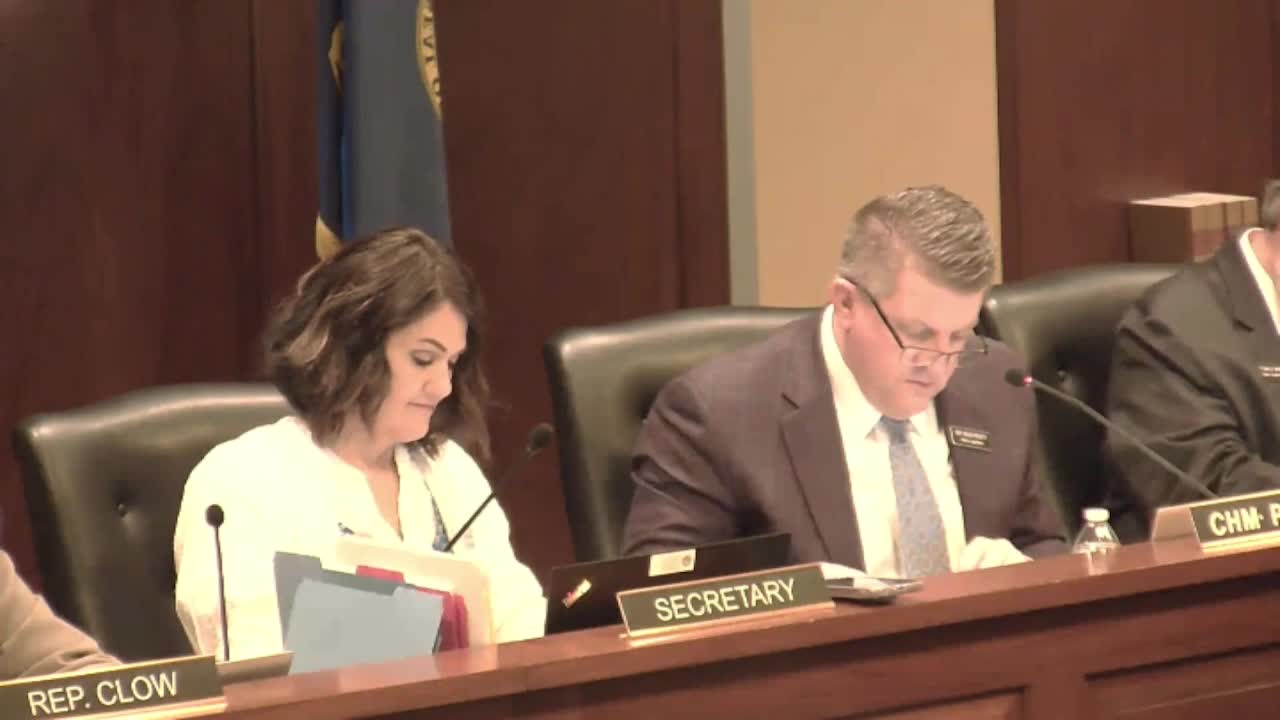
Representative Jordan Redmond sponsored RS 31972C1, the "Bible Reading Act," to authorize sequential, non‑instructional Bible readings in public school classrooms and to provide conscience accommodations; the committee voted to introduce the RS for a full bill hearing.
Representative Jordan Redmond presented RS 31972C1, described in the hearing as the "Bible Reading Act," which would create a statewide policy permitting teachers to read sequential passages of the Bible in classrooms "without instruction or comment," while requiring reasonable accommodations for teachers and students with conscientious objections.
Blaine Kinzotti, identified in the hearing as president of the Idaho Family Policy Center and a presenter for the RS, framed the proposal with historical context. Kinzotti said Idaho public schools historically permitted daily Bible readings and referenced a 1925 state statute and a 1926 Idaho attorney general opinion. He argued the U.S. Supreme Court’s 2022 Kennedy v. Bremerton decision changed the governing test from the Lemon test to a "history and tradition" standard and that, under that test, the RS would be constitutionally permissible.
The RS text, as described in the hearing, would include findings about historical practice, a policy provision to permit non‑instructional Bible readings, conscience protections for objecting teachers and students, and an enforcement mechanism limited to injunctive relief (no criminal or civil damages). Kinzotti emphasized that the RS, as drafted, would not create penalties and that alleged violations could be addressed by petitioning a court for injunctive relief.
Committee members asked about constitutional review and legal opinion. Committee staff said the attorney general's office is not issuing public opinions at this time. Several members voiced concerns about church‑state separation; Representative Nelson opposed the idea on principle, while others said they would vote to introduce so the public could weigh in. Representative Hawkins moved to introduce the RS; the motion carried and the RS was printed for a full hearing.