Get Full Government Meeting Transcripts, Videos, & Alerts Forever!
Get email alerts on the Ag Research Extension topic
No spam. Unsubscribe anytime.
University of Idaho agricultural research seeks staffing and maintenance funding; extension highlights digital‑literacy outreach
Summary
University of Idaho officials told the February 10 JFAC meeting they seek funds for a viticulture and small fruits faculty position and building maintenance, described robust extension contact numbers and noted federal ARPA and a pending FCC grant supporting digital literacy work in rural communities.
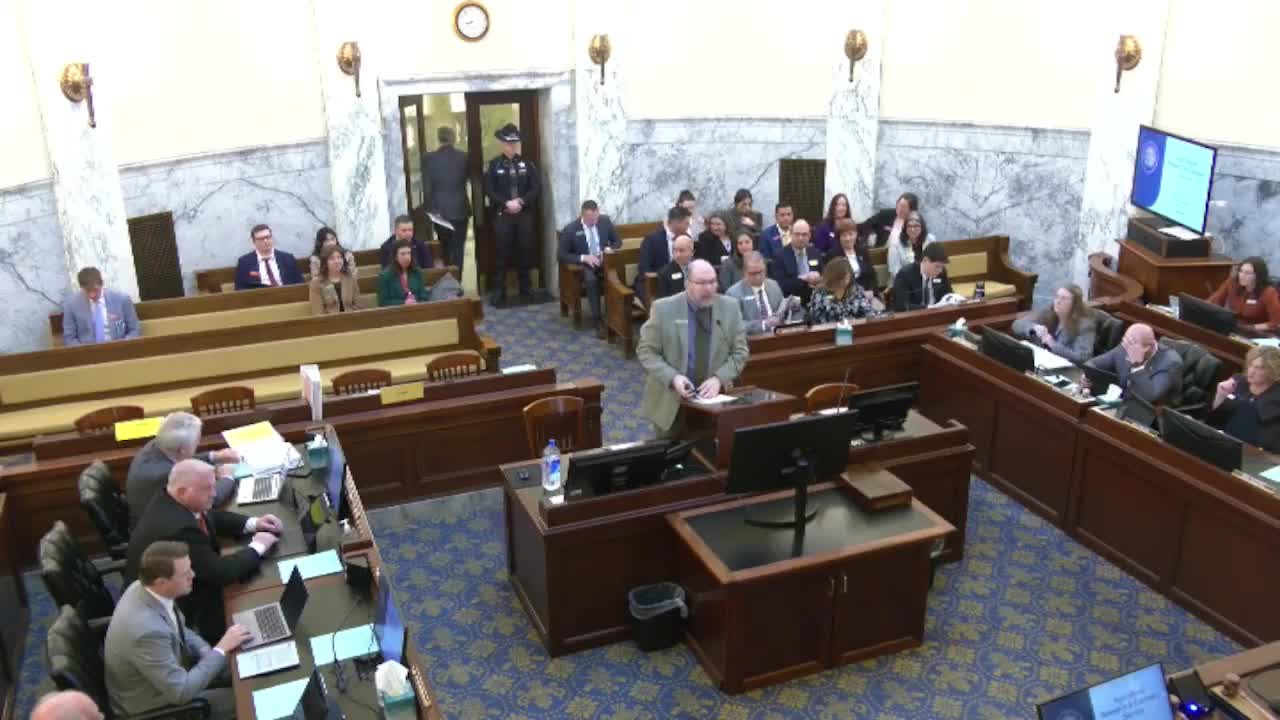
BOISE, Idaho — University of Idaho agricultural research and extension officials on Feb. 10 briefed the Joint Finance‑Appropriations Committee on the college’s budget, new faculty requests and statewide extension activities that include adult computer‑literacy programming for rural communities.
Kevin Campbell, a Legislative Services Office analyst, said the Agricultural Research and Extension Service (ARES) has a physical presence in 42 of Idaho’s 44 counties and operates 10 research and extension centers with access to roughly 14,000 acres of land for research. The service’s personnel total was listed in the presentation as 341.33 FTP and personnel expenses account for the majority of spending.
Michael Perella, dean of the College of Agricultural and Life Sciences at the University of Idaho, told the committee the college has used legislative investments to replace aging infrastructure and hire early‑ and mid‑career faculty. “Your investments have inspired many stakeholders to increase their support for our research and extension priorities,” Perella said, adding that the college leverages state funding to attract additional external grants and private support.
Requests and recent appropriations
- FY2026 requests: The service requested $157,900 ongoing from the general fund for a viticulture and small fruits research faculty position to support grape and small‑fruit production (disease prevention, water and pest management, post‑harvest storage). It also requested $250,100 for a portion of building maintenance costs at the Idaho Center for Agriculture, Food, and the Environment, a facility described as a collaboration with Idaho’s dairy industry.
- Recent funding history noted: FY2024 appropriations included funding for new faculty positions in animal and plant sciences and agricultural engineering; FY2025 included $232,000 for maintenance of a Parma research laboratory and ARPA funds of $142,000 for adult computer‑literacy work tied to broadband investments.
Extension outreach and digital‑literacy efforts
Perella and other college leaders told the committee extension staff reported more than 450,000 face‑to‑face contacts with Idahoans in the previous year and engagement with more than 75,000 youth through 4‑H. Perella said those outreach numbers translate to economic and social impact; he cited a summary figure the college uses suggesting participant savings in programming but said the committee could have additional breakdowns on request.
The college also applied for a federal FCC program; Perella said the proposal was among 24 awarded nationally and would bring $13,000,000 to the state if finalized, augmenting existing adult digital‑literacy programming. He described the FCC grant proposal as a statewide effort involving two‑year and four‑year schools and community partners.
Questions from lawmakers
- Nutrition and crop value: Representative Handy asked whether research is shifting from yield‑focused work to also study nutritional value. Perella said the college is expanding work on nutrition and human health and pointed to existing programs tied to dietetics and a National Science Foundation grant on women's health and nutrition.
- Outcomes and evaluation: Representative Miller asked about outcome measures for the adult computer‑literacy work. Perella said extension gathers participant feedback after courses and stated that last year’s programming produced substantial participant savings; he offered to provide more detailed breakdowns to the committee.
- Federal funding and ARPA follow‑up: Committee members discussed the challenge of programs that begin with federal one‑time funds and then face ongoing funding requests. Perella and staff said the college has pursued competitive external grants to sustain work and noted they would provide additional details on program continuity and outcomes.
No formal votes or motions were taken during the presentation.