Get Full Government Meeting Transcripts, Videos, & Alerts Forever!
Get email alerts on the Department Of Lands Budget Fire And Forest Programs topic
No spam. Unsubscribe anytime.
Department of Lands seeks staff, one‑time spending and larger fire fund transfers as wildfire costs rise
Summary
The Idaho Department of Lands told the Joint Finance‑Appropriations Committee it needs new staff, one‑time spending and larger fire‑suppression reserves as wildfire costs and reimbursement timing strain current balances.
The Idaho Department of Lands told the Joint Finance‑Appropriations Committee it needs new staffing and funding to manage growing wildfire costs, expand forest programs and sustain firefighting capacity.
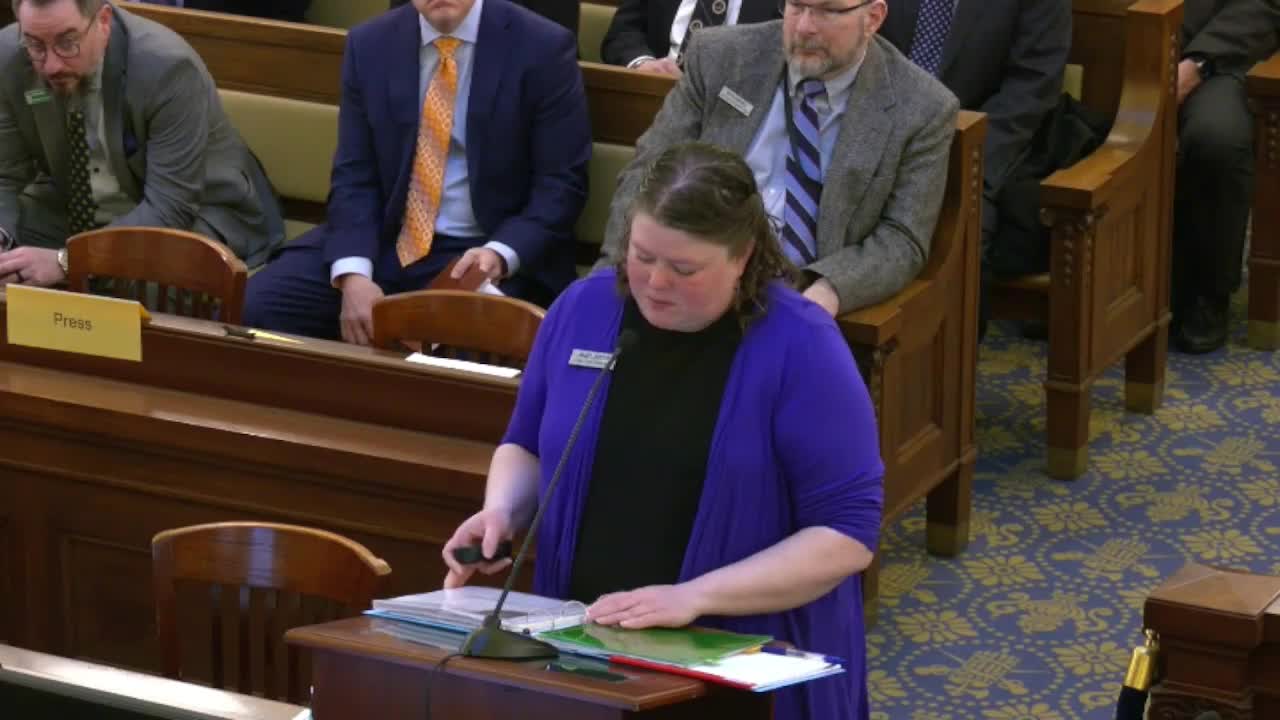
Janet Jessup of the Legislative Services Office presented the Department of Lands budget and described multiple dedicated funds that support department operations, including a continuously appropriated fire suppression deficiency fund used to respond to large wildfire spending. The governor recommended large transfers to the deficiency fund in the current and next year: a $60,000,000 supplemental transfer in the current year and a $40,000,000 transfer to the fire suppression deficiency fund for FY2026, as presented to the committee.
Dustin Miller, director of the Idaho Department of Lands, told members the department currently projects about $35,800,000 in the suppression account but noted outstanding invoices and cost shares that could reduce available funds. “If we do not receive the additional funds that's being asked for by the governor in our budget, that fund could drop down to about $13,000,000,” Miller said, describing a potential shortfall for FY2026 without supplemental transfers and reimbursements.
The department requested several new full‑time positions tied to fire program modernization and forest assessment work. Jessup summarized six personnel requests, including a fire emergency support program manager (ongoing request $124,700 and one‑time $59,700), a fire aviation section manager, a statewide forest assessment program manager, an assistant fire warden for the Ponderosa area, a fiscal financial specialist and a forest program position. Miller said these roles align with long‑term planning and the governor’s wildfire‑roundtable recommendations.
Timber Protective Associations (TPAs) were a separate focus. Jessup explained TPAs are quasi‑state entities responsible for fire protection on certain private forestlands; they are not state employees. The department and TPAs asked for a CEC (cost‑of‑compensation) adjustment for TPA employees; Jessup said the TPAs requested roughly $5,700,000 in enhancements (mostly one‑time) and that the governor recommended providing CEC parity by adding the equivalent 5% adjustment for TPA personnel. The governor’s recommendation included $1,000,000 in firefighter bonuses for Department of Lands employees; TPAs sought an additional $250,000 so both groups would receive bonuses.
Miller described the Good Neighbor Authority (GNA), a partnership that allows the state to conduct work on federal forest lands to increase the pace and scale of active management. He said the GNA has become largely self‑funded: about $40,000,000 has been generated to date through federal timber receipts associated with GNA work. Miller provided a breakdown of how GNA receipts have been used: roughly $5,000,000 for department personnel costs, about $5,000,000 for operating expenses, about $1,000,000 paid back to the Forest Service, and approximately $6,000,000 for restoration contracts; the balance funds planning and future sales.
Committee members asked for historical wildfire cost data and for more detail on timing of reimbursements. Jessup said LSO can provide historical fire‑suppression expenditures. Miller and staff described longstanding variability in annual suppression spending (from about $30,000,000 in quieter years to near $100,000,000 in severe years) and noted that reimbursements from federal partners can lag by multiple years. Miller also noted the department’s recent investment in an electronic fire business system to speed invoices and payments.
On abandoned mines, Miller said the abandoned mine lands workload remains large: the state must locate and, where necessary, close roughly 9,000 abandoned mine sites. Funding through the abandoned mine fund derives from a portion of the mine license tax and has not kept pace with the need, he said, which constrains grant availability.
Director Miller closed by thanking committee members and staff. The committee did not take final action on the department’s requests during the hearing.