Get Full Government Meeting Transcripts, Videos, & Alerts Forever!
Get email alerts on the Education Policy topic
No spam. Unsubscribe anytime.
Committee introduces RS 32392 on school‑attendance denials; four additional RSs approved for printing
Summary
The House Education Committee introduced Representative Sean Dyger's RS 32392, which tightens language allowing school boards to deny or refuse enrollment for dangerous students, and approved introduction/printing of four additional Research Statements (RSs) by roll call vote 8‑5.
BOISE — In an early agenda item on Feb. 14, the House Education Committee introduced RS 32392, a research statement presented by Representative Sean Dyger, R‑District 23, that revises statutory language to clarify when a school board may deny or decline enrollment for individuals judged to be dangerous.
Representative Dyger told the committee RS 32392 reorganizes existing language and narrows the standard from broadly "incorrigible" behavior to conduct "in the judgment of the board" that is "detrimental to the health and safety of other pupils" and captures situations where a student is withdrawn by parents before an expulsion process completes. The RS also adds a provision referring to students who have a conviction or adjudication under a specified criminal-section series (referenced by the sponsor as "section 25 to 5A") and preserves due‑process language allowing school‑board proceedings.
"If it's completed then it does go on their school record and the school does not have to accept them," Representative Sean Dyger said, arguing the bill would let schools receive transmitted information about completed adjudications. He emphasized the bill targets only serious felony‑level adjudications and uses the juvenile‑court term "adjudication."
Committee action: After brief questions from members about juvenile records and whether virtual charter programs would be covered, the committee voted to introduce RS 32392. The committee used a voice vote on the introduction and did not record a roll call for that RS.
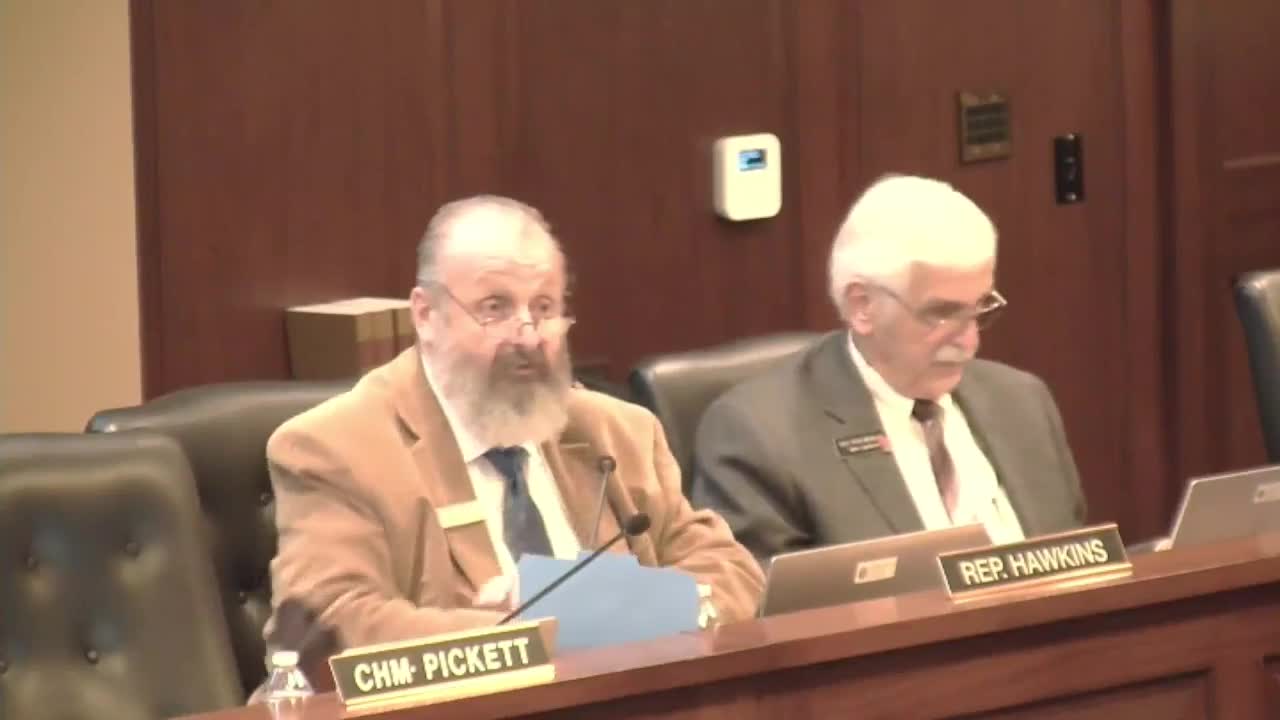
Other RS introductions: Later in the hearing the committee voted by roll call, 8‑5, to introduce and print four additional RSs listed in the day’s agenda (RS 32406, RS 32104, RS 32393 and RS 32409). Several members objected to mass introductions without separate hearings; one member, Representative Clow, said he would vote no on mass approvals. The clerk recorded the roll call and the chair announced the 8‑5 result.
What the RS means: RS (research statement) introduction and printing is a committee step that authorizes drafting and printing of bill text; it does not itself adopt policy or change law. RS 32392’s language as presented would be the basis for any subsequent bill text and any further hearings. The sponsor told the committee he would provide chapters and statutory citations (he referenced chapters and title provisions when asked) when the measure returns for a formal hearing.
Votes at a glance: RS 32392 — introduced by voice vote (no roll call recorded). RS 32406, RS 32104, RS 32393, RS 32409 — motion to introduce and print carried by roll‑call vote 8 yes, 5 no; outcome: introduced and printed.