Get Full Government Meeting Transcripts, Videos, & Alerts Forever!
Get email alerts on the K12 Funding topic
No spam. Unsubscribe anytime.
LSO outlines K‑12 funding basics: enrollment, support units, ARPA and potential formula changes
Summary
Jared Tatro of the Legislative Services Office gave the committee an overview of K‑12 funding mechanics — enrollment vs. average daily attendance, support units and divisors, major funds and one‑time ARPA dollars — and highlighted pending policy topics including a weighted‑student formula, transportation formula rewrite and a special‑needs fund.
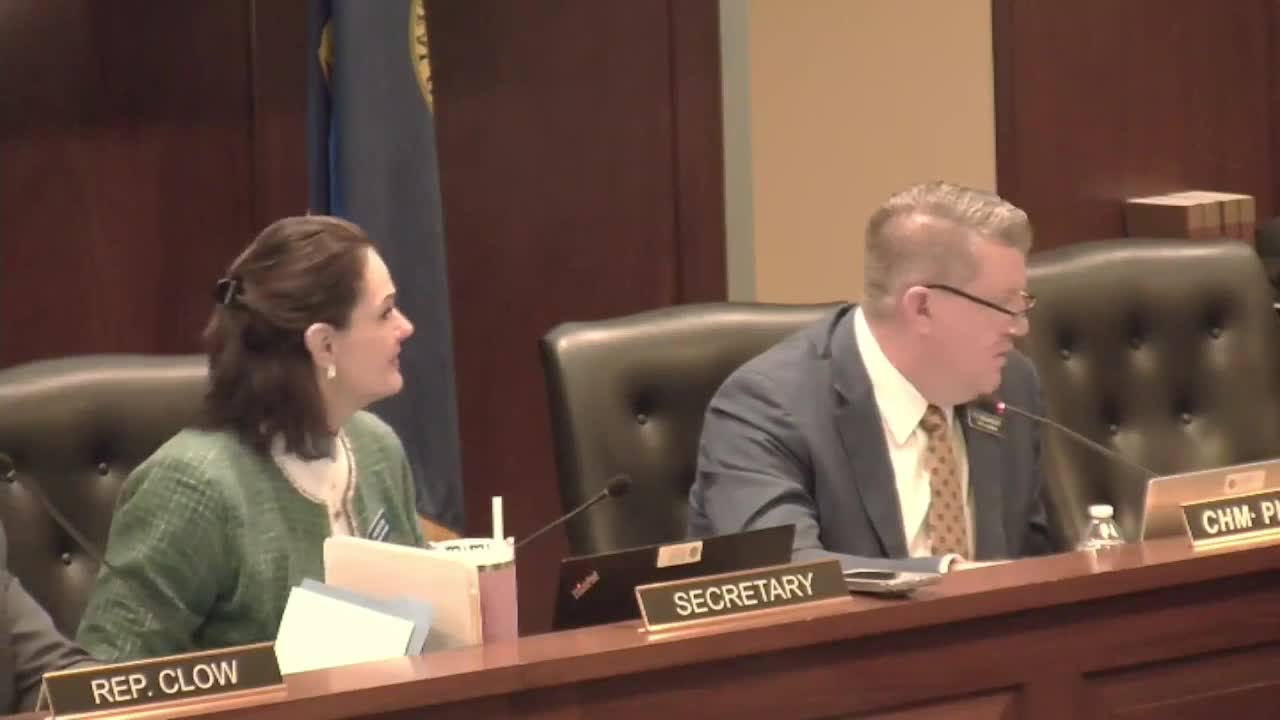
Jared Tatro, deputy division manager for the Legislative Services Office's budget and policy analysis division, briefed the House Committee on Education on Feb. 13 on how Idaho funds K‑12 public education and where key policy decisions affect district budgets.
LSO figures presented to the committee showed an estimated enrollment of about 314,100 students for the current school year and a February average daily attendance (ADA) of roughly 295,400 — about 94 percent of enrollment. Midterm support units were 15,875, Tatro said; support units are the primary unit used to allocate most state school funding and vary by district size through divisor tables.
Tatro explained that the legislature generally does not set individual employee salaries; it provides allocations and statutory minimums while school districts determine local compensation. He noted a current appropriation of about $3.3 billion for K‑12 with roughly $2.6 billion from the General Fund; federal funds total about $251 million plus $99 million in the final ARPA year. The School District Facilities Fund (the "$2.92 fund") and a Public Education Stabilization Fund (PSIF) were described as mechanisms to smooth funding year‑to‑year and provide property tax relief or bridge funding when claims exceed appropriations.
On policy priorities, Tatro identified three enhancements the superintendent requested that would require germane legislation: a weighted student formula to replace or supplement support units, a transportation formula rewrite, and creation or expansion of a special‑needs student fund. He also summarized JFAC's program maintenance actions already approved, including change‑in‑employee‑compensation amounts and other adjustments that will appear in the program maintenance budget. Tatro urged committee members to consult the legislative budget book and other LSO resources for statutory citations, budget sheets and the "big sheet" that consolidates statutory distributions and appropriation lines.
Committee members asked technical questions about how appropriation shortfalls are handled, how one‑time federal funds (ARPA) affect base budget calculations, and timing for districts to know final budgets. Tatro replied that one‑time funds are removed from base funding in subsequent years and that the legislature's final actions (signed law) determine districts' final available dollars; districts typically gain clarity in March–April when budgets are finalized. He also noted recent statutory and procedural changes aimed at improving attendance reporting and said the Department of Education added staff to assist verification.
The overview was informational; no committee vote accompanied the presentation. Members thanked Tatro for the briefing as the committee moved on to other agenda items.