Get Full Government Meeting Transcripts, Videos, & Alerts Forever!
Get email alerts on the Dual Credit Access topic
No spam. Unsubscribe anytime.
Panel backs bill to expand dual‑credit options for homeschooled students and allow multiple college‑entrance tests
Summary
House Bill 175 would let homeschooled students use community colleges to access Advanced Opportunities funds, allow students to retake college‑entrance exams, and align several program definitions; the committee voted to send the bill to the floor with a "do pass" recommendation.
Representative Megan Horman introduced House Bill 175 on Feb. 13 as a targeted update to Idaho's Advanced Opportunities program, saying the changes began after a family in her district encountered difficulty using the program with a local school district.
"This bill looks to just give them another option which is allow them to work through their community college for dual credits," Representative Megan Horman said. The sponsor said the draft clarifies that homeschool students who cannot access dual credit through a district may directly work with a community college and that the language was developed in collaboration with the College of Western Idaho (CWI).
HB175 also would allow students to take a college‑entrance exam more than once and aligns terminology in code — for example changing references to "tuition and fees" to "educational costs" to match Opportunity Scholarship language. The bill removes a discrepancy between public and private school language on course‑failure definitions and adds a requirement that private school students consult a counselor after earning 15 credits through Advanced Opportunities, matching existing practice in public schools, the sponsor said.
Representative Horman described the Advanced Opportunities account as "$4,625" per student for grades 7–12 and distinguished that account from the separate Opportunity Scholarship (referred to in discussion as about $3,500). She said the State Department of Education requested technical alignments in the draft, including having SDE cover out‑of‑district community college tuition for private‑school students and adding the counseling requirement.
Committee members asked several clarifying questions about funding mechanics and program interactions. Jared Tatro of the Legislative Services Office explained Advanced Opportunities funds are distributed through existing allotments and that a public education stabilization fund can temporarily cover shortfalls if more credits are claimed than appropriated. Representative Mathias objected on technical grounds to language that treats preliminary and college‑entrance exams as postsecondary credit‑bearing, saying that wording may be legally incongruent and could be amended.
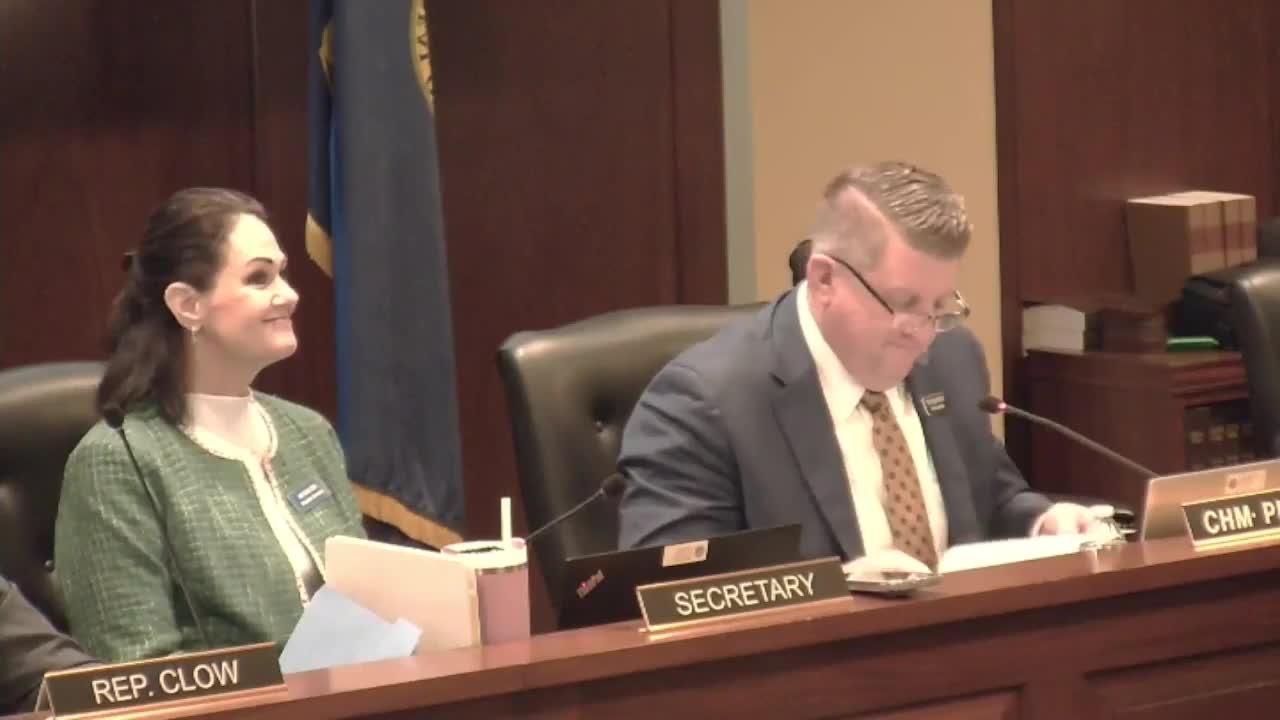
Representative Ehart moved that the committee send HB175 to the House floor with a "do pass" recommendation. The motion passed on a voice vote; the chair cast an aye and Representative Mathias asked to be recorded as voting nay. The bill will be printed with the committee's recommendation and proceed to the next legislative step.