Get Full Government Meeting Transcripts, Videos, & Alerts Forever!
Get email alerts on the Higher Education Presentations topic
No spam. Unsubscribe anytime.
Idaho university presidents tell House committee enrollment, workforce training and affordability remain priorities
Summary
Presidents from Lewis Clark State College, Boise State University, the University of Idaho and Idaho State University briefed the House Education Committee on enrollment gains, workforce programs (including LAUNCH), research growth and steps to contain costs and respond to campus concerns.
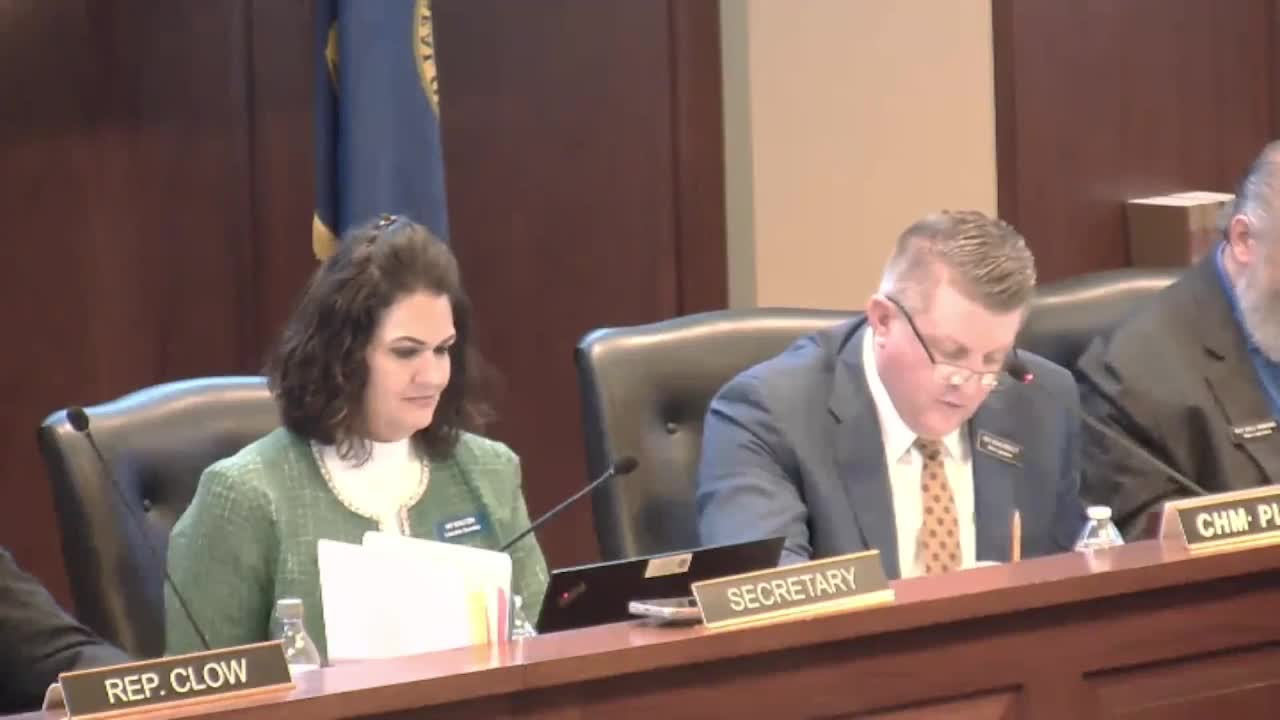
BOISE — Presidents from Idaho’s four public four-year institutions told the House Committee on Education on Jan. 28 that enrollment growth, workforce-aligned education and affordability remain central priorities as institutions adapt to state workforce needs.
The presidents — Dr. Cynthia Pemberton of Lewis Clark State College; Dr. Marlene Tromp of Boise State University; Dr. Scott Green of the University of Idaho; and Dr. Robert Wagner of Idaho State University — described enrollment and program trends, workforce partnerships, and steps taken to improve completion and student supports.
Dr. Pemberton said Lewis Clark State College aims to preserve a small-school experience while supporting health-care and technical programs, workforce training and prison-education efforts. She noted the state’s eight public institutions collectively serve about 43,685 students and deliver more than 18,000 credentials; LC State serves a high share of working, first-generation and Pell-eligible students. “We are uniquely positioned. We are Idaho’s one and only four-year public institution that is a small school,” Pemberton said.
Boise State President Marlene Tromp told the committee Boise State serves more than 33,000 students and has increased in-state enrollment. She highlighted low average student debt for Idaho four-year graduates, said the university has kept tuition affordable in inflation-adjusted dollars since 2016, and described campus initiatives to support free speech and civil discourse through the Institute for Advancing American Values and the Idaho Listens program.
Tromp responded to questions about campus programs on diversity, equity and inclusion. She acknowledged that some student centers tied to earlier DEI programming had been closed and said the university reorganized services to expand supports. Tromp also addressed legal costs from a high-profile lawsuit, saying total defense costs were about $1,500,000 and that the university used non-tax funds and worked with State Risk on defense and indemnification obligations.
University of Idaho President Scott Green described the land-grant mission, extension and research work across the state and a record of nearly $136,000,000 in research expenditures in the prior year. He discussed a new Addo Center for Agriculture, Food and the Environment, a planned large research dairy in the Magic Valley and the university’s push toward R1 research classification — a change Green said increases the university’s ability to compete for federal research dollars.
Idaho State University President Robert Wagner emphasized health-sciences programs, statewide access and workforce partnerships. Wagner highlighted ISU’s dual-enrollment work in rural high schools and said the university is developing telehealth-style mental-health assistance for rural “mental health deserts.” He noted ISU had 888 LAUNCH scholarship recipients and said the institution is focused on retention and completion.
Committee members asked about program inventories, certificate offerings and whether the LAUNCH scholarship program should carry return-to-state requirements (for example, an internship or a service period). Presidents said some professional programs (for example, medical education tracks) already use return agreements, but implementing such requirements broadly would raise legal and policy questions and potential workforce-recruitment tradeoffs.
Other committee exchanges focused on program relevance, efficiency and degree completion. Several members asked presidents to examine degree portfolios for programs with low workforce returns or low enrollment and to pursue faster pathways to certificates and degrees where appropriate.
What the presidents said about workforce and affordability
- Lewis Clark State College: Focus on health-care education, allied health, apprenticeships and prison education; many LC State students work while enrolled and are first-generation college students. - Boise State University: Reported enrollment growth, low average student loan debt among graduates and a campus focus on free-speech principles and expanded student services; legal defense costs from a lawsuit were cited at about $1.5 million and described as covered by non-tax funds and State Risk. - University of Idaho: Emphasized extension centers, research growth (nearly $136 million in expenditures), an Addo Center for agricultural research and steps to reach R1 classification. - Idaho State University: Emphasized health-sciences workforce training, 888 LAUNCH students, dual-enrollment expansion for rural schools and pilot mental-health tele-services for underserved areas.
Committee chair and members thanked the presidents and requested follow-up data on enrollment definitions (full-time load averages and the effect of dual enrollment), program discontinuations or consolidations, and the workforce impact of LAUNCH-funded training.