Get Full Government Meeting Transcripts, Videos, & Alerts Forever!
Get email alerts on the Mobile Devices In Schools topic
No spam. Unsubscribe anytime.
House committee introduces bill to fund "bell-to-bell" phone policies and asks State Board to report on outcomes
Summary
Representative Chris Mathias introduced RS32321 to create a School Mobile Device Policy Fund that would offer $1,500 grants to districts that adopt evidence-based "bell-to-bell" phone policies; the State Board would be asked to report on effectiveness using existing data.
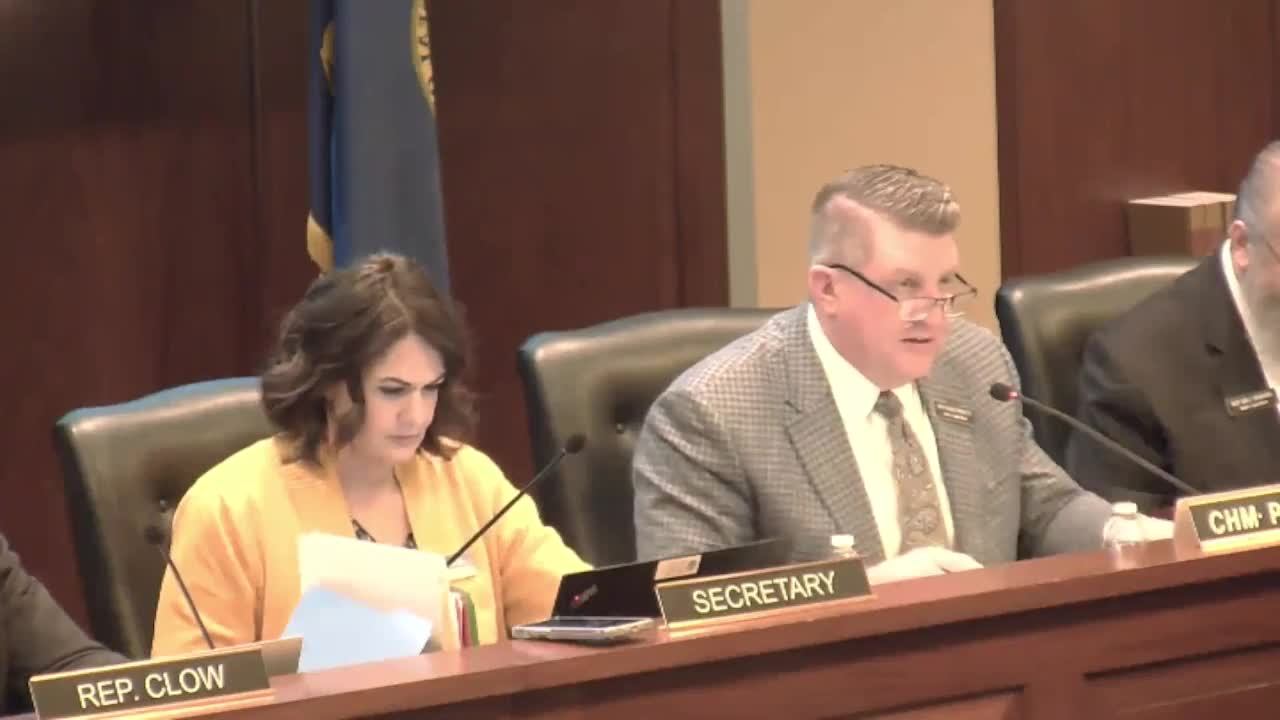
Representative Chris Mathias introduced RS32321, a replacement RS that would create a School Mobile Device Policy Fund to support local districts that adopt evidence-based "bell-to-bell" mobile-device restrictions. Mathias told the House Committee on Education the bill does not require districts to adopt such policies; it preserves local control and makes grant money available to districts that choose to implement them.
Under the proposal, grant awards would be $1,500 per district/school. Mathias described a conservative fiscal estimate of "under $285,000," derived by multiplying 115 school districts and 77 charter schools by $1,500; he said that estimate is likely overstated because many districts have already adopted similar policies or accepted earlier grants. The RS defines "mobile device" as a personal portable wireless device and carves out exceptions for devices necessary for educational purposes or health monitoring.
The bill establishes a streamlined grant application process. Mathias said applications would ask for contact information, the proposed bell-to-bell policy, a list of equipment or services to be purchased (or staff time to be funded), projected costs and other relevant details. He emphasized the fund is intended to lower implementation cost barriers for districts where equipment or administrative changes might otherwise be prohibitive.
RS32321 would also direct the State Board of Education to use existing data systems and reporting protocols to "prepare and submit a report to JFAC, this committee, [and] the Senate Education Committee," summarizing received data and assessing the effectiveness of mobile-device policies in participating districts. Mathias described that assessment as a narrowly tailored question: whether the state’s modest investment (e.g., $1,500 grants) yields the intended effect.
Committee members raised implementation questions and concerns. Representative Clow asked how the State’s prior "Phone Free Learning" executive-order grants (described as $5,000 awards) intersect with the new fund; Mathias said he would find how many districts took the earlier $5,000 award and noted that the executive-order funding came from federal COVID dollars and might no longer be available. Representative Hawkins and others questioned whether spending state funds to limit phones was necessary given existing research; Mathias and other members responded that the State Board’s limited data analysis would specifically evaluate whether small grants change outcomes in participating districts.
Members also debated practical and safety implications. Representative Ehart and Representative Tanner raised concerns about classroom emergencies and communication with parents; Mathias responded that emergency operations plans and best practices typically do not encourage student-to-parent phone contact during an incident and that one goal of policy adoption is to relieve teachers of day-to-day phone enforcement.
Representative Sauter moved to introduce RS32321. During the committee vote members were recorded as asking to be noted or registered in opposition; Representative Visniewski was recorded explicitly in opposition and Representatives Mendyve and Hawkins asked to be noted. The motion to introduce RS32321 carried and the RS will be assigned a bill number for public consideration.
The committee did not adopt substantive amendments at the meeting. Members requested additional detail for subsequent hearings, including (1) how many districts accepted prior $5,000 executive-order grants and whether that funding remains available, and (2) practical implementation examples from large districts that have adopted similar policies.