Get Full Government Meeting Transcripts, Videos, & Alerts Forever!
Get email alerts on the Education Overview topic
No spam. Unsubscribe anytime.
State superintendent urges ‘back to basics’ reading push, outlines math, CTE, teacher-prep and budget changes
Summary
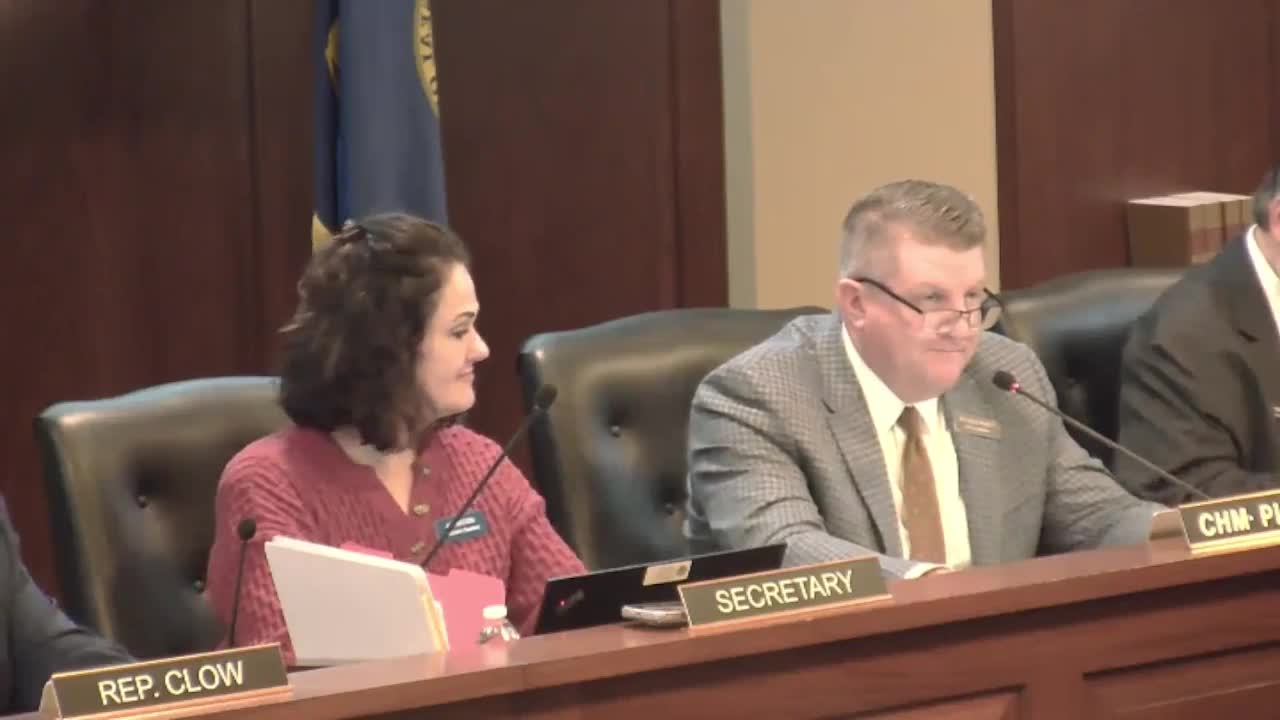
Debbie Critchfield, Idaho State Superintendent, told the Idaho House Education Committee on Jan. 23, 2025, that the Department of Education is focusing on early reading, essential math standards, career-technical education and teacher preparation as statewide priorities.
Debbie Critchfield, Idaho State Superintendent, told the Idaho House Education Committee on Jan. 23, 2025, that the Department of Education is focusing on early reading, essential math standards, career-technical education and teacher preparation as statewide priorities. "We have to ensure that our students have the ability to read," Critchfield said at the start of her annual briefing.
Critchfield said Idaho tests all kindergarten through third-grade students with the Idaho Reading Indicator (IRI) and reported an 8% increase in third-grade reading proficiency over the past two years. She told the committee the department is shifting from a norm-referenced to a criterion-referenced contract for the IRI so the state will not "reset the bar" every five years and can instead track consistent year-to-year progress for students.
Why it matters: Early reading proficiency is commonly used as a predictor of later academic success; the superintendent framed literacy, math and civics as the foundation for student preparation and for an Idaho diploma that has practical value for both college and career pathways.
On math, Critchfield said the State Board of Education and the Department are developing "essential math standards" that narrow statewide expectations to ensure classrooms cover the building blocks required for later grades. She said Idaho — like other states — sees a performance dip in middle school math and the standards are designed to reduce remediation needs.
Career-technical education (CTE) was highlighted as a major preparation strategy. Critchfield said state legislators have appropriated $65,000,000 for the Idaho Career Ready Students Grant over the past two years and that the department has awarded a large number of grants to expand or create programs tied directly to local industry demand, citing examples including forestry programs in Potlatch, Orofino, Sandpoint, St. Maries and Priest River, an agricultural drone program at Shelley High School and a meat-science program in New Plymouth.
Teacher preparation and mentoring were presented as the third priority. Critchfield said the department will ask colleges of education to strengthen preparation around classroom management, the science of reading (including phonics) and other practical skills, and that better mentoring during the first three years of teaching is essential to retain teachers.
On the state budget, Critchfield said the department will propose a modernization that shifts part of the public schools budget away from legacy line items toward allocations tied to student characteristics. She said the public schools budget totals about $2,650,000,000 and that the department proposes to redistribute roughly $433,000,000 to be more closely aligned with the types of students a district serves (for example special education or gifted students).
The superintendent also addressed federal policy changes, telling the committee the state must follow federal requirements tied to federal funding (special education, Title IX, services for homeless students) even if Washington reforms how funding is delivered. She said she and other state chiefs have asked to meet with the incoming Education Department leadership to discuss transitions.
Committee members asked for details on measurement and implementation. Representative Clow pressed on Section 504 and discipline; Critchfield said she would follow up where the transcript did not specify an immediate answer. Representative Garner asked how the department will raise achievement for the roughly 30% of third graders the IRI marks as not yet proficient; Critchfield emphasized training and coaching teachers, targeted intervention for students below grade level and family engagement in early literacy. Representative Hawkins asked whether optional removal of English learners from IRI contributed to the increase; Critchfield said the change was optional for districts and that the department would check the data by district.
Committee directions and next steps: Critchfield said she will return to the committee during the rule-making process to present proposals on graduation requirements and to provide details about the proposed budget changes. She offered to provide materials about the department's "smart coaching" and CTE grant outcomes to legislators.
Ending: Chairman Pickett and committee members thanked Critchfield for the presentation and opened a question-and-answer period; the committee then moved on to the remainder of its agenda.