Get Full Government Meeting Transcripts, Videos, & Alerts Forever!
Get email alerts on the Open Meetings Law topic
No spam. Unsubscribe anytime.
City attorney briefs INCO on Brown Act: open‑meetings rules, social media limits, teleconference restrictions
Summary
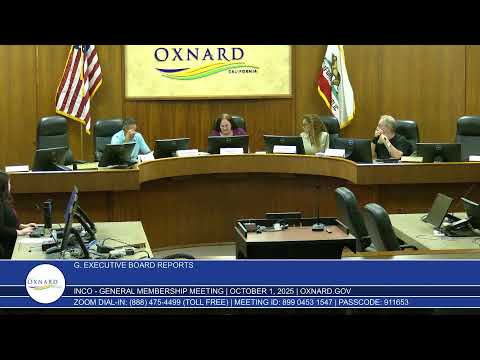
Assistant City Attorney Jason Zaragoza gave INCO a refresher on the Brown Act, stressing that the INCO is a legislative body subject to open‑meetings rules, explaining email/serial‑meeting risks, social‑media limits, virtual‑attendance caps and local agenda posting practices.
Assistant City Attorney Jason Zaragoza gave a Brown Act refresher to the INCO general membership, telling neighborhood chairs that the law’s “heart” is public access and that the INCO is a legislative body subject to the state open‑meetings statute.
Zaragoza opened the presentation by quoting the law’s purpose: “it is the intent of the law that their actions, meaning those of a legislative body, be conducted openly.” He told the group that the Brown Act applies to “meetings of legislative bodies” and explained when a gathering becomes a meeting — generally when a quorum convenes to hear or deliberate on matters within the body’s jurisdiction.
The training covered several practical rules for INCO members. Zaragoza said email chains and serial one‑on‑one communications can create an illegal collective concurrence, and warned against the “hub‑and‑spoke” method of contacting members in sequence to secure agreement. He also highlighted a recent social‑media provision of the Government Code, noting that “if you are a member of the same legislative body, you cannot directly respond to any communication on a social media site” about matters within the body’s jurisdiction. Zaragoza called that rule “interesting” and said it is broadly written.
Zaragoza outlined teleconferencing rules that apply to INCO: members may participate virtually for a limited number of meetings for a “just cause” or emergency (he advised that the INCO limit is two virtual participations per member per year) and that when a member appears remotely they must follow identification and camera rules. He reviewed agenda rules, saying the Brown Act requires 72 hours’ notice for regular meetings and 24 hours for special meetings, and explained that the city’s “sunshine” policy posts INCO agendas seven days in advance — a local enhancement beyond the state minimum.
On public comment, Zaragoza reminded the group that the public may speak on any agendized item and that the city’s Measure M guarantees at least three minutes for each speaker (with an additional three minutes if translation is required). He also summarized permissible closed‑session topics for the council — litigation, real‑estate negotiations, public employment and public‑security matters — and described the civil and, in egregious cases, criminal remedies that can follow Brown Act violations.
Chairs asked clarifying questions about application to neighborhood councils and to volunteers who want to participate remotely. Zaragoza said the INCO itself is subject to the Brown Act, while individual neighborhood councils are not considered legislative bodies under the Brown Act and therefore are not governed by all of the same requirements. He advised the conservative approach for virtual participation and recommended members notify the executive secretary when they expect to attend remotely.
The session closed with Zaragoza taking questions from chairs about social media, elections and whether observers may attend remotely as members of the public. He reiterated that many answers are fact dependent and that members should consult staff when unsure.