Get Full Government Meeting Transcripts, Videos, & Alerts Forever!
Get email alerts on the School Impact Fees topic
No spam. Unsubscribe anytime.
York County advances amended Clover School District impact fee to $7,000 for single-family homes
Summary
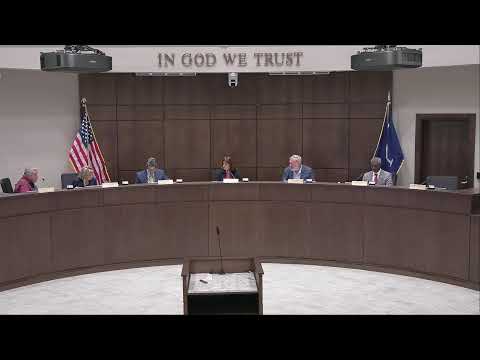
After a three-hour presentation and extended council debate, York County Council approved first reading of an ordinance revising the Clover School District public education impact fee, amending the proposed single-family fee to $7,000 (with proportional increases for other housing types). The item moves to a public hearing and second reading.
York County Council voted on Oct. 6 to advance first reading of an ordinance that would revise the Clover School District public education impact fee, amending the district’s requested maximum and approving a lower, council-amended fee for now.
The council approved first reading after an extended presentation from Clover School District officials and lengthy debate among council members. The council amendment set the single‑family impact fee at $7,000 and directed that multifamily and manufactured-home fees be increased pro rata from the county’s current $4,000 baseline. The item will return for a public hearing and second reading before any final adoption.
Clover School District Superintendent Sheila Quinn, joined by Chief Operations Officer Dr. Mark Hopkins and Chief Financial Officer Ken Love, presented the district’s five‑year capital improvement plan, updated construction cost estimates and a new impact‑fee study prepared for the district. Quinn told council that the district followed state impact‑fee statutory procedures and that the current study uses updated construction and land costs. “An impact fee is not a fee on a house. It’s a fee based on the students that are generated from a house, or an apartment, or a mobile home,” Quinn said during the presentation.
The district said its updated study shows higher construction and project costs since the 2020 study. Tishler Bice’s analysis cited in the presentation produced higher maximum-allowable fees than those the council awarded to Clover in 2020. The district reported that 1,988 permits were issued in the Clover district in the last five years and that 1,611 of those permits had paid the county’s existing impact fee; the district said it had collected $6,260,482.64 in impact fees through September 2025.
Council members debated affordability and who ultimately bears the cost of new school construction — new residents, developers, or existing taxpayers. Several council members said they were concerned that a higher fee could price small, owner‑built single‑family homes out of the market; others said lower fees shift costs to existing taxpayers and that the district should be treated consistently with other districts that received higher fees.
After discussion, a council member offered an amendment to set the single‑family fee at $7,000 (with pro rata increases for multifamily and manufactured homes); the amendment passed and was incorporated into the first‑reading motion. Council voted to approve first reading of the revised ordinance with the amended amounts.
Next steps: the ordinance must return for a public hearing and second reading before final adoption. The council’s action at first reading does not change current fees or collections until the ordinance is adopted following the public‑hearing process and any further amendments.
Speakers who addressed the council on this item included Clover School District Superintendent Sheila Quinn, Dr. Mark Hopkins (chief operations officer), and Ken Love (chief financial officer). Several county council members questioned the district’s assumptions and the impact on homebuilders and residents; Councilmembers named in the record include Atkins, Litton, Huckaby and Cloninger, among others.