Get Full Government Meeting Transcripts, Videos, & Alerts Forever!
Get email alerts on the Transportation topic
No spam. Unsubscribe anytime.
Livingston committee reviews draft transportation plan; members weigh 'complete streets,' road classifications and funding strategy
Summary
Parish staff presented a draft master transportation plan that includes several priority corridors, parish-wide pavement assessment results, and proposals for road-classification, tailored geotechnical designs and phased 'complete streets' adoption; committee agreed to seek outside experts and invited further briefing at Nov. 3 meeting.
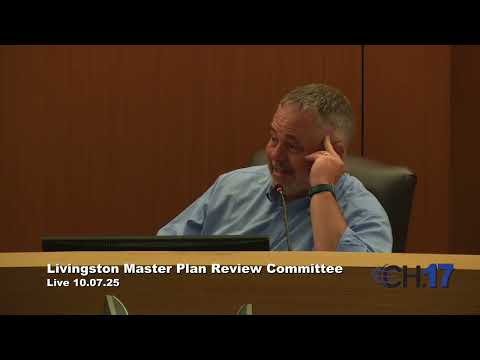
Livingston Parish staff and committee members spent the Oct. 6 Master Plan Review Committee meeting outlining a draft master transportation plan and discussing how "complete streets" principles, road classification, and targeted engineering could shape future projects and unlock funding.
Parish staff described the draft plan as a living document focused on moving people rather than storing vehicles. "Traffic should move people. So, you know, asphalt shouldn't be parked on," a presenter told the committee, summarizing the plan's intent.
Key projects discussed included an expressway extension north into Watson (an extension of Juban), a proposed connection of Highway 449 to the interstate envisioned as an economic corridor, and extending Highway 63 south to Whitehall to create an evacuation route and support the Lower Port area. The draft also calls for intersection and safety improvements, multiuse and "safe routes" projects around denser areas such as Dillon Springs, Walker and Albany, and a classification of local roads to prioritize investment.
Staff reported several technical steps already complete or underway: a pavement assessment of every parish road, a classification of roughly 3,500 roads, and a prioritized road-program that will guide bonding and capital requests. "We have done a pavement assessment on every road in the parish," staff said. The parish currently maintains "over 1,100 miles of parish road," and this year's program covers about 60 miles, the presentation said.
Committee members and staff emphasized tailoring road designs to local soils and conditions. Staff said Livingston has roughly 16 distinct soil classifications and recommended developing area-specific road typicals instead of a single parish-wide standard. Geotechnical tailoring could change base thicknesses and surfacing choices to extend pavement life and reduce life-cycle costs.
Members discussed subdivision standards and the parish's process for accepting roads into the parish-maintained system. Speakers said an existing ordinance sets minimum standards and right-of-way requirements for a road to be taken into the parish, and that the council has sometimes accepted roads that do not meet those criteria. The committee debated using setbacks (not servitudes) and design classifications (collectors, local roads) to protect future corridor space without taking property prematurely. "You have to think of it as a setback. Not a servitude," one committee member said.
Complete streets — policies that promote multimodal design for pedestrians, bicyclists and transit users in addition to motor vehicles — drew both interest and caution. Committee members noted that parish adoption of a tailored complete-streets policy could make state-funded projects built inside the parish subject to those standards, potentially unlocking funding for sidewalks and multiuse paths. At the same time, members raised concerns about maintenance responsibilities and long-term cost. "If you did sidewalks... the reason I gotta cut grass is because the ditch is 3 and a half foot deep... a 65, 70 year old man ain't gonna go out there and weed eat it," a DPW representative said, explaining maintenance limits and preferences.
Committee members asked staff to bring outside experts (including April and Jamie, referenced by staff) to the committee's next meeting to offer technical briefings on complete streets and implementation choices. The group set a target for another meeting on Nov. 3 at 6 p.m. to continue the discussion and to invite key technical staff and outside consultants.
No ordinance or master-plan amendment was adopted at the Oct. 6 meeting. Committee members agreed to continue refining the transportation plan, pursue outside expertise, and align classification, geotechnical and pavement-assessment work to support future bond requests and grant applications.