Get Full Government Meeting Transcripts, Videos, & Alerts Forever!
Get email alerts on the Municipal Modernization topic
No spam. Unsubscribe anytime.
Ordinance committee approves municipal modernization draft after debate over CAFO powers and proposed comptroller
Summary
The Holyoke City Council ordinance committee voted to forward an amended municipal modernization ordinance that establishes a chief administrative financial officer (CAFO) role and retains a comptroller provision after a contentious debate over overlapping audit powers and personnel protections.
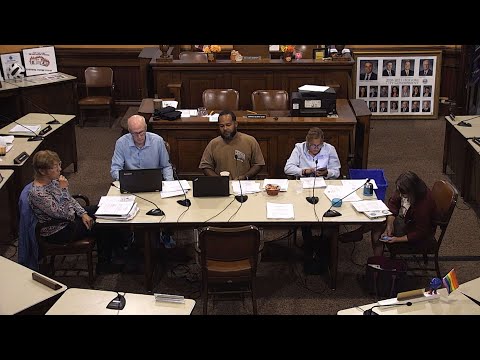
Holyoke — The ordinance committee voted July 29 to forward an amended municipal modernization ordinance to the full City Council after more than two hours of detailed line-by-line review and debate over the new chief administrative financial officer (CAFO) role and a proposed comptroller position.
The committee considered edits offered by Councilor Constance Bartley and others that clarified timelines for document requests, specified disciplinary authority, and added procedural protections for a CAFO facing removal. Councilors approved the package as amended by a 3-2 roll-call vote; an earlier motion to remove the new comptroller section failed 3-2.
Why it matters: The ordinance rewrites portions of the city charter and municipal code to centralize certain financial and auditing functions. It creates a CAFO position with defined certification and reporting duties, changes timelines for records requests, and spells out appointment and removal procedures. Committee debate focused on who should hold disciplinary authority, whether a new comptroller role duplicates the work of an auditor or internal-audit director, and what procedural protections employees should have when facing removal.
The committee’s floor work centered on textual edits. Bartley proposed replacing vague "reasonable time" language with a fixed window — she recommended 30 calendar days in several places — and inserting the word "business" to turn a seven-day period into "seven business days" in one certification requirement. She also proposed adding a line: "The mayor shall have exclusive disciplinary authority hereunder, unless otherwise disclosed by the mayor who may transfer set authority to the CAFO so long as the transfer is in a writing available to the public," which she described as ensuring an elected official retains primary disciplinary power unless the mayor formally delegates it.
"The mayor shall have exclusive disciplinary authority hereunder, unless otherwise disclosed by the mayor," Bartley read into the record and then clarified: "...the mayor may transfer set authority to the CAFO, and that transfer should be in writing." (Councilor Constance Bartley)
Bartley also urged explicit language to allow a CAFO who faces removal by the mayor to request an executive session with the council "prior to any vote of the council," and she proposed that the city council president schedule such an executive session excluding the mayor. She said the language reflects existing state practice that personnel matters may be discussed in executive session and would give the CAFO an opportunity to be heard.
Committee members debated whether that executive-session protection should exclude the mayor or allow both sides to be heard together. "I could see it going both ways," Councilor Reagan said, arguing that hearing both sides could give councilors "a full picture" before a vote. Bartley replied that a removed employee may reasonably want to speak without the mayor present.
A longer policy dispute in the meeting addressed a new comptroller role in section 2-293. Several councilors and staff noted the draft assigns the powers and duties of a city auditor under Massachusetts General Laws (MGL) c.41, §50–54 to both a controller/comptroller and a director of internal audit. That led to back-and-forth about duplication of duties.
"It seems to be redundant," Councilor McGrath Smith said, noting both positions reference the same MGL sections. Other councilors and staff argued the duplication of statutory powers is intentional so an auditor can access the same records as the person whose work is being reviewed. Kelly (staff) summarized differences presented in an earlier memo, saying the director of internal audit would "maintain general ledger and chart of accounts, perform revenue recognition, audit/review all warrants and vouchers, maintain and monitor fraud hotline, conduct random department audits, manage annual audit and federal single audits," while a comptroller would "maintain accounts payable/receivable, oversee payroll processing, reconcile treasurer's cash to GL, maintain tax filings, assist with budget transfers, close periods, prepare balance sheet schedules."
Councilor Bartley moved to remove the entire comptroller section (2-293); that motion failed on a roll-call vote (3 no, 2 yes). The committee then voted to approve the ordinance as amended — which kept the comptroller language in place — by a 3-2 roll-call vote (Councilors McGrath Smith, Jenny Rivera and Israel Rivera in favor; Councilors Reagan and Bartley opposed). The committee then voted down an effort to table the item for further legal review.
Actions recorded in committee included approval of line edits (including the 30-calendar-day and 7-business-day clarifications, wording about disciplinary authority, and language allowing a CAFO to request executive session), a failed motion to delete the comptroller section, and final approval to forward the amended ordinance to full council with the comptroller language intact.
The committee asked staff to confirm cross-references elsewhere in the draft so that removing one section would not leave orphaned references in other sections. Jeff (staff) said he would collect Bartley's marked edits and circulate a consolidated document for the full council packet.
What’s next: The amended ordinance will go to the full City Council for consideration. Committee members asked that the ordinance go to legal review and that staff provide a final consolidated list of edits for councilors before the full council meeting.
Ending: The committee acted on the ordinance after detailed line edits and split votes over structure and staffing; the full council will now receive the draft as amended for final consideration.