Get Full Government Meeting Transcripts, Videos, & Alerts Forever!
Get email alerts on the Municipal Code Public Art topic
No spam. Unsubscribe anytime.
Oregon City staff and arts commission discuss municipal-code updates for Arts Commission membership and new mural rules, including AI guidance
Summary
City staff proposed updates to Chapter 2.26 (Arts Commission charter) and Chapter 15.28 (murals) to clarify membership, terms and mural restoration procedures and to build flexibility for future policies on the use of artificial intelligence in public murals; legal review and further edits were requested.
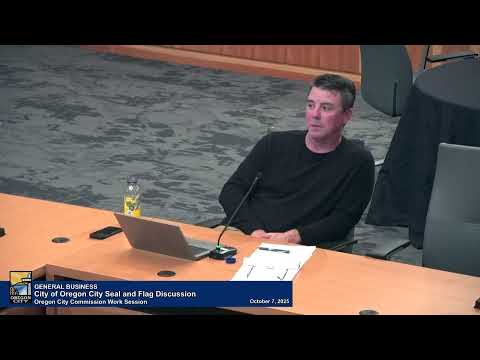
City staff and Arts Commission members spent substantial time on Oct. 7 reviewing proposed municipal-code changes that would update the Arts Commission’s charter and rules for public murals.
Staff said the code cleanup responds to outdated language and procedural gaps. Economic Development Manager James Grama told the joint work session that the chapter on the Arts Commission (Chapter 2.26) contained decades-old references and that proposed edits aim to “clean up language, clarify things, and address some of the protocol things we wanted to address.” Grama said one numerical line needed correction after the commission’s prior review: the draft intended a maximum of three “citizens at large,” not two, to align with the proposed residency percentages.
Discussion covered several substantive items: whether the commission should set a fixed maximum number of members (proposals cited a maximum of nine), how many seats should be held by city residents (staff proposed that 60% of members reside inside Oregon City limits), and term lengths and limits. Multiple commissioners argued for consistency with other city boards and commissions — most of which limit out‑of‑city members and two-term service — and several suggested clarifying staggered, multi‑year terms so projects that span years would maintain institutional memory.
The staff presentation also proposed code updates for the city’s public-murals chapter to address restoration and to broaden the geography of allowed installations (for example, to “roof murals” and bluff-facing works). A notable addition was language to preserve policy flexibility for “the use of artificial intelligence to create murals, through the printing of screen materials that can be applied to a wall,” a change staff described as intended to allow the Arts Commission to craft evolving rules rather than lock a specific prohibition into code.
Commissioners and staff said the city attorney should closely review the AI language and other content controls. Staff and commissioners raised legal and First Amendment questions and intellectual-property concerns tied to AI tools that draw on existing copyrighted works. Grama and others said the code language was intentionally flexible so the Arts Commission could develop a policy over time and return to the commission with a detailed, legally reviewed approach.
What they decided: No ordinance was adopted at the work session. Staff will refine the wording in consultation with the city attorney and bring the revised code changes back to a future city commission work session; because code amendments require ordinance adoption, the likely next steps are additional review, a public hearing and two readings at future city commission meetings.
Why it matters: The changes seek to modernize an advisory body that helps shape public art and to provide a framework for how the city will evaluate restoration projects and emerging tools like AI. Commissioners emphasized balancing artistic practice and community standards while protecting the city from legal risk.