Get Full Government Meeting Transcripts, Videos, & Alerts Forever!
Get email alerts on the Master Plan Land Use topic
No spam. Unsubscribe anytime.
Planning commission backs master plan for Parish Council review after changes; removes specific zoning from future land use map recommended
Summary
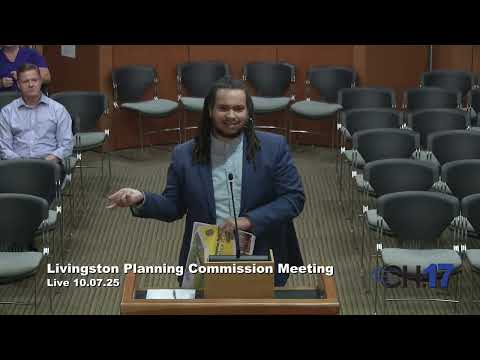
At a special meeting, the Livingston Parish Planning Commission voted to recommend the draft Livingston Parish master plan to the Parish Council with amendments including added appendices, alignment to the Capital Region bicycle and pedestrian plan and a recommendation to remove specific "associated zoning" from the future land use map.
At a special meeting, the Livingston Parish Planning Commission voted to recommend the draft Livingston Parish master plan to the Parish Council with a set of amendments and caveats, and it asked staff and the council to resolve two outstanding review items before final adoption.
The commission voted to forward the plan after hearing a presentation from Nathan, a planning consultant with WSP, who said the recommended edits include replacing one commissioner name in the document, adding two appendices (a full breakdown of population projections and raw survey results), aligning pedestrian and bicycle language to the Capital Region bicycle and pedestrian plan, and adding additional outreach documentation from a recent implementation meeting.
The commission's endorsement includes language asking the council to consider four primary changes discussed at the meeting and to treat two outstanding items — the Parish drainage master plan review and whether to include specific "associated zoning" designations in the future land use map — as separate, follow-up items.
Why it matters: the commission's choice on whether to list specific zoning tied to future land use categories affects how property owners and the public interpret the plan and how rezone requests are analyzed. Removing specific associated zoning would retain the master plan's status as a policy guide and leave site-specific zoning determinations to the planning and zoning processes, legal counsel said.
Details of the discussion
WSP representative Nathan told commissioners the two appendices would contain the population-projection methodology and survey results ("a couple 100 survey results," as he described), which WSP recommended be kept out of the main body but available as reference. He said staff had discovered the parish is included in a robust Capital Region bicycle and pedestrian plan and that pedestrian/bicycle recommendations in the draft should be aligned to that existing plan.
Commissioners spent most of the substantive debate on whether the plan should include "associated zoning" — the practice of listing recommended zoning categories alongside each future land use designation. Several commissioners and legal counsel argued that listing specific zoning in a policy document risks creating public expectations that a rezone is guaranteed and could complicate due-process rights for neighbors. Legal counsel Steve said the master plan is "a policy document," and that the correct approach is to use it as a guide rather than specify exact zoning, because the planning and zoning processes must evaluate rezoning requests individually and consider public hearings and statutory tests.
Concerns about wetlands and drainage
Commissioners and several speakers raised that a recent Supreme Court and federal-agency rulemaking process is narrowing Corps jurisdiction over isolated wetlands, which could change which areas require federal mitigation. A commissioner asked whether the plan's wetland maps should be revised in response; WSP said the Parish's drainage master plan is under review and that the drainage team has not submitted comments yet. Because the drainage master plan and the federal rule changes may affect mapping and development requirements, WSP recommended leaving the door open to update maps and footnotes after the drainage review and federal rulemaking are finalized.
Rural estates and infrastructure language
Commissioners also asked that language describing "rural estates" not be so prescriptive that it discourages future infrastructure investment. One commissioner noted many areas already have community water systems in poor condition and that plan language limiting infrastructure to septic and private wells could prevent efforts to repair or extend public utilities. WSP agreed to tweak the text to allow for community sewer and other community-scale infrastructure where appropriate.
Public comments and ethics concerns
Councilmember (District 9) Darty urged the commission and council to be cautious about rezones and described repeated rezone requests in her district she said were inconsistent with earlier representations by applicants: "I'm fed up with it," she said, urging stricter review. Resident Travis Star recommended adding an "economic development corridor" designation to direct larger commercial opportunities into appropriate areas.
Formal action
A motion to recommend the draft master plan to the Parish Council "with the major changes and recommendations on the outstanding reviews, discussions, secondarily as we discussed" was made and seconded; the motion passed and the commission directed staff to forward the document with the stated amendments and to flag the two outstanding review items for the council's attention.
What remains: the commission left two items for further review: (1) follow-up comments from the drainage master plan team, which WSP said so far has not submitted comments; and (2) the policy choice about listing associated zoning in the future land use map — the commission recommended removing specific associated zoning from the policy document and treating the map as a guide, with rezoning to be evaluated through normal zoning procedures. The commission also asked that the plan include a footnote or explanatory language noting that federal wetland jurisdiction and drainage mapping are active, changing issues.
The commission's vote to forward the plan puts the draft before the Parish Council for its consideration and any final changes.
Ending: commissioners said they intend to keep the plan a flexible policy document that can be updated as the drainage master plan and federal rule changes settle, and they asked staff to return recommended wording changes and any drainage-related map updates to the council when available.