Get email alerts on the Land Use Zoning topic
No spam. Unsubscribe anytime.
Jefferson County advances major zoning update to add housing options, conservation protections
Summary
The Jefferson County Commission voted to advance a substantial update to the county zoning ordinance that adds new land‑use categories, allows accessory dwelling units and tiny homes in specified zones, raises design standards, and creates conservation and overlay protections tied to the county's comprehensive plan.
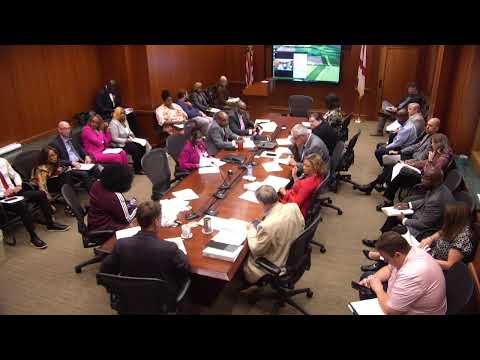
Joe Johnson, development services staff, told the Jefferson County Commission that the county had completed a multi‑year process aligning a new comprehensive plan with a proposed overhaul of the Jefferson County zoning ordinance and asked commissioners to advance the ordinance update.
The update would create new land‑use categories intended to support industrial clusters, mixed‑use activity centers and "missing middle" housing — described by Johnson as medium‑density options such as multiplexes, courtyard housing and cottage courts — and to add conservation and slope‑protection overlays tied to environmentally sensitive areas. "This gives the county commission another option in terms of saying, ‘OK,’" Johnson said, "we see that this employment is near it or we see that this proposal is near employment, we'd like to see something that's a little less dense, a little more well built out, and a little more well designed."
Why it matters: Johnson framed the ordinance changes as a response to long‑running workforce‑housing shortfalls, transportation and sewer infrastructure constraints, and development pressure near interchanges and major corridors. The county plans to pair a future‑land‑use map with a context‑based approach to local development reviews so staff reports will indicate whether proposed projects are consistent with planned character, connectivity and required infrastructure.
Most important changes described by staff: - New residential categories to permit medium‑density housing forms (multiplexes, courtyard housing, attached two‑ to four‑unit forms and townhouses) intended to supply "missing middle" units in transit‑ and employment‑adjacent locations. - Accessory dwelling units (ADUs) allowed with controls (must be for an immediate relative, share utilities with the principal dwelling and be architecturally compatible), and a change to the minimum tiny‑home floor area from an earlier 600 square feet to a proposed 400 square feet for qualifying lots in specified rural/agricultural zones. - Tiny homes permitted under limited conditions (one tiny home per one‑acre lot in agricultural zoning; site must be served by sanitary sewer where required). - Increased design, landscaping and materials standards for new mixed‑use and medium‑density development; minimum single‑family road frontage set at 65 feet with limited exceptions for alley‑loaded or side‑loaded carriage access. - New overlays for slope protection, environmentally sensitive areas and the Northern BeltLine alignment; provisions to require traffic impact analyses for major rezoning requests and economic impact analyses for certain upzonings.
Commission discussion and stakeholder input: Johnson said staff held parcel‑by‑parcel mapping and multiple public meetings and that the county met with many municipalities and the Home Builders Association; he said builders have generally responded positively, though they raised concerns about some minimum dimensions. Several commissioners raised questions about where tiny homes and other new categories would be allowed; Johnson and staff identified candidate areas including former mining camps and named communities such as Robinwood and portions of the McCullough and Forest Hill areas as potential locations for planned infill and redevelopment. Commissioners also discussed flood‑plain and long‑term maintenance implications for county infrastructure and asked staff to ensure compatibility with surrounding neighborhoods.
What the vote did: The commission voted to advance the zoning ordinance update as presented for the next steps of review and implementation (staff presentation, Planning and Zoning Commission review and follow‑up as required). The motion was moved, seconded and approved by voice vote; specific roll‑call tallies were not recorded in the transcript.
Next steps and caveats: Johnson said the draft ordinance will go to the county's review processes and that staff will bring design and traffic analyses as required. He emphasized that the new categories are aimed at clustering development where sewer and transportation capacity exists and at avoiding unplanned suburban sprawl. Several commissioners requested that staff tighten compatibility standards so new housing increases, rather than depresses, neighboring property values.
AI generated
The text on this page is AI generated. Summaries, highlights, and analysis are all produced from the original source material.
AI can make mistakes, so if you spot one, and we will fix it for everyone.
Note: the source content is unaltered by us. Any content source we link to, be it a video, an audio recording, a transcript, or a document, is presented exactly as its publisher released it. That publisher is usually a government body, sometimes an individual official or another organisation.