Get Full Government Meeting Transcripts, Videos, & Alerts Forever!
Get email alerts on the Education Facilities topic
No spam. Unsubscribe anytime.
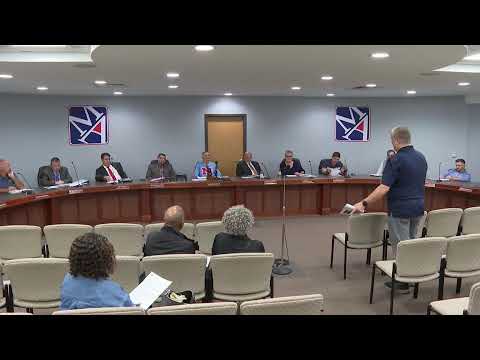
McKeesport board discusses high school feasibility study, athletic-trainer contracts and consent agenda
Summary
At its Oct. 2 open-agenda meeting, the McKeesport Area School District board reviewed a proposed feasibility study and master plan for the high school, answered public questions about superintendent staffing and solicitor listings, and addressed athletic-trainer contracts that specify $50 per hour plus a 35% comprehensive management fee.
The McKeesport Area School District board on Oct. 2 heard a presentation proposing a three-phase feasibility study and master plan for the high school and fielded public questions about superintendent staffing and solicitor listings. The meeting also included discussion of athletic-trainer arrangements, including a cited $50 hourly rate and a 35% comprehensive management fee, and routine motions to approve multiple agenda items by consent.
The presentation on the high school called for a phased strategic master plan beginning with a facility-condition study of the building envelope, mechanical and electrical systems and security infrastructure. A staff presenter described phase one as a review of the “exterior envelope, the windows, the doors, the walls, the roofs, HVAC plumbing systems, electrical security,” and said a selected architect would complete the first phase in about one to two months, with a second visioning phase and a third options-and-analysis phase following. The presenter said the three phases together typically take about four months to reach refined options for the board’s consideration.
Board members and commenters emphasized ongoing building problems. A board member noted existing repairs and said the district will pursue “the best available candidate” for any personnel openings arising from recent changes in supervisory staff. A public commenter asked whether the district would search for an “assistant to the superintendent” or an “assistant superintendent”; a board member replied that the personnel committee and the full board would determine titles and the hiring process.
On facilities details, the presenter showed a rendering of a proposed new secure vestibule at the high school entrance and described brick cladding to protect column bases from salt-related deterioration. The presenter and commenters spoke of equipment issues at the high school: boilers that required cannibalization of parts to keep some units running, roof-top units with intermittent failures and other continuing maintenance needs. When asked about the district’s capital reserves, a staff member said the district “started off the year about 24,000,000,” and later said the capital balance was “down to about 1.9 right now.” The transcript did not specify units for the 1.9 figure beyond the numeric value given.
During public comment, a speaker questioned whether a local attorney or their law firm was listed as solicitor for other districts and whether that listing applied here. The board’s speaker advised the questioner to check the district’s records and said personnel decisions would go through the personnel committee.
A separate exchange covered athletic-trainer services. A commenter referenced a district action to contract with Premier Sports Medicine to provide athletic trainers “on an as‑needed basis” at $50 per hour and asked about a 35% “comprehensive management fee,” noting the contract text did not define 35% of what. A staff speaker explained the fee covers services, supplies, benefits, insurance and administrative costs and that the 35% is part of the company’s overall charge for providing and managing coverage. The comment also named Jennifer Waslander as a performing athletic trainer at $50 per hour; staff explained the district uses multiple contract trainers for coverage when regular trainers are unavailable and that availability, not full-time schedules, drives the as‑needed arrangements.
Board business proceeded largely by consent. The board sought motions to vote multiple scheduled agenda items by consent across categories including board matters, curriculum, technology, facilities and personnel. The transcript records the board chair seeking motions to approve groups of items by consent (for example, “seek a motion to vote all the 10/09/2025 agenda items 4.2 through 4.4 by consent”), but individual roll-call tallies or explicit outcomes for those consent votes are not recorded in the provided transcript.
Other items noted briefly during the facilities discussion included planning for a stadium-turf replacement (the turf system is more than 10 years old and had low drop-test results), alternate lighting plans for the stadium to reduce neighborhood impacts, and a vendor-combination price that the presenter said would be available the following week.
The meeting closed after routine motions and a call for adjournment. The transcript records a motion and a second for adjournment; no detailed roll-call or final vote outcome is provided in the supplied text.
Looking ahead, the board’s next steps as described in the meeting record are to issue an RFP for the feasibility/master-plan work, have the personnel committee handle any staffing searches or recommendations, and return to the board with refined options and cost models after the consultant’s phases are complete.