Get Full Government Meeting Transcripts, Videos, & Alerts Forever!
Get email alerts on the K 12 Education topic
No spam. Unsubscribe anytime.
Palmdale Aerospace Academy officials present CAASPP results, outline math-focused intervention plan
Summary
Middle school leaders told the Palmdale Aerospace Academy District board that district CAASPP results show math lagging behind state averages, and described a package of data, instructional and intervention strategies aimed at improving student math performance.
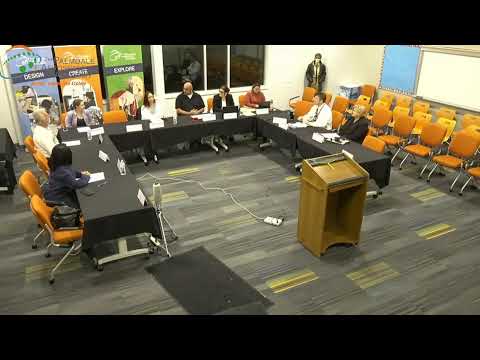
Palmdale Aerospace Academy District middle school administrators presented 2024–25 CAASPP results to the district board and said math achievement is the district’s top middle-school priority.
"My name is Melody McLaren. I'm the middle school principal," McLaren said as she introduced the data presentation and the work the schools plan to use to close gaps. She and assistant principal Mrs. Marquez walked trustees through state-comparison scores, performance-band breakdowns and a multi-pronged improvement plan.
The presentation said the district is behind state averages by roughly 20 percentage points in math, about 11 points in English language arts and less than 10 points in science. Administrators said more than half of middle school students fell into the “not meeting standards” band in math on last year’s tests.
Those numbers, the presenters said, are driving a year-long focus on math instruction. "That's why this year, we are doing a deep dive and really focusing on math to see what are the concepts that the students are not getting," McLaren said. She and Mrs. Marquez described work that includes monthly data dives by administration and departments, pacing plans and Common Formative Assessments (CFAs) to monitor progress, and use of targeted digital interventions.
District staff identified specific tools and supports already in place or being adopted: monthly collaboration with Solution Tree to support professional learning communities (PLCs); pacing plans and interim benchmarks (CFAs/CSAs); IXL for individualized practice; NWEA (referred to in the presentation as a targeted support) for diagnostic and progress monitoring; and a PBIS (positive behavioral interventions and supports) Tier 1 approach to recognize small gains and support student motivation.
Administrators said teacher turnover and past administrative instability contributed to inconsistent instruction and hindered growth, and that site- and district-level work now emphasizes both horizontal (within-grade) and vertical (across-grade) alignment. McLaren said the district has started a guiding coalition in middle school, scheduled regular admin data meetings and plans an "all secondary" meeting to coordinate middle- and high-school teams.
Trustees asked for specifics on alignment and next steps. "Do the grade levels get together... so that you can know in working together it helps the scores to come out?" asked a trustee identified in the record as Miss Vicki. McLaren said vertical-alignment conversations are taking place this year and that sites are doing proficiency maps so teachers agree on standards coverage before testing.
When asked whether elementary and high school collaboration is happening, administrators said secondary teams meet monthly with STEM and high-school teachers and that secondary curriculum alignment is planned to become regular practice. On timeline and follow-up, McLaren said the district has already taken a NWEA baseline and expects to return to the board after the winter benchmark/second-semester progress checks with updated CFAs and progress data.
Administrators characterized the current work as a combination of diagnostic review and instructional change: refine assessments, set measurable goals, adopt pacing plans and monitor CFAs to identify when reteaching is required. They said the goal is to substantially reduce the number of students not meeting math standards by the next CAASPP cycle.
Trustees expressed support for the emphasis on data-driven instruction and on empowering teachers to use CFA results to inform reteach cycles. Administrators said more frequent, structured teacher collaboration and continuing PD are central to sustaining improvement.
The board did not take a formal action at this agenda item; administrators committed to provide a progress update after the winter benchmark.