Get Full Government Meeting Transcripts, Videos, & Alerts Forever!
Get email alerts on the Grants Funding Cdbg Home topic
No spam. Unsubscribe anytime.
McHenry County grant panel raises $50,000 minimum, reviews LOIs and schedule for 2026 CDBG/HOME round
Summary
The McHenry County Community Development and Housing Grant Commission reviewed letters of intent and a notice of funding for the 2026 Community Development Block Grant (CDBG) and HOME rounds, confirmed a $50,000 minimum request threshold, and discussed focusing future rounds on specific project types and scheduling for deliberations.
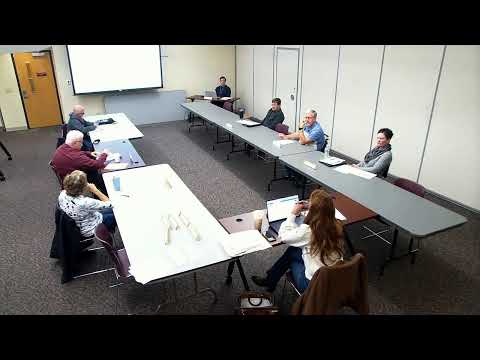
McHenry County’s Community Development and Housing Grant Commission on Oct. 22 reviewed early letters of intent (LOIs) for the 2026 CDBG and HOME funding round, confirmed that the staff increased the minimum grant request to $50,000 for this cycle and discussed scheduling and prioritization options for upcoming deliberation meetings.
The change to the application floor and the LOI process were presented by a staff member who said the county requested LOIs before releasing the notice of funding. The staff member said the notice went out Oct. 20 and will close Dec. 1; after that, commissioners will receive access to full applications in Neighborly for review. “We actually increased the floor. We didn't allow anybody to submit something less than $50,000 this year,” the staff member said, explaining the decision was made in part because administering many small grants requires the same staff time as a single large grant.
The commission heard that requests already submitted exceed recent allocations. The presenter gave these figures as the commission discussed needs and likely funding limits: last-year allocations were about $1,300,000 for CDBG and about $580,000 for HOME; infrastructure requests in the LOIs totaled about $3,300,000; total CDBG requests were about $5,200,000; and HOME requests were stated as about $1.9 million. The staff member told commissioners applicants could revise proposals before the full application deadline and that some LOIs represent phases of existing projects (for example, a “phase 3” for the Village of Wonder Lake and a continuation project for Spring Road at Macomb Lake).
Commissioners discussed whether the commission should designate future rounds to emphasize a single project type (for example, an “infrastructure year” or a “housing year”) so larger projects could be completed more quickly without long phasing. One member noted staff in other communities have used that approach and that it could reduce administrative burden and finish multi-phase projects more quickly. Commissioners also raised concerns that routinely designating a single-project focus could disrupt multi-year plans for agencies that budget annual support from the commission (for example, Habitat for Humanity-type partners) or encourage applicants to inflate request amounts to meet the new $50,000 minimum. The presenter said applications’ financials and budgets would be available to review for signs of inflated costs.
On scheduling, staff proposed the following timeline: the application portal closes Dec. 1; staff will grant commissioners access to applications in Neighborly at that time; staff will screen applications for eligibility in December and January; and the commission would meet in February to decide which applicants to invite for full presentations and then hold deliberation meetings in April (the presenter suggested two days or one-and-a-half days for deliberations depending on application volume). The presenter said moving the committee’s fall meeting from October to November next year would allow staff to present final spending reports after agencies submit end-of-program-year reimbursements (the grant year ends Sept. 30 and agencies have until Oct. 31 to submit final requests).
Votes at a glance: the commission approved a procedural motion to admit a participant to the meeting (seconded by Adamson) and approved April meeting minutes (moved and seconded during the meeting). Both motions were carried by voice vote and recorded as “Aye.”
Commissioners asked staff to track which LOIs were continuations of prior-year projects and to flag multi-phase dependencies in the full applications. Staff also said that, after Dec. 1, commissioners would have two months of application access in Neighborly to prepare for the February screening meeting and the April deliberations. The commission did not adopt any new allocation formula or binding rule at the meeting beyond the already-implemented $50,000 minimum and the procedural scheduling proposals.
The commission adjourned after confirming there were no further public comments or announcements.