Cultural Heritage Commission approves attic conversion at 1901 Oxy Street, selects casement-window option

Loading...

AI-Generated Content: All content on this page was generated by AI to highlight key points from the meeting. For complete details and context, we recommend watching the full video. so we can fix them.

Summary

The South Pasadena Cultural Heritage Commission approved a certificate of appropriateness for a 1911 Craftsman house at 1901 Oxy Street to convert attic space into a second floor, choosing the design that replaces double-hung windows with casement windows for egress and removes a proposed front balcony.

The South Pasadena Cultural Heritage Commission on Oct. 16 approved a Certificate of Appropriateness (project COA25-001) for renovations at 1901 Oxy Street that will convert attic space into a second habitable floor and alter the roofline.

Tatiana Marin, a City of South Pasadena staff member presenting the item, said the property is a corner lot between Milan Avenue and Montrose Avenue in the residential low-density zone and is listed in the city's inventory of historic resources as a contributor to a locally designated district. The existing home was built in 1911 in the Craftsman style and is 1,441 square feet with a 272-square-foot detached garage, Marin said.

The project would create an additional bedroom, bathroom, office, gallery and two closets by converting attic space to a second habitable floor and add a new shed dormer with six wood double-hung windows on the east roof elevation, Marin said. Staff recommended the commission find the project exempt from the California Environmental Quality Act (CEQA) Guidelines, citing Sections 15301 (Class 1) and 15331 (Class 31), and approve the project subject to the conditions of approval attached to the staff report.

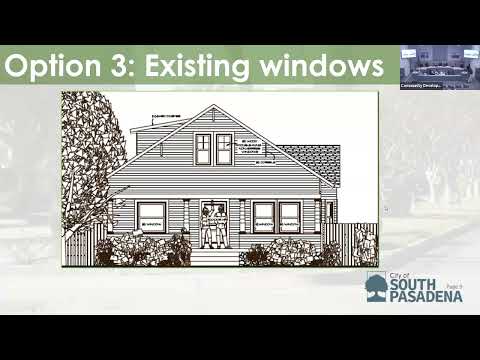
Tim Clark, architect with Cynthia Bennett and Associates, representing the absentee owners, described three design options the applicant provided in response to the commission's questions at a previous hearing on Sept. 18. "The owners would obviously like the balcony," Clark said, explaining the applicant's preferred design. The three options were: (1) keep a reduced front balcony with wood railing and Craftsman detailing; (2) remove the balcony and replace the front double-hung windows with outward-opening casement windows to meet egress requirements; and (3) leave the front elevation unchanged and retain the existing double-hung windows.

Commission discussion focused on the balcony and egress. Commissioners noted that building-code egress requirements make leaving the existing windows in place unlikely without reconfiguring interior plans. Commissioners also said the revised balcony detailing and reduced scale addressed previous design concerns. Several commissioners expressed a preference for the option that removes the balcony and substitutes casement windows for egress compliance, calling it a subtle change that better fits the house while meeting safety requirements.

Chair Lopez moved to approve the project specifically adopting Option 2 (removing the balcony and installing casement windows on the main elevation). The motion was seconded (second not specified in the record). A roll-call vote recorded three yes votes: Commissioner Appelo (Aye), Vice Chair Severson (Yes) and Chair Lopez (Yes). The motion carried and the commission approved the Certificate of Appropriateness with the staff-recommended conditions.

The commission's approval is final unless an appeal is filed within 15 days; no construction or activity may commence during that appeal period, and appeal forms are available from the City Clerk's office.

Votes at a glance

- COA25-001 (1901 Oxy Street): Motion to approve Option 2 (remove front balcony; replace front double-hung windows with casement windows to meet egress). Mover: Chair Lopez. Second: not specified in the transcript. Vote: Appelo ' Aye; Vice Chair Severson ' Yes; Chair Lopez ' Yes. Outcome: approved. Conditions: approval subject to attached conditions; 15-day appeal period; no construction during appeal period.

Background and context

The item was continued from the CHC meeting on Sept. 18 for design concerns related to a proposed front balcony and overall consistency with the Craftsman style. Commissioners and staff emphasized the need to balance historic preservation standards with current building-code egress requirements. Staff's recommendation of CEQA exemptions under Guidelines —615301 and —615331 indicates the city staff found the project qualifies as minor alteration and historic resource restoration; the transcript records the staff recommendation but does not include the full written findings, which are included in the project conditions of approval attached to the staff report.

No members of the public provided comment on the item during the hearing.