Get Full Government Meeting Transcripts, Videos, & Alerts Forever!
Get email alerts on the Public Safety Forensics topic
No spam. Unsubscribe anytime.
Enid to host OSBI Rapid DNA instrument as part of investigative lead program
Summary
The Oklahoma State Bureau of Investigation outlined a Rapid DNA Investigative Lead Program and said Enid Police Department is being considered as the first outside partner to house an instrument that can produce a presumptive DNA profile in about 90 minutes.
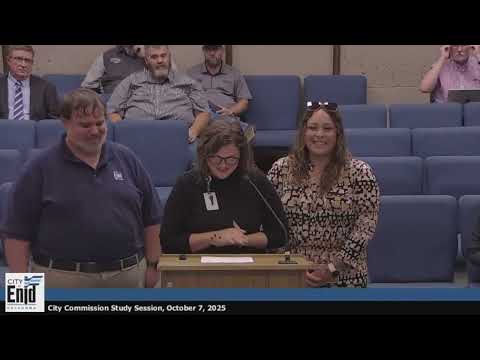
Enid — The Oklahoma State Bureau of Investigation presented the Rapid DNA Investigative Lead Program to the Mayor and Board of Commissioners, and the bureau said Enid is being considered as the first external law-enforcement partner to host the Rapid DNA instrument.
The program uses a small, self-contained instrument and single-use cartridges that can produce a presumptive DNA profile in about 90 minutes, OSBI Rapid DNA supervisor Beth Dean said. “You’re not getting an accredited lab report. You’re not gonna be able to go to court with it,” Dean told the commission, adding that the tool is intended to give officers an early investigative lead rather than a court-admissible result.
The OSBI described a tiered rollout. The agency said it has three instruments now, 248 certified operators statewide and that, since January 2025, participating agencies have run 83 samples. Of those, 43 produced profiles that could be entered into the rapid-DNA database and 23 of those entries produced associations in the database, the OSBI said.
Why it matters: OSBI officials and Enid leaders said the tool can let investigators pursue leads months earlier than waiting for conventional laboratory testing. “If we would have sent a DNA sample to the lab, it could take six months to eight months to get that back. What this does for us is gives us a presumptive result, and gives us a lead that we can start investigating six months earlier,” Chief Skaggs said.
How the program would work: OSBI staff said an agency operator would collect evidence using an AB swab method so that one swab (A) is preserved for formal laboratory confirmation and the second swab (B) can be run in the rapid instrument for a presumptive search. OSBI staff emphasized that the instrument and database are intended to supplement — not replace — accredited laboratory confirmation.
Funding and support: OSBI representatives said the program is supported by dedicated legislative funding that can help partner agencies with instrument costs, tech support and training. The instruments communicate with a centralized rapid-DNA data center housed at the OSBI Forensic Science Center, Dean said.
Questions and scope: Commissioners asked about accuracy, courtroom use and evidence handling. OSBI laboratory director Janice Jocelyn and other OSBI staff answered technical questions and said the agency had performed validation studies before rollout. OSBI staff also noted a range of crime types have produced leads; property crimes were the most common category in their early data, and they cited one instance where a human-remains sample produced investigative value.
Next steps: OSBI said it hopes to place an instrument in Enid and train local operators. Officials did not state a firm delivery or start date during the presentation.