Get Full Government Meeting Transcripts, Videos, & Alerts Forever!
Get email alerts on the Utility Rates topic
No spam. Unsubscribe anytime.
Woodland council weighs 12–27% water rate increases; options could add $10–$17 per month
Summary
Council workshop reviewed multi-year utility-rate options to meet a 2023 FCS rate study and to preserve eligibility for state loans; debate focused on balancing capital needs and customer hardship.
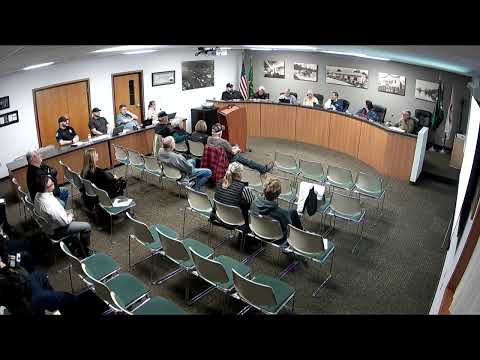
Woodland city staff outlined rate options at an Oct. 20 council workshop that would raise utility rates for water, stormwater and sewer to align with a previously approved FCS rate study and to support capital projects and loan requirements.
Mayor (name not specified) summarized the background: the FCS study, originally adopted in 2020 with phased increases through 2025, was partly delayed in subsequent years. Staff said water currently sits roughly 27% behind the study’s 2025 target, stormwater about 16.9% behind, and sewer about 3.6% behind.
Public Works Director Riley and finance staff presented two principal options in the workshop:
- Option A: Raise rates to the 2025 FCS targets — water +27.1%, stormwater +16.87%, sewer +3.6%. Staff estimated the average in-city residential account would pay about $17.12 more per month under Option A.
- Option B: Raise rates to the 2023 FCS targets — a smaller step that staff said leaves two structured increases remaining; the estimated average customer increase under Option B was about $9.84 per month.
Riley and other staff told council that higher rates improve the city’s ability to fund aging infrastructure, reduce reliance on long-term loans, and improve the city’s competitiveness for grant programs that score applicants on financial condition. Evan (staff) noted that certain Department of Health loans tied to the city’s Reservoir 4 project include expectations of healthy water-rate structures.
Councilors raised concerns about the size and timing of any increase, particularly its burden in summer months when irrigation drives higher usage and on residents on fixed incomes or living in mobile-home parks. One councilor suggested increasing only the water rate (rather than all utilities) or phasing increases; another advocated preserving stormwater increases because of failing dry wells that cost roughly $40,000 each to replace.
Staff said the workshop was for direction; the council expects a formal rate ordinance to return for a first vote in November and a final vote later in the month. The staff presentation included modeled impacts by usage tier and stressed that summer consumption often triggers higher tiers for discretionary outdoor irrigation.
Ending: Staff will return with a formal proposal; council did not take a formal vote on rates at the Oct. 20 workshop.