Lifetime Citizen Portal Access — AI Briefings, Alerts & Unlimited Follows
Orange County officials urge residents to 'know your zone' as evacuation tools expand
Loading...
Summary
Orange County Emergency Manager Michelle Anderson and local public-safety officials described how evacuation zones, Alert OC and new patrol-siren capabilities are used during fast-moving incidents and urged Villa Park residents to prepare in advance.
Michelle Anderson, Orange County emergency manager, told a Villa Park community meeting that knowing local evacuation zones and signing up for Alert OC are the single most useful preparedness steps residents can take ahead of fast-moving fires or other disasters.
Anderson said evacuations involve a sequence of public notices and public-safety actions, and repeated that "the sheriff department cannot force you to leave your home. We won't come in and muscle you out" — but that warnings and orders are strong recommendations to move for safety. She explained the county distinguishes evacuation warnings, evacuation orders and shelter-in-place and urged people who feel unsafe to leave immediately rather than wait for official orders.
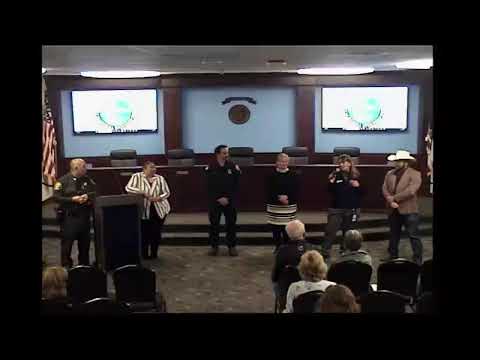
The county and local law enforcement also described how residents will be notified. Anderson said the fastest alert in many incidents is a door knock by a deputy or firefighter, followed by Alert OC messages and the federal Emergency Alert System when employed. Captain Miguel Sotelo of Villa Park Police Services demonstrated a new high-low patrol siren and a prerecorded message the units can play; the prerecorded wording shown at the meeting began, "Attention. This is an emergency evacuation order. Remain calm. Follow the instructions of the emergency officials." A meeting slide and presenters emphasized that the high-low siren and prerecorded message are intended to supplement, not replace, door-to-door notification and aerial announcements.
Anderson and panelists described practical steps residents should take before and during an evacuation: review evacuation-zone maps and electronic versions on city and county websites, assemble a "grab-and-go" bag with copies of identification and insurance, keep medicines and care items accessible for children and people with access or functional needs, and store contact information for neighbors and relatives. She recommended adding multiple addresses (home, workplace, school) and phone numbers to an Alert OC account so notifications arrive for any location where a resident or loved one may be.
The presenters discussed road closures and repopulation. Anderson explained the difference between "soft" road closures, which may permit verified residents through, and "hard" closures, which allow no one to pass. She said authorities will coordinate among fire, law enforcement, public works and utilities before repopulation and that residents should expect closures to remain while responders and utilities make an area safe.
On recovery, Anderson cautioned that federal aid to individuals is uncommon and slow. She said FEMA's individual assistance program is used rarely; more frequently cities and counties coordinate nongovernmental organizations such as Team Rubicon and the American Red Cross for volunteer and donation-based recovery support. The panel encouraged residents to consult city and county "before/during/after disaster" web pages for up-to-date information and resources.
Speakers at the Villa Park meeting also included Mayor Pro Tem Jordan Wu and an Orange County Fire Authority representative, who remained available for questions on response and repopulation planning.