
Westmoreland council passes first reading of 60% masonry façade rule after debate over manufactured homes
Get AI-powered insights, summaries, and transcripts
Subscribe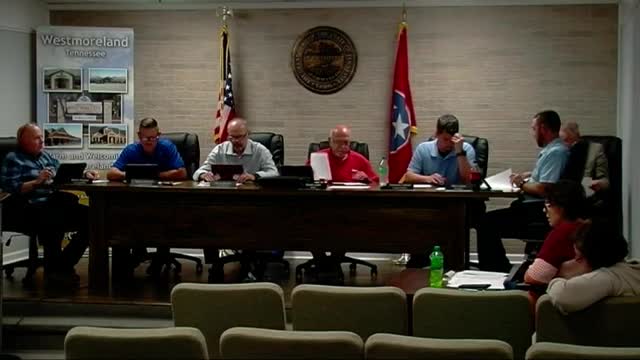
Summary
The Westmoreland City Council voted unanimously on first reading to approve an ordinance requiring at least 60% masonry-style exterior facings on buildings across zoning districts.
The Westmoreland City Council voted unanimously on first reading to approve Ordinance 0102025-1, which would require that at least 60% of a building’s exterior facings be masonry-style material across zoning districts.
Council members and staff spent extended time on the ordinance’s practical impact, particularly whether the requirement would prevent manufactured or modular homes from replacing older single-wide units and whether local rules could withstand legal challenge under state law.
Alex, a Planning staff member, described the requirement during discussion: “I think this is the one where it requires a, at least 60% of, exterior facings on a building to be masonry facade.” That requirement, as read at the meeting, would apply across residential and nonresidential districts unless an exemption or alternate-plan approval is used.
Council members asked how the standard would apply to mobile or modular homes, to slab foundations, and to features such as porches. Planning staff and other speakers said applicants can request an approval of an alternate plan that does not strictly comply with the numerical standard “but basically satisfies the intent of the requirements.” The ordinance text also allows property owners to seek variances from the Board of Zoning Appeals.
Speakers noted two practical constraints. First, a local building inspector would be responsible for measuring the façade percentage when permits are reviewed. Second, several participants cautioned that state law limits the city’s authority to regulate manufactured homes; one attendee advised the council to check state statutes protecting manufactured homes before second reading to avoid litigation.
Council members raised fairness and cost concerns. Some said masonry or masonry-style siding may raise construction cost, especially for homeowners replacing older homes; others noted potential offsetting insurance savings from masonry exteriors. The meeting record shows a consensus that the item should move forward on first reading and be revisited before the second reading to consider exemptions, amortization periods or alternate compliance pathways for preexisting mobile/modular housing.
The council moved and seconded the ordinance for a first reading and then voted. The clerk recorded the measure as passed unanimously on first reading. Members indicated they expect staff and the planner to return with proposed exemptions or clarifications ahead of the ordinance’s second reading.
What’s next: Because this was a first reading, any technical clarifications, exemptions for preexisting manufactured homes or drafting changes can be submitted and considered before a second reading and final adoption.