Get Full Government Meeting Transcripts, Videos, & Alerts Forever!
Get email alerts on the Land Use topic
No spam. Unsubscribe anytime.
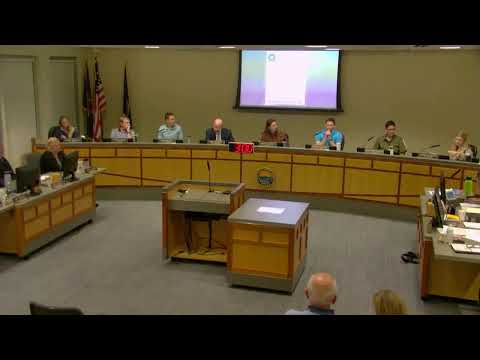
East Grand Rapids Commission approves amended Gaslight Investors concept plan after contested hearing
Summary
The East Grand Rapids City Commission voted to approve a revised concept plan and accompanying resolution for the Gaslight Investors planned unit development (PUD) after a lengthy public hearing that included legal questions about a protest petition and repeated calls for additional traffic, parking and environmental studies.
The East Grand Rapids City Commission approved an amended concept plan and resolution for the Gaslight Investors planned unit development (PUD) after a lengthy public hearing and debate over a late-filed protest petition.
Mayor Frivali opened the discussion and explained staff and the developer had negotiated five changes to the draft resolution. City Manager Charles summarized the revisions, which address maintenance standards for privately built streets and sidewalks, facade step-backs for taller buildings, continued community access to private streets for events, and conditions to ensure unfinished building pads are seeded and maintained if later phases are not built.
The commission and staff repeatedly emphasized that the vote before them was for the concept plan only and that detailed studies and approvals would be required at later stages. City Manager Charles said additional project-specific traffic and parking analyses will be required after “building location and uses are finalized.”
The meeting included sustained public comment. Several residents told commissioners they opposed the concept plan in its current form because of density, parking and traffic concerns. Bonnie Mower, a longtime resident, said, “In summary, the increase in density and traffic, I believe, will negatively impact the current community atmosphere.” Attorney Nick Curcio, who filed a copy of a protest petition with staff, told the commission the petition should be treated under the Michigan statute governing protest petitions and, if valid, would raise the vote threshold for approval.
City Attorney Hough told the commission staff had received a protest petition shortly before the 5 p.m. filing deadline and that the petition as submitted was incomplete: the city had not received documentation showing signer ownership and acreage calculations required to apply the statutory 20% test under the Michigan Zoning Enabling Act. Hough said those deficiencies meant the petition could not be treated as complete for action that evening.
Pat Lennon, an attorney representing Gaslight Investors, and other project representatives described the revisions staff and the developer reached by agreement. Lennon said the parties also expect to finalize site architecture, façade articulation and final PUD agreement provisions at the final-plan stage.
Many residents asked the commission to delay or to require additional independent study before approving the concept plan. Multiple public speakers and several commissioners urged completion of a comprehensive traffic and pedestrian safety study that uses current vehicle counts and accounts for school traffic, the planned high school renovation, and pedestrian, bicycle and e‑device traffic. Commissioner Wesley said the studies should consider “how do we be able to help, keep both kids, drivers, and everyone safe while navigating through state law.” Several speakers also raised concern about potential environmental effects on Reeds Lake and recommended runoff and stormwater analyses.
Commissioners also debated whether the PUD amendment vote was a legislative action, subject to protest petition and referendum rules, or an administrative action. That legal distinction matters because a valid protest petition would require a higher approval threshold. City Attorney Hough advised that, in his legal view, this action was administrative and that the late-filed petition as submitted was legally deficient. Several commissioners said the commission itself would need to decide whether to accept or reject the petition if the commission chose to treat it as relevant.
When the commission called the formal vote on the ordinance amendment and resolution, the roll call recorded four votes in favor and three opposed: Commissioner Schwartz — yes; Commissioner Burdick — yes; Commissioner Wesley — yes; Mayor Frivali — yes; Commissioner Hunter — no; Commissioner Skaggs — no; Commissioner Graf Blasek — no. The motion carried.
The commission and staff stressed that approval of the concept plan does not authorize construction. The resolution and ordinance impose conditions that must be satisfied before any final PUD approval or building permits, including detailed traffic and parking analyses, final architecture and façade articulation in buildings over three stories, and enforceable maintenance requirements for any private streets and sidewalks built as part of the project. City Manager Charles said the city will require studies and that, if the final studies indicate deficiencies, the developer will have to adapt — including reducing units, altering building footprints or other substantive changes — and the commission retains authority to deny final plan approval.
The meeting also produced procedural questions the commission said staff and the city attorney would follow up on, including how to adjudicate the protest petition the commission received and what administrative steps are required if residents pursue a referendum under the city charter. City Manager Charles said staff would review next steps with the city attorney and provide a follow-up to the commission.
What’s next: the developer may proceed to prepare a final PUD submission that must include the technical traffic, parking and stormwater studies the commission required. The commission’s approval of the concept plan establishes the framework for those next steps but does not authorize construction. If residents pursue a referendum or file a corrected protest petition, the city clerk would follow the charter and statute procedures and the commission may be required to rule on the petition’s sufficiency.
Votes at a glance: the commission’s recorded roll-call vote on the Gaslight Investors PUD amendment was — Yes: Commissioner Schwartz, Commissioner Burdick, Commissioner Wesley, Mayor Frivali. No: Commissioner Hunter, Commissioner Skaggs, Commissioner Graf Blasek. Motion carried.