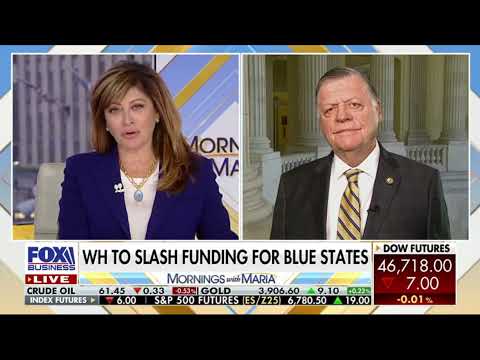
Rep. Tom Cole: Shutdown is a "self-inflicted political disaster," urges quick reopening and short-term CR
Loading...
Summary
Rep. Tom Cole, R-Okla., chairman of the House Appropriations Committee, said in a Capitol Hill interview that the ongoing federal government shutdown is a “democratic self inflicted political disaster” and urged the Senate to move quickly to reopen the government.
Rep. Tom Cole, R-Okla., chairman of the House Appropriations Committee, said in a Capitol Hill interview that the ongoing federal government shutdown is a “democratic self inflicted political disaster” and urged the Senate to move quickly to reopen the government while the House’s short-term spending measures are resolved.
Cole said the House has passed legislation to keep the government open and that the Senate — which he said currently has 55 votes in favor and is “still 5 short” of a filibuster-proof majority on an unspecified package — is now the body handling the continuation of operations. “The sooner they sober up and reopen the government, the less damage that will be done,” he said.
Why it matters: Cole warned that a prolonged shutdown creates immediate financial strain for many federal employees and service disruptions for essential functions. He said some pay dates could be delayed during the shutdown and that many uniformed and mission-critical personnel would remain on duty but unpaid.
Cole described the likely timing of pay during the shutdown, saying federal workers would likely be paid on Oct. 5 for the last two weeks of September but would not be paid on Oct. 20 for the first two weeks of October if the shutdown continued; he added that historically withheld pay has been paid once the government reopens, but he said there is “no assurance” of that. “Every air traffic controller across the United States on duty, but unpaid,” he said, adding that military personnel would remain on duty but unpaid.
Cole outlined which federal jobs he expects to be safer from cuts, saying his district hosts “a very federal heavy district” including Tinker Air Force Base — which he described as a major depot supporting the bomber, tanker and AWACS fleets — and Fort Sill, which houses field artillery and air-defense capabilities. He said those kinds of defense-related civilian jobs and mission-critical roles at the Department of Defense are “largely safe,” while positions concentrated in the Washington, D.C., Virginia and Maryland bureaucratic footprint are more at risk.
On policy and budget timing, Cole said returning to regular appropriations could take “a couple of CRs” (continuing resolutions) and that the schedule depends on negotiations with Senate Democrats. “It'll probably take a couple of CRs. And again, it's hard to predict. It depends on how willing the Democrats are to negotiate,” he said.
Cole also said the administration had already begun freezing about $26 billion in funds intended for federal projects and listed examples: roughly $18 billion he said was for New York transit projects and about $8 billion for green-energy projects. He said the freezes affect funding meant for 16 “Democrat-run” states, including California and Illinois.
The interview included sharp criticism of Democratic tactics: “They literally have put the government and every federal employee at risk to achieve something that doesn't have anything to do with them,” Cole said. He called the shutdown a “boneheaded play” politically and argued voters have historically held the party that forces shutdowns responsible.
No formal votes or committee actions were taken during the interview; Cole described the House’s appropriations work as “essentially done right now” but said the shutdown has delayed completing and packaging the bills. He did not provide specific legislative text or dates for final passage.
Looking ahead, Cole said the outcome depends on negotiations in the Senate and on whether leaders will accept short-term continuing resolutions to reopen operations and then finish appropriations work. “We have a bipartisan majority in favor of that,” he said of the House measure to keep the government open.