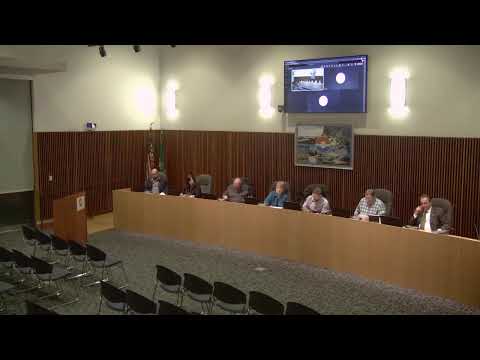
Moses Lake staff present 2026 budget workshop; permit portal, homeless services, parks and lodging‑tax allocations draw questions
Loading...
Summary
Finance director Madeline Prentice and department leads presented the draft 2026 budgets covering community development, homeless services, parks and recreation, lodging‑tax programs and police operations.
City finance and department staff gave an overview of proposed 2026 budgets and program changes, reviewing community development, homeless programs, parks and recreation, lodging‑tax funds and police budgets.
Community development
Vivianne Ramsey described the combined building and planning functions. Highlights included a projected downturn in development revenue, work on a one‑stop permitting counter, a planned cost‑recovery fee study, and continued implementation of the unified development code and comprehensive plan update process. She said planning staff have processed more than 80 land‑use permits so far in 2025 and that the building division had issued roughly 590 permits and 239 certificates of occupancy this year; two inspectors completed more than 3,500 inspections.
Council spent significant time on the city’s recent switch to a new permitting portal and back‑end workflow. Ramsey and other staff said the city will continue to use Cityworks on the back end and a vendor‑supplied front‑end portal (Centricity). Council members and customers reported time‑out and “spinning wheel” problems on the public portal. Staff said the city performed internal and external beta testing before launch, is tracking partial submissions and usage analytics, and will do a more exhaustive review of workflows with a study session and further staff training. Staff described an escalation path for customer problems (start with permit tech, escalate to GIS/technical staff) and committed to a follow‑up study session for council.
Code enforcement and building operations
Ramsey told the council code enforcement opened 812 cases in 2025 and resolved 629, for a 77.5% compliance rate to date. She said the building division is closing gaps in plan review processes and expects 2026 expenses to be lower than 2025 because of reduced development activity.
Homeless program
Liz Murillo summarized the city‑administered homeless services program and the shift after the sleep center closed June 30. She said the city is moving from direct shelter operations to supportive and outreach services, and that the proposed 2026 revenue is roughly $160,000 with proposed expenses of about $71,000. Murillo said the city plans to fund a mobile outreach and transportation service (MOTS) and increased a contract allocation for a MODS provider from $55,000 to $70,000 to reflect scope. She also said the city will begin charging a 10% administrative fee to some revenues (recording‑fee and affordable‑housing supplemental dollars) to support administration of homeless programs. Staff said interviews for the MODS provider are complete and that council will see next steps in an upcoming meeting.
Parks, recreation and cultural services
Parks Director Doug Coutts presented a general‑fund parks budget showing proposed revenues of about $1.8 million and proposed expenses of about $8.6 million for 2026 (a small net decrease year over year). Capital requests include $35,000 for a second main pool heater replacement and $15,000 rolled forward for a sister‑city project. Coutts discussed a parks, recreation and open‑space plan update (consultant costs previously estimated at $120,000–$130,000); he said coordinating that update with the city’s comprehensive plan process reduced the outside consultant cost by roughly $40,000–$60,000.
Lodging tax (LTAC) and tourism
Coutts also outlined changes under lodging‑tax management moving to Parks, Recreation and Cultural Services. He said proposed lodging‑tax revenue for 2026 is about $1,040,000, with proposed lodging‑tax expenditures of $1,489,550 (a 43.3% increase over the prior lodging‑tax budget). Staff said LTAC has a significant fund balance and that the committee will meet to make allocation recommendations; the committee’s allocation meeting was scheduled for Thursday after the workshop. Coutts said Surf and Slide Waterpark and the Moses Lake Museum and Art Center are city‑run facilities eligible for lodging‑tax support and noted a sample city request to LTAC to recoup event‑support staff costs.
Public art and trails
Coutts described the public‑art policy (1% of eligible capital projects over $75,000) and said staff will return with a proposed threshold increase to $150,000 to reduce administrative overhead and concentrate funding on larger projects. He also said the city will move paths and trails donations into the grants and donations fund for future administration; one shared‑use path project adjacent to state highway land was moved into the streets fund because of WSDOT coordination needs.
Police department and grants
Police leadership reported that the department has 46 commissioned officers and seven civilian staff (including officers in academy or field training) and three open positions. Chief/Presenter described recent accomplishments (Community Police Academy, a new Project Safe Streets outreach project) and said the department had partnered with federal task forces on tougher felony cases. The police requested funds to replace expiring body armor (11–15 sets at roughly $1,500 each), to cover overtime and to backfill equipment for three upcoming hires. The chief said the department is requesting a third captain assignment; staff said this would not create a new FTE but be a reclassification and would help with anticipated retirements.
Staff also reviewed discretionary fund sources: federal forfeiture/seizure funds, a high‑crimes fund the department uses for technology and one‑time law‑enforcement equipment, and donations for canines and other programmatic needs. Staff identified a planned-request potential purchase of an armored vehicle (Bearcat) as a use case for accumulated funds; no purchase was approved at the workshop.
Sale of former sleep‑center housing units
Staff reported that the 39 housing units previously used for the city’s OpenDoor/Opendoor sleep center were sold; proceeds will return to the homeless program. Finance staff said the sale produced $12,700 that will go back into homeless‑services funding, consistent with grant restrictions.
Council questions and next steps
Council members asked for further details and a study session on the permitting portal rollout and analytics, asked for clarification on LTAC timing and the recreation‑center debt service schedule, and requested a follow‑up on water‑main/leak detection and smart‑meter rollouts. Staff committed to bringing a permitting‑portal study session, LTAC allocation recommendations at a subsequent regular meeting and further budget research where council requested detail.