Get Full Government Meeting Transcripts, Videos, & Alerts Forever!
Get email alerts on the Capital Planning topic
No spam. Unsubscribe anytime.
Council reviews draft 2026–2035 capital improvement plan; staff flags $155 million sales‑tax program and police station estimate
Summary
City staff presented the draft 2026–2035 CIP and highlighted major projects including a planning‑level $75 million police station, a $30 million cash component and $45 million TIF bond for a South Loop parking facility, and work to keep 2026 tax levy impacts below 2 percent.
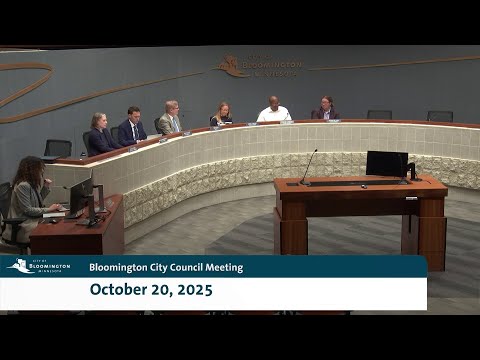
City staff presented the draft 2026–2035 Capital Improvement Plan (CIP) to the Bloomington City Council on Oct. 20 and reviewed projects and funding scenarios in a planning document that staff said guides future project sequencing but does not obligate the city to immediate spending.
Finance staff and CIP project managers told the council the CIP lists projects costing $50,000 or more over a 10‑year window and that the document is a planning tool, not a commitment to proceed with every project. Laurie Economy Scholler (finance) and CIP staff emphasized the document was shared with rating agencies and used in the city’s debt‑planning discussions.
Major projects highlighted for the 10‑year window included a planning estimate of $75 million for a future police facility, a potential parking structure in the South Loop tied to a hypothetical water‑park development (staff showed a $30 million cash component and $45 million in TIF financing as a planning scenario), and transportation and sanitary projects carried forward from prior plans. Staff said they had added roughly 50 new projects in the draft and that many projects are preliminary and subject to funding availability.
Council members asked for clarification on who pays for large county‑led street projects listed in the CIP (for example, Nicollet Avenue). City staff said the CIP shows total project costs to provide context and that the city’s local participation obligation for such county projects is typically a fraction of the total; for Nicollet Avenue the city’s current estimated share is roughly $6.5–$9 million depending on design choices and alternatives, staff said.
Staff reminded the council that including projects in the CIP enables the city to pursue state, county and federal grant opportunities and to sequence studies, design and procurement. The CIP will return for adoption in December; staff said approval would authorize staff to begin more detailed design, consultant engagement and budgeting steps where appropriate. Council members asked for additional detail on several items slated for 2026–2027 (for example, a Civic Plaza lunchroom replacement and the 80th Street pedestrian bridge) and discussed how the document functions as a rolling plan to inform future bond and grant strategies.
The council asked staff to provide more project‑level detail for items of immediate interest and to continue quarterly reporting on CIP status after adoption.