
SCCPSS reports SAT gains and steady graduation rate amid literacy reforms
Get AI-powered insights, summaries, and transcripts
Subscribe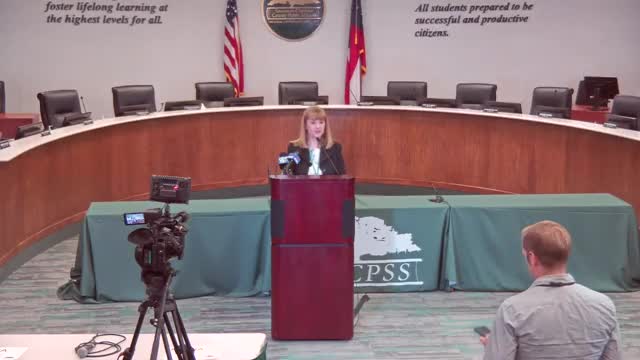
Summary
District officials reported a mean SAT score of 1,006 for the class of 2025 (a 16-point gain over 2024) and a graduation rate of 87.2% that matches the state average, while leaders described literacy work including science-of-reading training, a new curriculum and a high-dose tutoring pilot.
District leaders on the Savannah-Chatham County Public Schools update presented assessment and graduation data alongside literacy initiatives they said aim to improve outcomes in coming years.
Dr. Laura May, who presented the SAT figures, said the district—s class of 2025 achieved a mean SAT score of 1,006, a 16-point gain over the class of 2024. "We were delighted to score at a mean of 1,006 for the graduating class of 2025," May said. She noted the district—s reporting follows Georgia Department of Education standards and reflects only public-school students.
May said the district outperformed the national mean by 10 points but fell below Georgia's mean. Participation in the SAT was 53% for the class of 2025. School-level mean scores ranged from 1,169 at Savannah Arts Academy to 878 at Windsor Forest High School, according to the presentation.
Superintendent Dr. Denise Watts highlighted a slight increase in the district—s graduation rate to 87.2%, which she said matched the state average and reflected early progress. "Two thirds of our high schools either improved or maintained their graduation rate," Watts said, and she singled out Woodville-Tompkins High School (Early College) and Savannah Arts Academy for 100% graduation rates this year.
Watts outlined literacy-focused work districtwide: science-of-reading training for teachers, adoption of a new, aligned curriculum, and an AMERA assessment for K-2 that the district said shows early improvement in reading readiness. She described a high-dose tutoring pilot under the Ignite reading program and said the district will evaluate and scale the pilot if effective.
Other details provided at the briefing: total district enrollment of about 35,098 students (Pre-K through 12), 66 Georgia Lottery-funded pre-K classes serving over 1,400 students, and recent district activities such as literacy week and Parent University sessions. Officials said literacy is the district—s "North Star," and leaders urged continued family and community support for early reading efforts.
District leaders cautioned that many literacy reforms are early-stage and may not yet show up in some quantitative measures; they described classroom-level changes and teacher uptake of professional development as reasons for optimism about future gains.