Get Full Government Meeting Transcripts, Videos, & Alerts Forever!
Get email alerts on the Emergency Funding topic
No spam. Unsubscribe anytime.
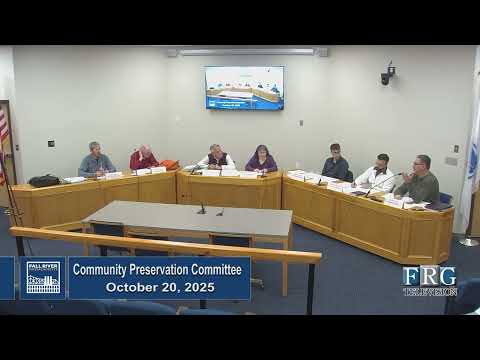
Fall River CPC delays decision on formal emergency-funding rules after hours-long debate
Summary
The Fall River Community Preservation Committee debated whether to keep, limit or scrap its emergency-funding mechanism and voted to table a proposed set of guidelines until the next meeting for further review.
The Fall River City Community Preservation Committee on Oct. 20 debated whether to formalize, limit or discontinue the committee’s practice of considering emergency funding requests and ultimately voted to table proposed guidelines until its next meeting.
Committee members and applicants spent roughly an hour discussing when an unexpected need qualifies as an emergency, how to distinguish emergencies from deferred maintenance, and what documentation applicants should supply. The committee’s chair opened the discussion by recounting the committee’s history of handling atypical, time-sensitive requests and asking members whether they wanted to keep an emergency-funding process at all.
Members raised repeated concerns about fairness and precedent. Several members said many past emergency requests looked like deferred maintenance — problems that owners had years to fix — and that allowing late or ad-hoc emergency requests can undermine the regular funding cycle. Member Rick Mancini emphasized taxpayer stewardship, arguing that the committee should use its limited funds for projects that benefit the public and that property owners should be responsible for routine maintenance. Member Alexander Silva (committee member) and others said emergency rules ought to protect revenue-producing organizations whose operations would otherwise stop, while also protecting small nonprofit service providers such as food pantries.
Committee members and outside presenters discussed specific procedural safeguards. Suggestions included requiring a licensed professional assessment (architect, structural engineer) describing immediate fixes and a timeline to a permanent solution; limiting emergency awards to temporary “patch” repairs that allow an organization to reopen and then apply for full funding in the next cycle; and creating a scoring matrix to evaluate urgency, impact on operations, historic significance and timeliness.
Speakers cited practical constraints: the Division of Capital Asset Management and Maintenance (DCAMM) requirements for contractors on certain state-aided projects, the fact that insurance payments sometimes do not cover historic-standard repairs, and the committee’s limited total funds. Members urged clearer website guidance for applicants and a published rubric so emergency applicants understand evaluation criteria and so the committee can document decisions consistently.
After discussion, a motion to table the proposed emergency-funding guidelines until the committee’s next meeting passed on a roll-call vote with all members recorded as voting yes. The motion leaves the committee’s existing ad-hoc emergency practices in place for now but directs members to return with a clarified document and evaluation matrix for future consideration.
The committee also directed staff to circulate the draft guidelines to members and to include a vote on whether to continue offering emergency funding on the next meeting’s agenda.